

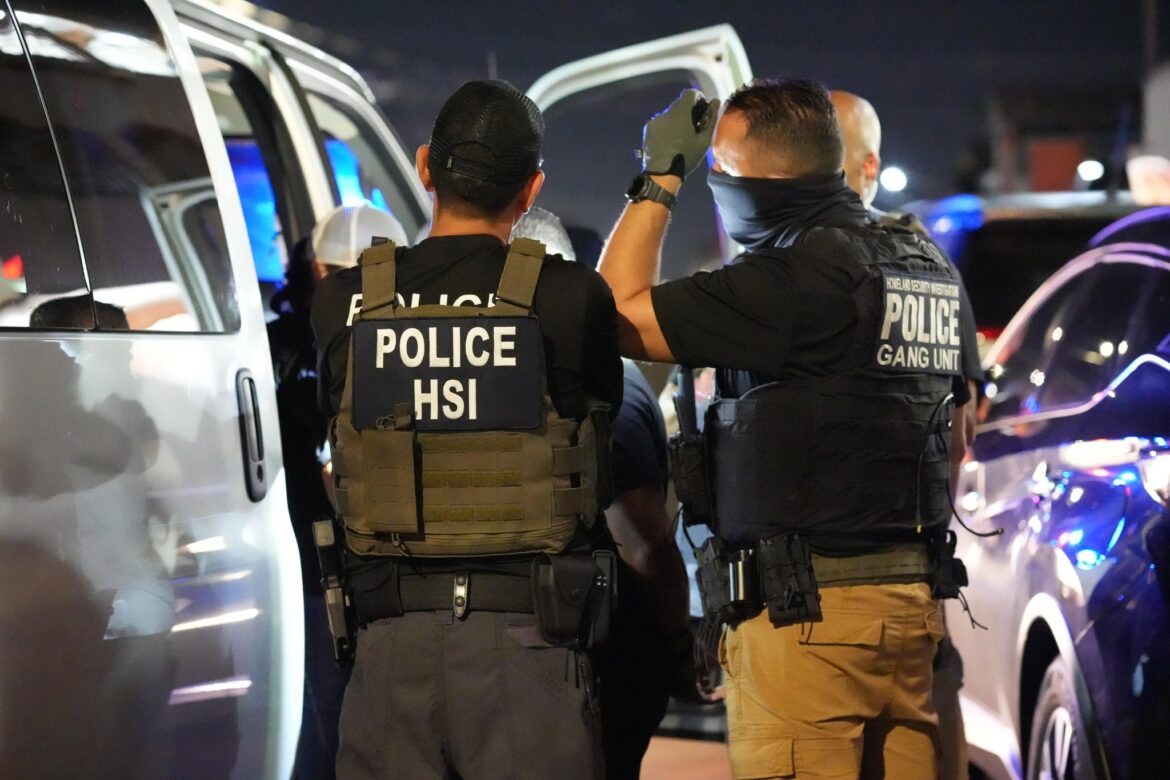

Jacinto (a pseudonym) was driving with his family along Monserrate Avenue in Carolina, just east of San Juan, when another car hit their vehicle. Instead of filing a report at the scene, a municipal police officer escorted him to the Sabana Abajo precinct, questioned him about his immigration status, and arrested him before he could retrieve documents from his home. According to Jacinto’s partner, who later brought the paperwork to the precinct, the officer told her his badge was on the line if he failed to report an undocumented immigrant.
By the following Monday, no official record of the incident existed in the municipal police system, nor had a case number been assigned. The woman filed a formal complaint against the officer, known only by his last name, Aponte, and badge number 551. The Centro de Periodismo Investigativo (CPI) contacted the precinct but was told the officer was unavailable. A request for an interview with Carolina’s police chief, Inspector Rubén Moyeno García, went unanswered.
Another man, Pedro (also a pseudonym), was stopped by Puerto Rico Police a block from his home in Hatillo, on the northwest coast. After officers asked for his ID, two federal immigration agents arrived and arrested him on the spot. He was later transferred to the Krome Detention Center in Florida.
“The state is cooperating. How else would they know where he lives if not through his driver’s license?” said Pedro’s attorney, María del Rosario García Miranda. She confirmed he had recently renewed his license, listing his current address.
Since 2013, individuals without defined immigration status in Puerto Rico have been eligible for a provisional driver’s license under Act 97, signed by then-Governor Alejandro García Padilla. The Department of Transportation and Public Works (DTOP, in Spanish) maintains a registry of these licenses.
Federal Homeland Security Investigations (HSI) agents have asked for access to that registry. In an NPR interview, Rebecca González, HSI’s lead agent in Puerto Rico and the U.S. Virgin Islands, stated: “The Puerto Rico government is cooperating with us in anything that we ask them for. And we’re asking for that to move forward with the mission. And we’re waiting.”
But according to HSI special agent Yariel Ramos, that list has already been delivered. Speaking on the TV program Primera Pregunta, Ramos confirmed that the Puerto Rican government turned over the data earlier this year.
“The DTOP manages the information under its custody responsibly and in accordance with applicable laws. We reiterate that the agency has no collaboration agreements with any external entity and continues to operate within the current regulatory framework,” said Edwin González Montalvo, DTOP secretary, on February 18 to El Nuevo Día. However, U.S. Immigration and Customs Enforcement (ICE) later confirmed it received the list of immigrants with these driver’s licenses between February and March via subpoena.
In a written statement to the CPI, HSI said only that “local authorities support our criminal investigations,” but did not clarify whether administrative detentions like Jacinto’s or Pedro’s stem from criminal probes. The agency did not identify which local departments collaborate with them or in what capacity.

Photo provided
Convinced of Local Authorities’ Collaboration
“They’re on the streets every day now,” said García Miranda, who directs the Immigration Legal Clinic at the University of Puerto Rico Law School. “Before, ICE raids were sporadic and followed a process. Not anymore.”
She described a case in which the Puerto Rico Department of Justice called a client under the pretext of updating crime victim records. She advised her client not to answer.
Attorney Julie Cruz Santana, former president of the Puerto Rico Immigration Lawyers Association and current American Civil Liberties Union (ACLU) advisor, said her clients report that ICE agents show up at homes with full names, addresses, and photos pulled directly from driver’s licenses.
“There is collaboration by all agencies,” she said. “All of them.”
Both Cruz Santana and attorney Mariela Negrón Marty, a professor from the Inter American University Law School, denounced that under U.S. President Donald Trump’s anti-immigration policies, immigrants visiting Driver Services Centers (CESCO, in Spanish) in Puerto Rico are increasingly facing difficulties obtaining driver’s licenses. This is happening despite a clear legal requirement that applicants need only prove they’ve lived on the island for more than a year. Nonetheless, officials often impose additional, unwarranted hurdles.
“They do not follow the law, and in practice, they are rejected,” denounced Negrón Marty, who emphasized that the driver’s license does not regularize their immigration status because it is an administrative procedure, but at least it allows them to drive legally.
García Miranda warned that the pattern creates a public safety risk: “People are scared to go to CESCO or other agencies for fear ICE will be notified.”
No Formal Federal Partnership, But Cooperation Still Widespread
Puerto Rico has no formal agreement under Section 287(g) of the Immigration and Nationality Act, which allows local police departments to work directly with ICE. As of June 4, 2025, Puerto Rico is not listed among the 629 jurisdictions participating in the program.
“Puerto Rico has not signed a memorandum of understanding under Section 287(g). Contrary to how it has worked in the U.S., in Puerto Rico, it has never been necessary because there is a general perception within the state’s security forces that if it is [a federal order], then they have to do it. So, there is an act of automatic submission,” said Annette Martínez Orabona, executive director of the ACLU Puerto Rico.
Although Puerto Rican officials deny active cooperation, Governor Jenniffer González has stated she would not oppose Trump’s immigration orders, citing fear of losing federal funds. In contrast, over 20 U.S. states and cities have refused to cooperate and even sued the Trump administration. Among them are California, Colorado, Connecticut, Delaware, Hawaii, Illinois, Maine, Massachusetts, Michigan, Minnesota, Nevada, New Jersey, New Mexico, New York, Oregon, Rhode Island, Washington, Wisconsin, and Vermont.
Detentions Spike Under Trump
ICE arrests have nearly quintupled in Puerto Rico since President Trump issued executive orders intensifying immigration enforcement. Data obtained by the CPI shows that as of May 27, 2025, only 16% of migrants arrested since these policies began had criminal records.
In 2024, there were 95 administrative arrests. As of June 5, 2025, that number had jumped to 468. An additional 84 individuals were detained over alleged links to criminal activity, bringing the total to 552.
Without Due Process
Most of the arrests occurred without court warrants. According to lawyers and civil rights groups, ICE agents increasingly rely on deception, racial profiling, and warrantless detentions based on appearance or accent. They said interventions have been more frequent this year, very different from the sporadic operations federal agents used to conduct in the ICE Deportation Division with individuals who had a conviction or had been given a deportation order and had not appeared.
HSI insists that detainees receive a list of immigration attorneys and are informed of their legal rights. But the ACLU says the list only includes Florida-based attorneys, based on the assumption that no hearings will take place in Puerto Rico. The ACLU is working to compile a list of local lawyers to assign to detainees.

Photo by Vanessa Serra | Centro de Periodismo Investigativo
But the complaint that arrests are made without guaranteeing them the right to legal representation and due process of law to individuals who have not committed any prior crime was supported by ACLU attorneys Martínez Orabona and Cruz Santana, indicating that after an operation on May 8, they went with another attorney to the temporary detention center of HSI in Guaynabo. Initially, they were denied access to the building, although Cruz Santana is an immigration attorney and had her identification. There, they realized that the authorities give a list of Florida lawyers to the detainees and not from Puerto Rico. They also corroborated that they are kept incommunicado for a long time and that, by removing them from Puerto Rico, their proper representation is hindered. García Miranda told the CPI that she spent hours on May 26, 2025, trying to enter to speak with her detained client at the Guaynabo detention center.
Attorneys Denounce Racial Profiling Behind Immigrant Detentions
Martínez Orabona and ACLU Puerto Rico Legal Director Fermín Arraiza Navas documented repeated instances of ICE agents targeting neighborhoods with high immigrant populations, stopping individuals based solely on appearance.
According to these lawyers, most interventions have occurred without a court order, using an administrative document, if any, with which they manage, through deception, to obtain information from the immigrant. They clarified that every intervention by an immigration official requires a court order. The federal agency did not respond to this claim.
“It is through deception and coercion. It is a completely illegal intervention. Based on physical appearance in areas or places of residence where immigrants live, the accent immigrants may have, and their skin color. All this falls under the concept of racial profiling,” said Arraiza Navas.
The attorney said that arrest warrants against an immigrant for committing a crime or being a fugitive from justice are minimal.
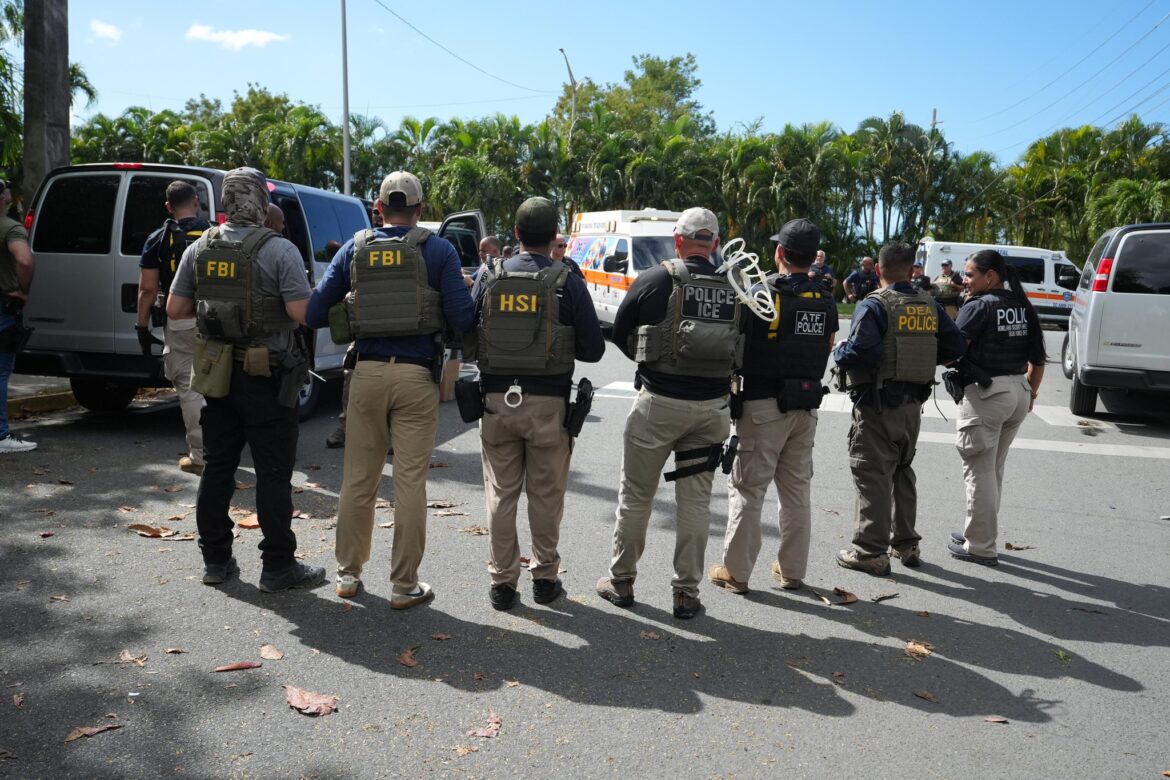
Photo provided
Lawyers from the ACLU recalled that before Trump, many immigration operations occurred in the labor context when a complaint was filed for labor exploitation of immigrants. The arrests made were followed by a judicial process. If they found people without a regular immigration status, they were detained. However, they were brought before an immigration judge, said the lawyers.
For Martínez Orabona and Arraiza Navas, eliminating due process of law, the detention of immigrants by immigration authorities constitutes a type of kidnapping, something that has also been widely denounced in states like Florida, Chicago, Wisconsin, California, and Massachusetts, among others.
“They take them away from their family, away from their place of residence, from their social contacts, they take them away from their lawyer,” criticized Martínez Orabona, explaining that the detainee is deprived of basic rights to defend themselves and legalize their immigration status.
Martínez Orabona explained that a person is not supposed to be subject to a criminal-type detention because being undocumented is not a crime but an administrative offense. Before Trump’s orders, the norm was that people with undefined immigration status detained were released with a citation to appear later in court.
“They are creating a state of terror, period. To force them to leave voluntarily,” said Arraiza Navas in a separate interview.
Technology and “Self-Deportation”
The federal government eliminated the CBP One mobile application created by the U.S. Customs and Border Protection Office that facilitated immigration application processing. In its place, they created CBP Home, for people who do not have the documentation to remain in the United States to voluntarily begin the process of returning to their country.
With CBP Home, the government promotes these “self-deportations” with the promise that they will not be detained and will receive assistance in the process. In exchange, the federal government offers an incentive of $1,000, which would be disbursed when the person is in their country of origin.
“What certainty is there that they will be given the $1,000 upon returning to their country?” questioned Cruz Medina.
Economic Fallout
Economist José Caraballo Cueto, director of the Center for Development Studies at the University of Puerto Rico, warned that deportations will hurt the local economy.
Immigrants contribute through taxes, including the Sales and Use Tax (IVU), and many pay into Social Security despite being ineligible to claim benefits. “That’s why in economics we say that when the population decreases, there is economic loss, there are fewer consumers,” he said.
Puerto Rico’s population has dropped 2.5% in the past four years, according to U.S. Census Bureau population estimates published in March 2025. Construction, one of the most immigrant-dependent industries, will be especially impacted. Caraballo Cueto anticipated that the result of immigrant deportations would further delay Puerto Rico’s reconstruction and increase project costs.
Families Left Behind
A Peruvian national was detained in Puerto Rico in April of 2025 and is still at the Krome Detention Center in Miami, where there have been reports of overcrowding. From there, in a phone call, he narrated to a relative that in the first days, he was placed in a room where the detainees barely fit and slept on the floor. He fell ill and did not receive medical attention.
His wife, who preferred not to be identified, told the CPI about the hardships she has faced alone with the couple’s three children, one of whom has a neurological condition, and without an income at home. Due to health conditions, she cannot work, and her husband was the main provider. Now, she lives with some savings and the help of a relative.
She can barely speak with her husband for a few minutes a week, paying for phone calls.
“This has greatly affected the children. They couldn’t concentrate well in school, obviously knowing the conditions their father was in and is in now. What he tells us is that he is not doing well there,” said the woman.
Juan, a pseudonym for a young Dominican national, was heading to work last March in the Cupey, an area in San Juan, and was intercepted by ICE agents upon arrival. Since he was driving, they asked for his identification, and when he gave them the driver’s license for a person without regularized status, he was arrested. Not only was Juan taken, but also two people accompanying him in the car, one of whom was a U.S. citizen.
Not even the lawyer knew where he was detained. It wasn’t until Juan was able to call his mother, who resides in the Dominican Republic, that they learned he was in Aguadilla, where there is a federal detention center on the northwestern coast. She communicated to inform that the young man wanted a voluntary departure. Although in that call, they informed her that they would arrange a ferry trip, within days, the immigrant informed his mother that he would be transferred to the Laredo Detention Center in Texas. Despite an immigration judge granting his voluntary departure on or before April 17, he was transferred from Texas to the Dominican Republic on April 27.
This translation was generated with the assistance of AI and thoroughly reviewed by our editorial team to ensure accuracy and clarity.





lll