Those who want to stay
In turn, Ramos said there are other people who, because they have been living there for so long don’t want to leave , as is the case with one of the community leaders.
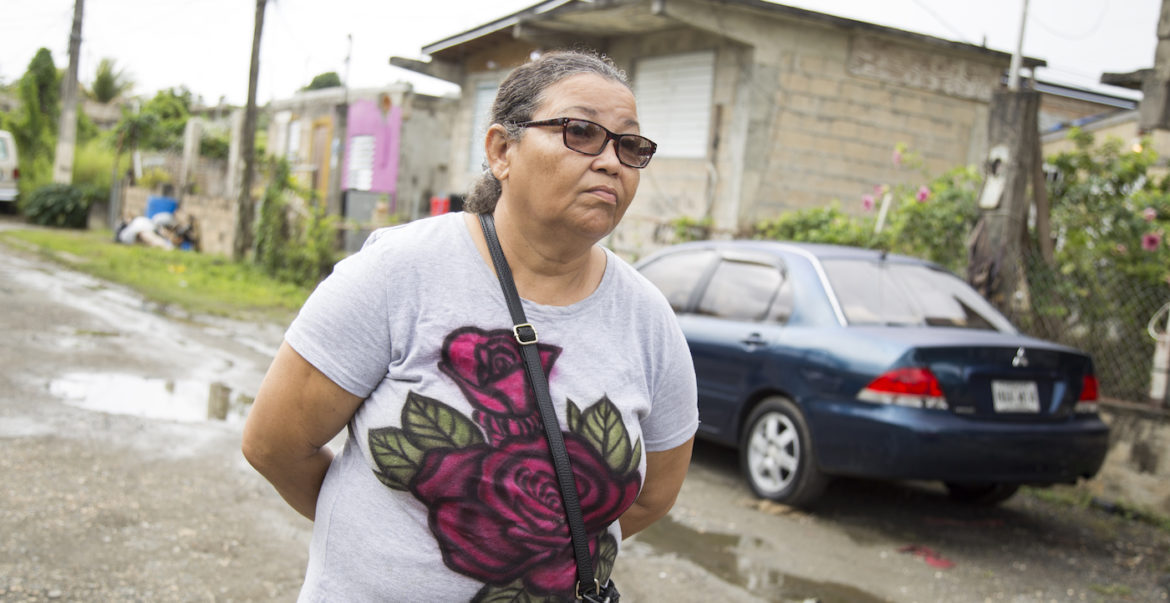
Jannette Lozada-Sabastro has been living in Valle Hill for 21 years. The 55-year-old woman said she would rather stay because she does not want to go through the uncertainty of not knowing where she would have to move and start a process that could take a long time.
“I won’t go where they tell me to,” she said, referring to the government.
Lozada-Sabastro did not request assistance from the R3 program because she believes she wouldn’t qualify for the reconstruction alternative because she lives in a flood zone. She plans to rebuild her home on her own, with the $33,000 she received from FEMA after María. At the moment, she lives in a small structure in her yard, “a small shed” made by the TECHO organization.
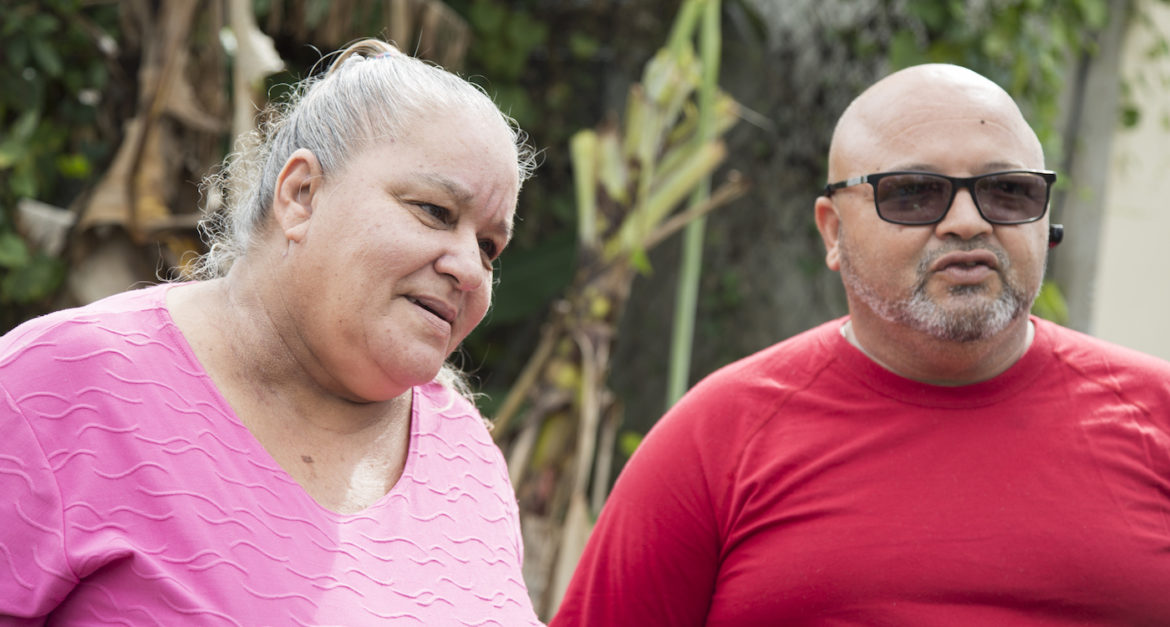
Daisy Dolores-Morell wants to stay in San Isidro, where she has lived for 30 years. She misses her home in the Villa Hugo II sector. She currently lives in another house in San Isidro under the Department of Housing’s Section 8 program, waiting for the agency’s response after applying for the R3 program in the hope of receiving help to move back to her home.
Morell lived in an emergency shelter for nine months after María , and more than two years after that experience, her voice breaks when she talks about it.
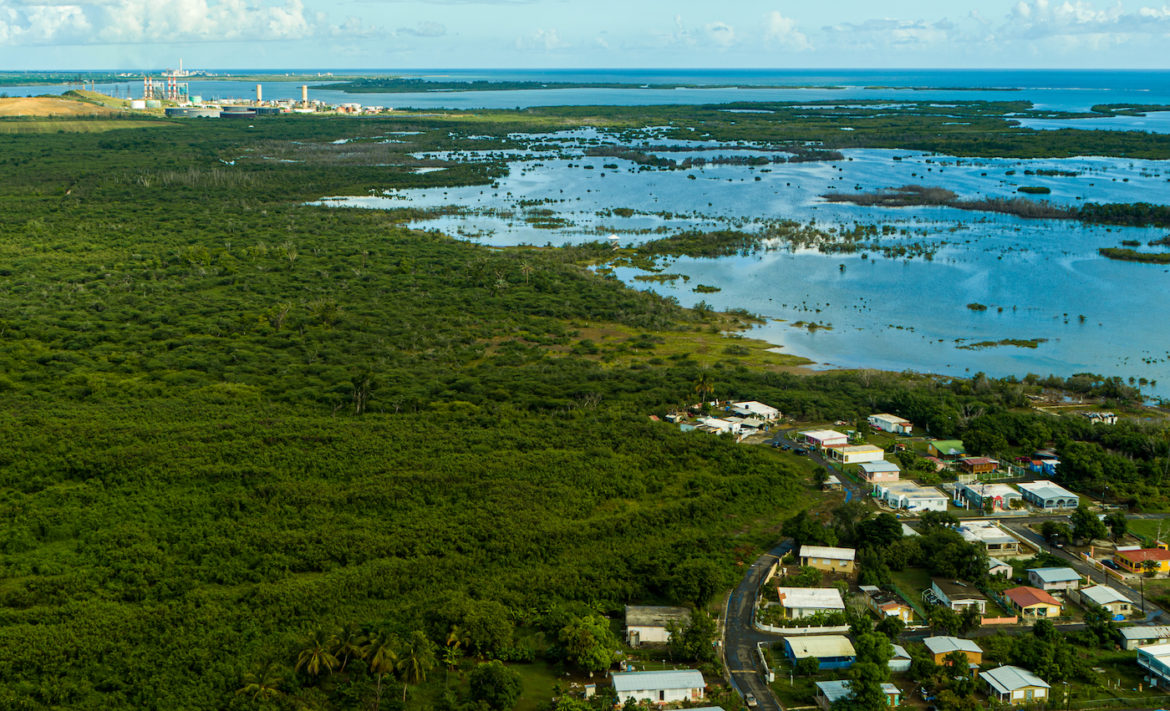
The uncertainty among the residents of San Isidro is evident, according to Ramos. They live in a flood zone, a wetland, and they have heard about plans to build a levee in the area where people now live and who are at risk of being displaced. So, some have doubts about whether to use the federal money they have already received to make improvements to their homes here, she said.
Residents who want to stay face the risk of displacement if they applied for the R3 program. That’s because this alternative does not allow rebuilding homes that suffered damages greater than 51% of their value and that are located in flood areas. In addition, the policy established by former Housing Secretary Fernando Gil-Enseñat prioritizes relocation over mitigation, which would allow communities he said, to be safe from future potential flooding.
The CPI tried for a month to get a reaction from Gov. Wanda Vázquez-Garced about what is the government’s public policy regarding displacement after Gil-Enseñat’s exit from the Housing Department. Some seven emails and six text messages were sent and received in La Fortaleza, as confirmed by press officers. The CPI also attempted several times to get information through the Secretary of Public Affairs, Osvaldo Soto. There was no answer.
The question to both was clear : What is your administration´s public policy about displacements of the communities? Will Gil-Enseñat’s preference in prioritizing relocation be upheld?
The Governor finally sent written statements that did not answer the question. She limited herself to a quote from the U.S. Department of Housing Action Plan.
“The Action Plan that was approved by the U.S. Department of Housing and Urban Development (HUD) and that contains the Repair, Reconstruction or Relocation (R3) program, states that the program’s priority is the repair or reconstruction of the homes where they are,” she said.
Additional earthquake damage
People who experienced damages due to the 6.4-magnitude earthquake that rattled Puerto Rico last Jan. 7 could receive assistance from the R3 program “if the applicant’s previous needs had not been met at the time of the earthquake, and it exacerbated the damage or loss caused by Hurricanes Irma and María,” said Dennis González, who served as interim secretary following Gil-Enseñat’s firing and who is deputy secretary of the CDBG-DR Program.
However, the agency will have to wait to hear from HUD to learn how far Puerto Rico will be allowed to go to cover earthquake damage, since R3 program funds come from the CDBG-DR grant for Hurricanes Irma and María.
Communities in the face of uncertainty
In the Las Mareas sector in Salinas, in the South coast, which is almost completely floodable according to the new FEMA maps, the community organizers worry that their people will not receive R3 program funds for their homes.
The same situation could be happening islandwide, since the new FEMA maps classify almost all of Puerto Rico as a flood zone. According to the Planning Board, there are 252,813 structures located in flood zones in Puerto Rico. However, the Planning Board does not know how many of these structures are homes.
Mario Núñez, executive director of the Enlace Project Corporation that works with El Caño communities, said the restriction of prohibiting development in flood zones is set by the local government. He said states and territories such as Texas, Florida and the U.S. Virgin Islands did not adopt the same restriction in their hurricane action plans.
“The Action Plan is a mechanism for the displacement of communities, including the R3 program, which does not provide options, in the case of the Caño Martín Peña l communities, because according to the new maps, they were extended and virtually the entire district within these maps is identified as a flood zone,” said Núñez.
Individual vs. community assistance
Verónica González, an attorney of the organization Ayuda Legal , stressed that the R3 program offers assistance to the individual, not to the community. She believes it’s very unlikely that it’s just one house in a community that’s in a flood zone. She also stressed that communities should be part of the process as a group, because they are the ones that know when they are in danger and what is best for them.
“If we don’t listen to people’s needs and wants, what the recovery will do is multiply the same inequities and inefficiencies we had before the hurricane,” she said.
The president of Habitat International Coalition, Lorena Zárate, stressed the importance of citizen participation in the relocation process because the issue goes beyond a home, and implies access to education, jobs and health services for the community.
“We have to see everything within the territory as a whole, and the communities know how to do that. That’s knowledge that neither the academy, public officials, nor the private sector has. That more comprehensive knowledge of how to do all that at the same time, is in the communities and that’s something that’s not seen and not valued,” said Zárate during the International Conference on Recovery, Ownership and Displacements held by the Caño Martín Peña Land Trust, jointly with the G-8 and the Caño Martín Peña ENLACE Project Corporation.
A report by the Advisory Commission for a Resilient Puerto Rico establishes that the first measure to be taken in a community that’s in danger of another natural devastation is structural mitigation, which implies strengthening housing or communities for future events. Voluntary relocation should be the last alternative, according to the Commission, composed of Malú Blázquez, Richard Carrión, Carmen Milagros Concepción, Miguel Soto-Class, Ana María Blanco and Federico Stubbe.
“This measure [relocation] must include a comprehensive education process that explains situations of high risk of exposure and a transparent participatory process in which the viability of other measures is discussed,” the document states.
“Did they build the houses as a community or individually?” Gil-Enseñat responded when he was approached about the feeling of experts who believe that relocations should be worked at the community level and not individually.
“The sense of community you can have in communities that do not have a geographical delimitation, such as the LGBTT community, or religious communities that identify themselves as a community, and the truth is that I address the housing needs of people,” added the former Housing Secretary.
Mitigation would prevent displacement
According to several experts interviewed by the CPI, displacements could be minimized with mitigation alternatives such as elevating a house that is in a flood zone.
Engineer Felix Rivera explained it is possible to elevate a house three feet off the ground using a hydraulic system without having to demolish it. This way, the structure would be up from the flood level. In the case of a first-time construction in a flood zone, building a foundation that’s three feet above the flood level is also recommended.
Before the Governor asked him to resign, Gil-Enseñat said that the agency does contemplate mitigation, when it is cost-effective. However, there is no set date for the arrival of the money earmarked for these purposes. And the guidelines required to access the $8.2 billion allocation in mitigation funds under the CDBG-DR program were just recently published on Jan. 15. This is the first in a six-step process for the island to finally receive the money.
“In the event that the mitigation money arrives, and the R3 [Repair, Reconstruction and Relocation Program] money is flowing, and the house qualifies, and the area can be mitigated, or that money can be used for that purpose, then it is mitigated. But, right now, I don’t have the option to do it …”, said Gil-Enseñat then.
Contrary to these statements, in November Gil Enseñat wrote to Democratic Congress members Raúl Grijalva, Alexandria Ocasio-Cortez, Robert Menéndez and Nydia Velázquez that he preferred relocating instead of rebuilding.
The letter came after the Congressional delegation in October asked Housing to present in writing how it would be preventing the displacement of people living in flood zones and how it would be handling the cases of those who do not want relocation.
Gil-Enseñat denied that Housing lacks a public policy to minimize displacement. He mentioned the Guide on Uniform Relocation Assistance and Residential relocation and anti-displacement Plan.
That Guide , according to Gil-Enseñat, provides the steps that the agency will follow along with the municipalities to minimize displacement. Among these are prioritizing rehabilitation, repair or reconstruction of homes when possible, in accordance with the R3 program. But NGOs that are watchful of the displacements claim that this program does not minimize, but rather increases, the possibility of displacement.
Ayuda Legal said the former Housing Secretary’s position before the congressional staff “represents an unjustifiable setback” in the management of the R3 program.
They told the Governor in a letter that it is “unacceptable” that the Department of Housing “establishes that relocation — as the only option — is a mitigation measure.”
The organization said that the R3 is the only CDBG-DR program among U.S. jurisdictions that “totally prohibits substantial repair and construction in flood areas, without considering mitigation alternatives.”
Last summer, Ayuda Legal filed a complaint with HUD noting that the R3 guidelines do not contemplate mitigation and risk adaptation measures rather than displacement. The complaint has not produced any results, although HUD is looking into it, González said.
The importance of mitigating
Mitigation could eliminate communities from flood maps and make them safe areas, according to González, from Ayuda Legal.
“Mitigation can change the flood condition in formal legal and physical terms. When you take these measures and they are done correctly, it’s supposed to lower the level of flooding, and in that case an administrative process can start, to ask FEMA and the Planning Board to amend the flood maps,” said González.
The attorney made it clear that there are exceptions, since there are communities where it is impossible to mitigate or take adaptive measures because the danger is extreme. In these cases, it would be necessary to relocate, she warned.
However, she urged that Housing evaluate each case individually and look for ways for people to stay in their communities and not establish “in advance” that if the person lives in a flood zone they don’t qualify for federal aid, because with this, they are encouraging displacement.
The R3 program states that homes that suffered damage greater than 51% of their value will not be eligible for reconstruction. If this is the case, then the person could relocate somewhere else and receive up to a maximum of $185,000.
“Federal regulations allow mitigation. It is a decision by Housing and the government of Puerto Rico [not to mitigate]. In any other circumstance, what would apply is the federal rule that requires taking mitigation measures if you’re living in a flood zone,” Gonzalez said.
Planner Ivis García told the CPI that none of the documents on the R3 program that she has reviewed, include measures to prevent the displacement of the communities. As an alternative to displacement, which in her opinion should be the last option, she suggested elevating a house that is in a flood zone or demolishing a damaged structure and rebuilding it, depending on whether the area is safe.
Roberto Thomas, coordinator of the Bahia de Jobos Ecodevelopment Initiative (IDEBAJO, in Spanish), said the process is not being carried out in a logical order, since the municipalities are still discussing mitigation plans, while programs such as R3, are already underway. He said the first step should have been to look into the possibility of mitigation and if there was no other alternative, then talk to people about relocating.
What will communities do?
According to Jenniffer Santos, an expert sociologist in disasters, communities that do not qualify for the Housing program’s assistance will choose to stay in their homes, unless they perceive that their life is at risk.
“They will figure it out among themselves, as they have always done, because this is not a population that the State has served. It is a population that has been marginalized,” said Santos, who works as an assistant researcher at the Center for Social Research of the School of Social Sciences of the University of Puerto Rico in Río Piedras.
The sociologist insisted that the relocation processes need to take into consideration the residents’ emotional standpoint so that displacement does not become a traumatic and painful event.
“There is a totally active concern right now [about possible relocations]. At the same time, it’s an issue that becomes an active stress factor that doesn’t allow these residents to focus on other needs of their community,” she said.
Meanwhile, Érika Fontánez-Torres, Law School professor at the University of Puerto Rico, said Puerto Rico’s housing crisis includes people who, while they have a property title, are subject to eviction for living in vulnerable places.
“Property is an individual right, but we’re dealing with collective problems. So, the personal point of view isn’t enough. An approach is required that acknowledges the social purpose of property and the right to the city around it and not just the property title or the individual right to property,” she said during her presentation at the International Conference on Recovery, Ownership and Displacement.
Housing says “relocations are voluntary”
According to Gil-Enseñat, there is no list of communities to be displaced and that relocations will be voluntary.
However, González believes this process is not at all voluntary. “It is choosing between leaving or staying in a home without a roof. For me that’s a fairly clear action, and saying this is a voluntary process is absurd, really, because it’s not,” she said.
“If you create the conditions so they don’t see other alternatives then you’re forcefully pushing them out,” Roberto Thomas said.
According to Gil-Enseñat the plans and projects submitted by the municipalities for the use of CDBG-DR funds — and that would involve mass displacements according to Ayuda Legal — won’t happen. However, he acknowledged that the information in those presentations was used to prepare the CDBG-DR Fund Action Plan.
“We listened, we laid out the projects of all of the municipalities and we created the programs (to use the CDBG-DR),” said Gil-Enseñat then.