



Amid the drumbeats and flags of this year’s Puerto Rican Day Parade in New York, Zohran Kwame Mamdani rode down Fifth Avenue on a float pulled by a black Jeep Cherokee. At its front, a banner proclaimed in bold letters: “PUERTO RICO IS NOT FOR SALE!” To one side stood Puerto Rican Congresswoman Alexandria Ocasio-Cortez, to the other, a life-sized replica of a coquí, the island’s iconic tiny frog.
The float’s scene was completed with palm trees, an artificial mountain with a waterfall, and speakers blasting a generic Latin beat as someone shouted, “Boricua, hands in the air!” Mamdani, the Democratic candidate for New York City mayor, smiled enthusiastically from the float, waving to both sides of the avenue as he swung a small Puerto Rican flag.
Andrew M. Cuomo, Mamdani’s main rival in the November 4 election, walked the parade route. He also waved a Puerto Rican flag and shook hands with supporters, some wearing traditional pavas jíbaras (straw hats) and shouting his name while holding signs in Spanish that read, “Andrew Cuomo walks with Puerto Rico.”
“What an incredible day of celebration. Thanks for the spirited support!” Cuomo wrote on Instagram, alongside a campaign video featuring footage from the parade.

Photo by Joel Cintrón Arbasetti | Centro de Periodismo Investigativo
Despite a significant decline in recent decades, the Puerto Rican vote in New York remains crucial in a particularly tight race that began on Saturday, October 25, with the start of early voting.
“The Puerto Rican voting bloc continues to be important, especially in an election as close and competitive as this one. Given the long-standing presence of the Puerto Rican population in New York, its history and its institutional roots, it’s easier to mobilize than other groups, such as Asians. The proportion of Hispanic voters who are Puerto Rican remains higher,” said Carlos Vargas Ramos, political scientist and director of public policy at the Center for Puerto Rican Studies at Hunter College.
According to a study by the Center for Latin American, Caribbean, and Latino Studies at the City University of New York (CUNY), the Puerto Rican population in New York City peaked in 1970 at nearly 900,000 people. In contrast, between 2017 and 2022, that number fell by 20%, from 715,000 to 574,000. The report suggests that this decline may be linked to the exodus that occurred during the COVID-19 pandemic, when many residents moved to northern counties, Long Island, and New Jersey.
The impact of this shrinking Puerto Rican population on voter participation in New York remains speculative, Vargas Ramos said. “It could be that although there are fewer of them, a higher proportion are voting now than before,” he said.
While Puerto Rican votes cannot be entirely separated from the broader Latino vote — since voters are not required to identify their national origin — examining boroughs and neighborhoods with high concentrations of Puerto Ricans allows for reasonable estimates.
In the Bronx, home to the city’s largest Puerto Rican population, Cuomo won the primary with 52% of the vote, while Mamdani garnered 34%. But in East Harlem and other Puerto Rican-heavy areas farther south, such as Queens, Brooklyn, and Lower Manhattan, Mamdani came out ahead.
A closer look shows that in Castle Hill, a Bronx neighborhood with a large Puerto Rican population, Cuomo received 1,491 votes to Mamdani’s 1,196. In Hunts Point, another Bronx neighborhood with a high concentration of Puerto Ricans, Cuomo won 356 votes to Mamdani’s 206.
In East Harlem, also known as El Barrio, Mamdani led with 6,782 votes, compared with Cuomo’s 5,592. In Lower Manhattan’s Lower East Side, known among Puerto Ricans as Loisaida, Mamdani earned 5,594 votes while Cuomo received 3,454. In Brooklyn, Mamdani dominated in historically Puerto Rican neighborhoods such as Williamsburg, Bushwick, and Sunset Park. In Queens, he won majorities in Ridgewood and Ozone Park, both areas with significant Puerto Rican populations.
The Centro de Periodismo Investigativo (CPI) analyzed the data using a map produced by The New York Times, based on information from the New York City Board of Elections, the U.S. Census Bureau, the Department of City Planning, and The Associated Press.
As of October 1, Mamdani led among Latino voters with 48%, according to a Hispanic Federation poll. Cuomo had 24% and Curtis Sliwa, the Republican candidate, 14%. The survey, conducted between September 25 and October 1, sampled 600 Latino voters, of whom 37% were of Puerto Rican descent and 25% Dominican.
The lack of specific data on Puerto Rican voters remains a barrier to more precise analysis, Vargas Ramos said. For that reason, he explained, researchers have had to rely on a methodology that examines neighborhoods with the largest Puerto Rican populations. However, he warned that most voters in a given area do not necessarily belong to the ethnic group most prevalent there.
“Let’s suppose that in Soundview, a predominantly Puerto Rican neighborhood in the Bronx, Puerto Rican voters make up 70% of the electorate. That doesn’t mean that everyone who voted is Puerto Rican. It’s possible that other groups turned out at higher rates, but the votes are attributed to Puerto Ricans because they’re the largest group living in that area. In statistics, that’s called the ecological fallacy… It’s a valid approach, but it carries that risk,” explained Vargas Ramos, author of several studies on Puerto Rican voting patterns in New York.
Mamdani received endorsements from Democratic Congresswomen Alexandria Ocasio-Cortez and Nydia M. Velázquez, both of Puerto Rican descent. Andrew M. Cuomo secured the backing of Luis Dávila Pernas, president of the Democratic Party in Puerto Rico and former executive director of the Puerto Rico Federal Affairs Administration (PRFAA), as well as Rubén Díaz Jr., a Democrat of Puerto Rican descent and former Bronx Borough President, whose borough has the city’s largest concentration of Puerto Ricans. Mamdani also received support from El Nuevo Caribe Democratic Club, while singer Marc Anthony endorsed Cuomo.
“The first time Mamdani was able to pull ahead — or even come close — in the polls was after the Puerto Rican Day Parade, which we participated in,” said Jonathan Soto, a Bronx resident and former New York State Assembly candidate endorsed by Ocasio-Cortez, in an interview with the CPI.
A poll and analysis by the Hispanic Federation indicate that Latino New Yorkers appear poised to play a decisive role in Mamdani’s potential victory. The survey showed that nearly half of Latino respondents planned to vote for him, while Cuomo trailed in a “distant second place” and Curtis Sliwa in a far third. Thirteen percent of registered Latino voters remained undecided, according to the analysis.
“I wouldn’t be here without the support of the Latino New Yorkers, because it was the majority of their support that helped make me the democratic nominee,” Mamdani said during the first mayoral debate on October 16. His campaign website is available in Spanish, as well as Arabic, French, Bengali, Haitian Creole, Chinese, and Urdu, the language spoken in Pakistan and India.
The New York City mayoral race is not the only election being held this year. Voters will also choose members of the City Council, the Comptroller, and the Public Advocate, a nonvoting Council member who investigates citizen complaints about city services. Depending on the district and borough, ballots may also include candidates for district attorney, judicial delegates, county committee members, and district leaders. In addition, this year’s elections feature a referendum with six ballot proposals related to voting procedures, infrastructure, and housing.
“These elections don’t coincide with any of the state or federal contests that tend to draw larger voter turnout. Nor do they generate the same level of enthusiasm as the U.S. presidential elections,” said Vargas Ramos.
“The structure of New York City elections is very different from how elections are held in Puerto Rico, where voters cast ballots for all positions at once every four years and there are no midterm elections as in the United States. This is one of the factors that helps explain why voter participation among Puerto Ricans in the U.S. is lower than it tends to be in Puerto Rico,” he added.
In fact, Proposal 6 on the upcoming ballot calls for moving local elections, such as those for mayor and City Council, to coincide with presidential election day to boost voter participation.
The New York City Mayoral Race: A Generational Battle

Photo by Joel Cintrón Arbasetti | Centro de Periodismo Investigativo
In several New York neighborhoods, Cuomo outperformed Mamdani in the primaries — with one key exception: young voters. “Mamdani has substantial support among youth, and a large share of young people in this city are Hispanic or Asian. The Asian population, particularly those from South Asia — India, Pakistan, and Bangladesh — is highly mobilized because this candidate’s roots are in the subcontinent, and that energizes those communities,” explained Vargas Ramos.
In the Hispanic Federation poll, 53% of registered Latino voters were under 50 years old.
Roland Cortez, a former nurse and aircraft mechanic born in Utuado, Puerto Rico, and raised in New York, ranked Cuomo as his first choice in the primaries and Mamdani as his second.
“But in the November election, I’m voting for Mamdani,” Cortez told the CPI. He declined to reveal his age but said his son was the one who convinced him to change his mind and put Mamdani at the top of his list. The issues that matter most to him, Cortez said while sipping coffee at La Marqueta — a marketplace in El Barrio that specializes in Latino products — are affordable housing, taxes, and food prices.
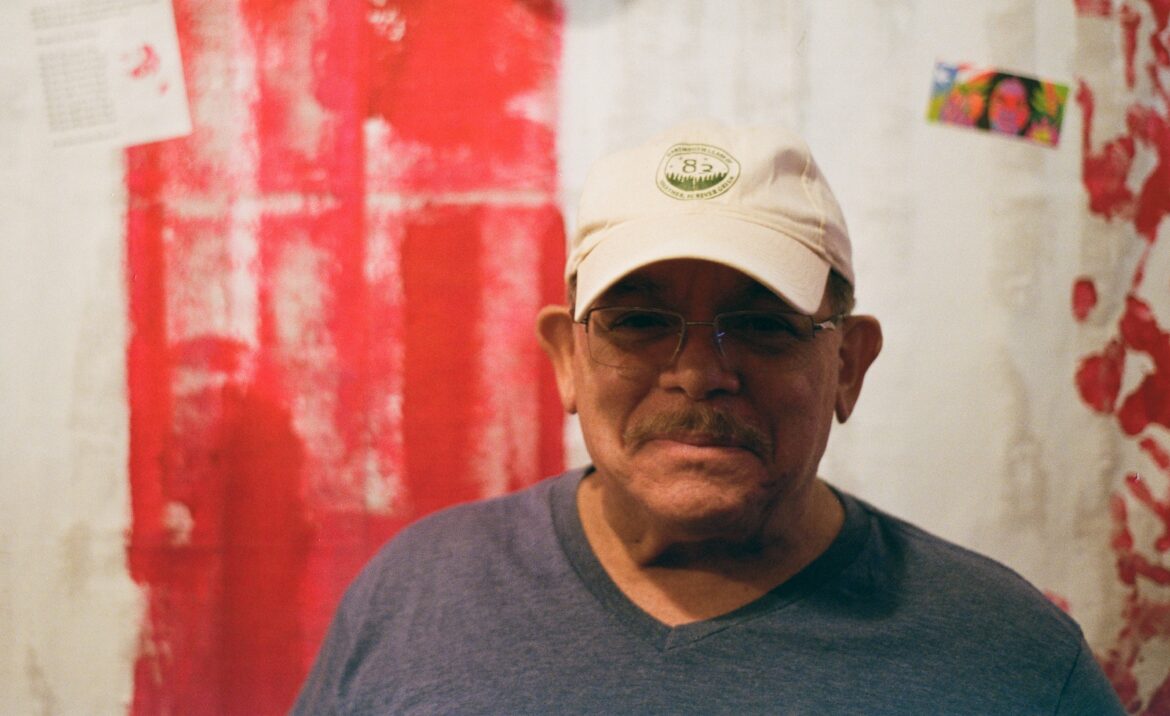
Photo by Joel Cintrón Arbasetti | Centro de Periodismo Investigativo
Mamdani’s age and limited political experience have raised concerns among some New York voters. He began his political career in January 2021, when he joined the New York State Assembly representing District 36, which includes three neighborhoods in Queens. In a Quinnipiac University poll published on October 9, potential voters were asked whether they believed the candidates had the right experience to serve as mayor. Seventy-three percent said Andrew M. Cuomo did, while only 39% said the same of Zohran Mamdani.
During the debate, Cuomo attacked Mamdani for his lack of experience. “This is no job for on-the-job training,” Cuomo said on October 16. “He never has had a job. On his resume, it said he interned for his mother. This is not a job for a first-timer,” he added.
“What I don’t have in experience, I make up for in integrity, and what you don’t have in integrity, you could never make up for in experience,” Mamdani responded.
Zohran Kwame Mamdani, 34, was born in Uganda to an Indian Muslim family. He won the Democratic primary on June 24, defeating Cuomo with 56.4% of the vote to Cuomo’s 43.6%. The current mayor, Eric Adams, did not participate in the Democratic primary, saying he would instead run as an independent in November. In September, Adams dropped out of the race for reelection amid a series of corruption scandals, including federal allegations of bribery and misuse of campaign funds.
Mamdani’s campaign centers on three main issues: the cost of living, access to housing, and the creation of a free public transportation system. A member of the Democratic Socialists of America, Mamdani represents a political vision that stands in sharp contrast to President Donald Trump’s conservative agenda, which has threatened to cut federal funding to the city if the leftist candidate wins.

Screenshot from a video posted on Mamdani’s Instagram account
Cuomo, 67, is a familiar face, having served as New York’s governor from 2011 to 2021. He carries the weight of his father’s legacy, Mario Cuomo, who governed the state from 1983 to 1994 with considerable popularity. Within the Puerto Rican community, Andrew Cuomo is remembered for providing aid and traveling to the island after Hurricane María and the 2020 earthquakes.
His mayoral campaign focuses on public safety, with proposals to increase the size of the New York Police Department and strengthen its presence in the public transit system. On housing, he has pledged to build more affordable units across all income levels.
Cuomo resigned as governor of New York in 2021 after the U.S. Department of Justice concluded that during his time in office, he sexually harassed at least 13 women who worked for the state. Some of the cases have been settled through monetary agreements, while others remain open. After losing to Mamdani in the Democratic primary, Cuomo entered the mayoral race as an independent candidate.
From Puerto Rican Voter Mobilization to Disillusionment with New York Politics

Photo by Ana Teresa Colón García | Centro de Periodismo Investigativo
In the 1970s, members of the New Jíbaro Democratic Club organized a series of concerts in the parks of Manhattan’s Lower East Side, aiming to use the crowds to register Puerto Ricans to vote. That was the first organized effort to mobilize Puerto Rican voters, recalled José “Pepe” Flores, 74, a native of Vega Baja, Puerto Rico, who has lived in the city for more than half a century. The concerts, mostly salsa performances, featured artists such as Tito Puente and Mon Rivera. While the music played, tables were set up around the audience to register new voters.
Those events helped cement the importance of the Puerto Rican vote in New York and prompted mayoral candidates to start courting the Puerto Rican community, said Flores, an activist who moved to Loisaida at age 19.
“That’s when people started voting and electing assembly members to represent us, though they didn’t always have our best interests at heart,” Flores said, laughing. “But at least it was someone with a Spanish last name,” he added.
A collector of Afro-Caribbean, Brazilian, and jazz music, and co-founder of the cultural center La Sala de Pepe, Flores acknowledges that while the Puerto Rican vote became an important factor in New York City politics, it hasn’t translated into meaningful change for the community.
As a Democratic voter, Flores believes “all those Democrats who got elected here have been a failure. They haven’t addressed the needs of the community, not just this one, but the broader New York community as well,” he said from his living room in Loisaida. Since 1974, all the city’s mayors, except for Rudy Giuliani and Michael Bloomberg, have been Democrats.
A Walk Through El Barrio

Photo by Joel Cintrón Arbasetti | Centro de Periodismo Investigativo
In the streets of El Barrio, it’s impossible not to come across a Puerto Rican flag at any moment, whether hanging from a window, displayed on a car windshield, or fluttering from a utility pole. On a Saturday in October, just after noon, the streets are teeming with people. The faded colors of the buildings, the types of businesses, and the atmosphere as a whole evoke an amplified, overcrowded version of the Paseo de Diego in Río Piedras (a bustling pedestrian shopping strip in San Juan known for its shops and street vendors), complete with a Banco Popular branch, the island’s largest and most recognizable bank.
Wilfredo Santiago, 75, sat on a bench in front of a laundromat at the corner of Third Avenue and 118th Street. With conviction, he said politicians “don’t fix anything.” Originally from Corozal, Puerto Rico, he has lived in New York for 40 years.
“Why should I vote? I’ve been living in a shelter for three years and they haven’t found me a studio apartment. Housing is hard, maybe good for some people, but not for us,” said Santiago, who has worked in factories, restaurants, and building maintenance across the city. He mentioned that his family moved from New York to Pennsylvania. “I’m all alone now. I’m not leaving, I’ve lived here my whole life. I’ve got my doctors and government offices here; I’ve got everything. What’s the point of leaving if I can walk everywhere I need to go?”
He said the shelter where he lives is comfortable but small, with no kitchen. Even though his family is no longer in the city, being able to walk everywhere makes him feel connected to his community, he added.
Santiago said he believes Andrew Cuomo was a good governor, and that his father, Mario, was as well. “They were both good governors,” he said. By the end of the conversation, he added that if he were to vote in the upcoming mayoral election, he would vote for Cuomo.
“When Hurricane María hit, he went to Puerto Rico twice, and he knows how to govern,” Santiago said of Cuomo. “Mamdani, nobody knew him around here — you’ve got to vote for someone people know.”
A little farther down, at the corner of Lexington Avenue and 117th Street, salsa music poured out from a small battery-powered radio in front of a community garden adorned with Puerto Rican flags. A group of people sat on the curb, nodding along to the rhythm.
One of the people sitting there, a 63-year-old who identified himself only as Canales, said he plans to vote for Andrew Cuomo because he remembers the former governor visiting Puerto Rico after Hurricane María and the earthquakes. He added that his biggest concern is public safety.
Mamdani and Cuomo differ sharply in their visions for ensuring safety in the city. Mamdani has proposed a public health– and community-based approach, which includes creating crisis response units for mental health emergencies. Cuomo, by contrast, advocates a more traditional “law and order” strategy focused on increasing police presence by 15%.

Photo by Joel Cintrón Arbasetti | Centro de Periodismo Investigativo
Ivonne Velasquez, a Puerto Rican born in New Jersey who has lived in New York for 18 years, voted for Mamdani in the primaries and says she will vote for him again in the general election. As a real estate agent, she is deeply concerned about housing affordability.
“I’m in the industry, and it’s always so hard when people come to me asking for help, but with these prices, it’s just not possible. We need more housing, more homes, more apartments that regular New Yorkers can afford,” she said.
Pepe Flores, the activist and music collector, though frustrated with past Democratic mayors, now holds on to a measure of optimism.
“I have hope in Mamdani,” he said, “because of the young people who’ve joined his campaign.”
Sitting on his couch in Loisaida, his tone light and playful, he added, “Let’s see what happens… knock on wood,” and laughed.
This translation was generated with the assistance of AI and reviewed by our editorial team to ensure accuracy and clarity.
