

FEMA
Latest
CPI Sues COR3 Over Withheld Hurricane Recovery Fund Reports
By Centro de Periodismo Investigativo | December 10, 2025
Despite the fact that the documents exist and were submitted to a government entity, the Central Office of Recovery, Reconstruction and Resilience (COR3) did not deliver the information to the Centro de Periodismo Investigativo.
Read more

Eight Years After Hurricane María, Puerto Rico Has Rebuilt Just One Public School
By Tatiana Díaz Ramos | September 22, 2025
The island’s Department of Education is losing students, in part, due to a cycle of constant school relocations, deteriorating facilities, and shortened schedules from noon to 5 p.m., which are stopgap measures that fail to address the core problem: an unrepaired infrastructure, despite the availability of funds.
Read more

Government Dysfunction and LUMA’s Infighting Stall Puerto Rico’s Power Grid Recovery
By Eliván Martínez Mercado , Vanessa Colón Almenas | September 20, 2025
The outlook is grim. The U.S. Department of Homeland Security has announced that its secretary will now personally review any grant or contract award exceeding $100,000 before the funds can be committed, the agency told the Centro de Periodismo Investigativo.
Read more

[Fact Check] Can LUMA and the Government Enter Private Property to Cut Trees Without Homeowner Consent?
By Luis Alberto González | May 29, 2025
Verdict: True, but...
Read more

Puerto Rico Loses FEMA Funds for Climate Adaptation
By Vanessa Colón Almenas | April 8, 2025
After a $1 billion cut to one of the main federally funded mitigation programs — designed to help communities tackle climate change — Puerto Rico is losing significant grants. For the past four days, Governor Jenniffer González's administration has remained silent on the matter.
Read more

Puerto Rico’s Coastal Roads Ill-Prepared for Flooding
By Luis Joel Méndez González , Gabriela Carrasquillo | Centro de Periodismo Investigativo | March 11, 2025
In the absence of long-term mitigation and adaptation projects from the government, many roads along Puerto Rico's coastal strip could be vulnerable to rising sea levels and increased flooding.
Read more

Uncertainty over Federal Funding Leaves Puerto Rico's Flood-Prone Power Substations in Jeopardy
By Vanessa Colón Almenas | September 27, 2024
COR3, the agency in charge of recovery in Puerto Rico, holds FEMA responsible for excluding that multi-million-dollar expense because of the methodology it used to estimate the damage to the electrical system after Hurricanes Irma and María.
Read more

[FACT CHECK] LUMA: “This Week We Launched an Initiative” to Remove Vegetation to Deal with Blackouts
By Vanessa Colón Almenas | July 9, 2024
Verdict: Misleading
Read more

Those Living on Unnamed Streets in Puerto Rico Are Invisible
By Laura M. Quintero | Todas y Centro de Periodismo Investigativo | January 24, 2024
For thousands of people without a physical address, FEMA post-disaster aid was delayed or denied. In Loíza, impoverished women and Black people have been the most affected by nor having that residential identity.
Read more
¡Haz tu donación, por más CPI!
Necesitamos tu apoyo para seguir haciendo y ampliando nuestro trabajo.

FEMA Paid $17 Million to US Nonprofits, Didn't Verify if They Met Their Obligations After Hurricane Maria in Puerto Rico
By Laura N. Pérez Sánchez | October 5, 2022
An audit by the US Department of Homeland Security’s Office of the Inspector General found irregularities in the payment of $17.1 million that the Federal Emergency Management Agency disbursed to nonprofit organizations for post-disaster work in Puerto Rico.
Read more

No Solutions to Prevent Blockages in Irrigation Channels During Severe Floods in Puerto Rico
By Víctor Rodríguez Velázquez | September 29, 2022
Communities around the irrigation channels, whose conditions worsened due to the flooding caused by Hurricane Fiona, will continue to be at risk because there are no immediate solutions to prevent obstructions during extraordinary rainfall events, experts and the government of Puerto Rico told the Center for Investigative Journalism (CPI, in Spanish). Although the Federal Emergency […]
Read more

Hurricane Shelters Without Water and Electricity Don't Comply With the Law
Hurricane Fiona’s first gusts were barely blowing when dozens of mayors had to improvise solutions. When they arrived at the locations that the government of Puerto Rico certified as shelters, they found they had no water tanks or power generators. At that time, a copy of Act 88 sat on a desk.
Read more
[FACT CHECK] Secretary of Health Carlos Mellado: “You must remember that those hospitals are private.”
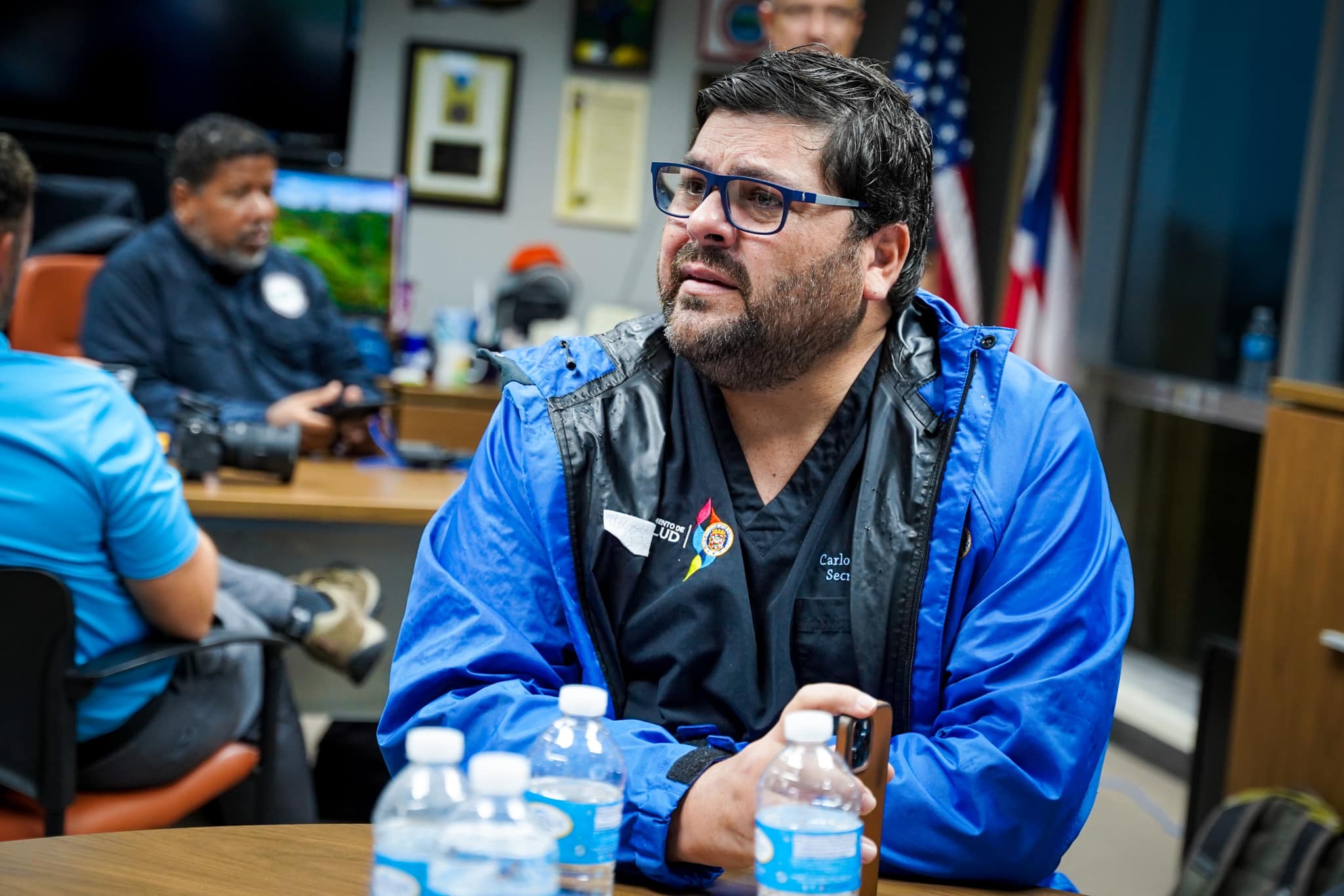
The DS is responsible for licensing, inspecting and supervising all hospitals, ensuring that their physical plant meets the safety standards required by Act 101 on Health Facilities and the Health Secretary’s Regulations for the Construction, Operation, Maintenance and Licensing of Hospitals in Puerto Rico.
Read more

US Commission on Civil Rights Confirms FEMA Discriminated Against Puerto Rico After María
By Damaris Suárez | September 22, 2022
The inequity in the federal response to both disasters becomes more evident if one compares that nine days after Harvey hit Texas, FEMA approved $141.8 million in individual assistance for victims, while nine days after María, that federal agency barely approved $6.2 million for survivors in Puerto Rico.
Read more

Formalizing Community Aqueducts is a Discouraging Process in Puerto Rico
By Rafael R. Díaz Torres | September 8, 2022
The procedure for community aqueducts to legalize their franchises and maintain their operation is so complicated, bureaucratic, and devoid of technical support that it discourages communities from formalizing the systems that carries water to their homes because of the Puerto Rico Aqueduct and Sewer Authority’s inability to provide the service.
Read more

Community Aqueducts Struggle to Recover After Hurricane María
By Rafael R. Díaz Torres | July 21, 2022
Of the 242 community aqueduct systems legally registered in Puerto Rico as franchises, 31% have not requested recovery funds for the damages caused to infrastructure by Hurricanes Irma and María in September 2017, according to data from the Government’s Central Office of Recovery, Reconstruction and Resiliency (COR3). Although the reasons are different for each community […]
Read more