

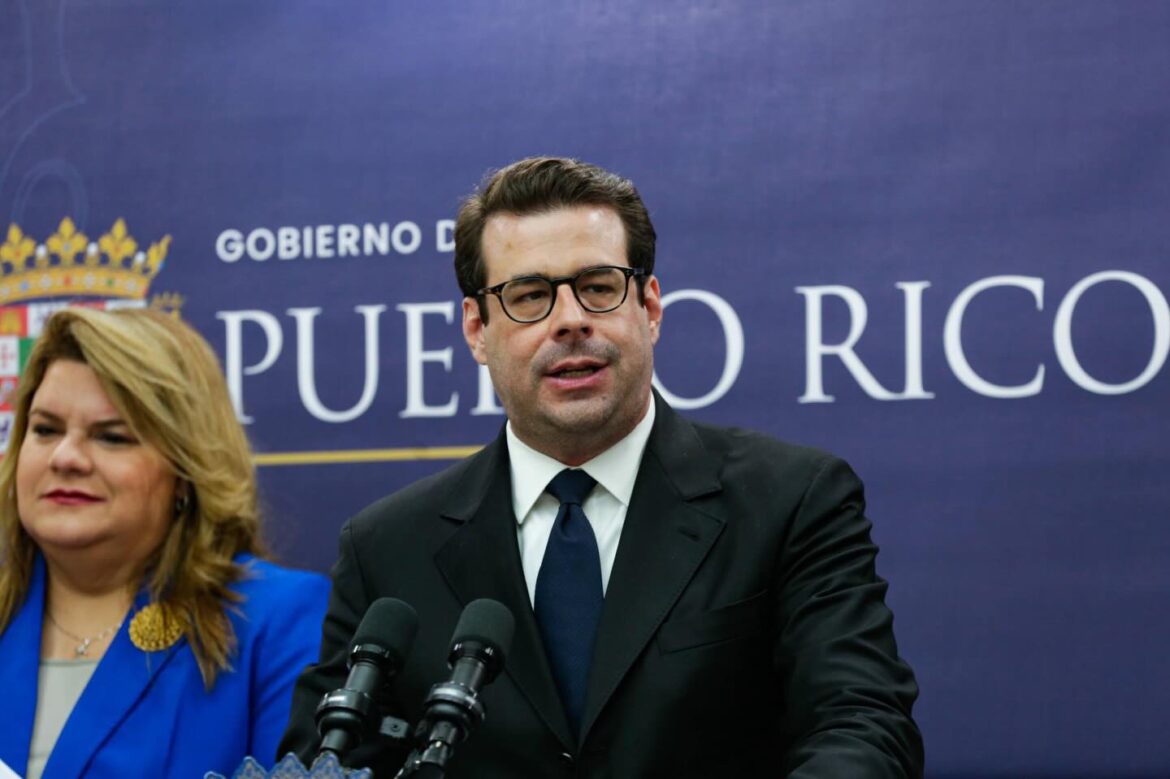
In April 2025, Francisco Domenech, Puerto Rico’s chief of staff, announced the signing of an administrative order that, he said, would bring oversight and transparency to lobbyists in government. “It is the first time rules have been issued,” said Domenech, who himself worked as a lobbyist for nearly 15 years.
A year after that announcement, agencies and lobbyists alike are violating the memo and several rules governing lobbying in Puerto Rico, an investigation by the Centro de Periodismo Investigativo (CPI) found.
For example, memorandum 2025-001 requires lobbyists to notify an agency in writing before taking any action on behalf of their clients, such as requesting a meeting or submitting a proposal. Once that notice is received — and before acting on any request — agencies must verify that the lobbyists are properly listed in the Lobbyists Registry that the Department of Justice keeps, the memo adds.
As part of a lawsuit seeking access to public records, the CPI requested from the Office of the Chief of Staff all communications, investigations and inquiries from public entities related to Domenech’s directive.
The office responded that it had no records in its files that would answer the CPI’s request.
In addition, three of the government’s main agencies — the Department of Health, the Department of Education and the Department of Housing — told the court they had received no communications from lobbyists, as required under the guidelines that Domenech announced. The same was true of the Puerto Rico Public-Private Partnerships Authority, whose enabling law allows it to receive proposals from the private sector even when there is no active bidding process or request for proposals.
Before the lawsuit was filed, the Puerto Rico Innovation and Technology Service and the Office of Management and Budget had already told the CPI they had no records related to the memo.
That would mean that, for nearly a year, none of the six public entities received outreach or visits from lobbyists — or that they failed to comply with Domenech’s order, as they stated in their responses. If they do have records related to memorandum 2025-001 in their possession, they would be lying to the court, exposing themselves to possible sanctions and fines.
Upon the CPI’s request, the Department of Health turned over a new protocol it implemented to enforce memorandum 2025-001, along with records of the internal training it provided on the issue. It also produced a form on which it says it will record lobbyists who visit the office to conduct business on behalf of their clients.
The Department of Education produced only a single email instructing employees to include the language required by Domenech’s memo in agency contracts.
In the case of the Department of Housing and the Puerto Rico Public-Private Partnerships Authority, both submitted certifications to the court stating that they had no documents, communications, regulations, or logs related to the implementation of memorandum 2025-001, issued by Domenech from La Fortaleza, the governor’s official residence.
What happened with Domenech’s new memo is another reflection of the path efforts to regulate lobbying in Puerto Rico have taken: stalled bills, nonexistent or halfhearted enforcement, and violations by people engaged in lobbying without being registered with the Department of Justice, the House or the Senate.
A supposed ‘war among lobbyists’
Three sources told the CPI separately that a battle among several lobbying groups has been underway since the administration of Jenniffer González Colón began.
Some of those fights have spilled into public view, including the clash between Genesis Security and GM Group. The two security companies, which for years have held millions of dollars in government contracts, have gone head-to-head more than once in bidding processes for services at the government’s biggest-spending agencies, such as the Departments of Education and Health.
Neither appears registered as a lobbyist with the Department of Justice.
Both Márquez and Campos categorically denied engaging in lobbying before the government.
“I am not, and have never been, a lobbyist at any time. I do not engage, nor have I engaged, in lobbying before the Government of Puerto Rico or its legislative bodies. Consequently, there is no obligation to register for those purposes,” Márquez said in response.
Through his firm, Legislative Assessment, the attorney and husband of the governor’s chief legal adviser, Lylybeth Echeandía, holds contracts totaling $200,000 with the Puerto Rico Public-Private Partnerships Authority, the Automobile Accident Compensation Administration and the Special Communities Perpetual Trust. Since last year, Márquez has also been listed as the authorized representative of Estudio Legal Echeandía y Asociados, an entity with just over $415,000 in active contracts with the Puerto Rico Tourism Company, the Public Buildings Authority and several municipalities.
Campos also denied being a lobbyist. “I am not a lobbyist. I do not lobby projects before the Legislature or the executive branch. I am a licensed attorney, and I provide legal advisory services to companies in the private sector, with particular emphasis on administrative, corporate and human resources law,” Campos said.
Politank again
Last week, ahead of the Committee of the Whole hearing called for this Tuesday, Senate President Thomas Rivera Schatz sent Domenech a 15-page letter containing questions centered largely on his relationship with Politank.
One of the figures mentioned in the document is Michael Ayala, a former federal affairs adviser to the governor and a close friend of Domenech. Since February, he has been a contractor for the Puerto Rico Fiscal Agency and Financial Advisory Authority, which Domenech heads, through his firm Stonepath Solutions, as the CPI reported in December.
At least four sources separately identified Ayala as a lobbyist, even though he is not registered. Two of the sources described him as a lobbyist for IEM, a Department of Housing contractor involved in reconstruction matters. According to Rivera Schatz’s letter, Ayala also allegedly made representations at the Department of Education.
The CPI contacted Ayala for comment but did not receive a response.
Rivera Schatz’s letter says Politank’s clients have seen an increase in the amount of business they do with the Puerto Rico government since the González Colón administration took office in January 2025.
Through his press officer, the CPI asked Domenech whether he has intervened on behalf of Politank or its clients, and what steps he has taken to avoid conflicts in matters involving the lobbying firm he founded in 2010, but it received no response.
In an interview with El Nuevo Día in May 2025, the official denied that he had “handled Politank matters, referred its clients to government agencies or third parties, or recommended that anyone hire its services.”
The chief of staff — who wields broad authority over government contracting processes under Executive Order 2025-008 — has never disclosed what measures, if any, he has taken to avoid conflicts in matters related to Politank.
In October of last year, the CPI revealed that of the 25 companies Politank identifies as clients, nearly half had secured or renewed government contracts in 2025 worth more than $295 million. In addition, former electoral comptroller and current Politank president Manuel Torres Nieves told the CPI that he is the firm’s sole owner and denied the existence of silent partners in the lobbying company, something Senate President Thomas Rivera Schatz has suggested.
“Politank’s shares are divided between me, as the principal shareholder, and the corporation itself,” Torres Nieves said at the time.
It was in this context of allegations involving Politank at the start of the current administration that the chief of staff called a news conference in April 2025 to announce the “unprecedented” rules that would govern lobbying activities under Jenniffer González Colón’s administration.
To verify compliance with the directive, the CPI requested in November that six public entities turn over any communications, documents and records related to the implementation of the memo. It also asked for any inquiries they had made to the Office of the Chief of Staff, as the memo requires.
The CPI also requested from that office all communications, investigations and inquiries from public entities related to Domenech’s directive. The office replied that implementation “does not require subsequent communications” — even though the memo itself says otherwise — and that, as of Feb. 9, it had received no inquiries and had not opened a single investigation under the memo.
There are other lobbying rules, but they are not followed
In July 2019, days before the first pages of the Telegram chat that would cost him the governorship became public, then-Gov. Ricardo Rosselló created a Lobbyists Registry through Executive Order 2019-31 and assigned the Department of Justice to implement it.
The Government Lobbyists Registry requires each lobbyist — whether acting individually or through a firm or law office — to identify, via sworn statement, his or her name and the list of clients represented. The sworn statement must be renewed annually.
The order also created the “Total Transparency Code for agency heads in the executive branch,” which, like Domenech’s order, bars agency heads from meeting with lobbyists who are not properly registered in the registry.
Several industry sources told the CPI that many lobbyists do not comply with the registry’s requirements, and that one of the main obstacles to effective regulation is the gray area between legal services and lobbying. Many attorneys, for example, are not registered because they say they are acting as legal representatives, not lobbyists, and therefore do not believe they are required to register.
The CPI asked the Department of Justice whether that interpretation of the rule is correct, and what steps the agency takes to ensure compliance with the Lobbyists Registry it oversees, but the agency had not responded by the time of publication.
It also did not answer whether it files reports every 90 days on implementation of the registry or whether it has received any notice from agency heads after they were approached by unregistered lobbyists, as required by Executive Order 2019-13.
Meanwhile, in the Legislature, both the Senate and the House of Representatives keep their own lobbyist registries.
In 2005, then-Senate President Kenneth McClintock approved administrative order 05-16, establishing a lobbyist registry in that chamber.
Under that directive, which remains in effect, any person “who engages, in whole or in part, in representing the interests of third parties in legislative processes for compensation” must register as a lobbyist and identify their clients. But the administrative order requires only the publication of the lobbyist’s name, not the names of clients. It also does not specify how often the information must be updated, nor does it establish fines or penalties for noncompliance.
The House of Representatives created its own lobbyist registry in 2021 through an administrative order signed by Carlos “Johnny” Méndez. In addition to requiring the name of the lobbyist and the lobbyist’s clients, the registry also requires disclosure of the matters being lobbied and whether the lobbyist or the client made political contributions to House members during the election cycle.
Despite having broader disclosure requirements than the Senate, the House registry reflects fewer registered lobbyists than its sister chamber. For the 2025-2026 term, the House has 15 registered lobbying firms and individual lobbyists, compared with 20 in the Senate. The Department of Justice has 23. Senate records are available back to 2017, while the Department of Justice and the House include records only from 2025 onward.
Beyond the rules established through executive and administrative orders at both La Fortaleza and the Legislature, a bill to regulate lobbying in Puerto Rico has been introduced at least nine times since 2009, but it has never become law. Méndez introduced five of those nine bills.
The House approved the most recent measure — House Bill 42 — in March 2025 to create the Lobbyists and Entities Engaged in Lobbying Activities and Their Representatives Registry Act.
Since then, however, it has remained before the Senate Government Committee, chaired by Sen. Ángel Toledo. The same thing happened in 2021 with a similar bill: It passed the House and stalled in the Senate under the presidency of José Luis Dalmau. The same was true in 2009 and 2017: It passed the House but was shelved in the Senate under Thomas Rivera Schatz’s presidency. In 2013, Méndez reintroduced the same bill, but it did not even pass the House, then led by Jaime Perelló.
The bill would create a registry in the Department of State, the Senate, the House of Representatives and the Supreme Court, where every person and entity engaged in any lobbying activity would have to appear. The registry, which would have to be public, would include general information about the lobbyist and the lobbyist’s clients, as well as the issues being lobbied.
As for violations, the measure provides penalties, including a ban on lobbying for at least 10 years, a $10,000 fine — or $25,000 for a corporate entity — and three years in prison.
This translation was generated with the assistance of AI and reviewed by our editorial team to ensure accuracy and clarity.
