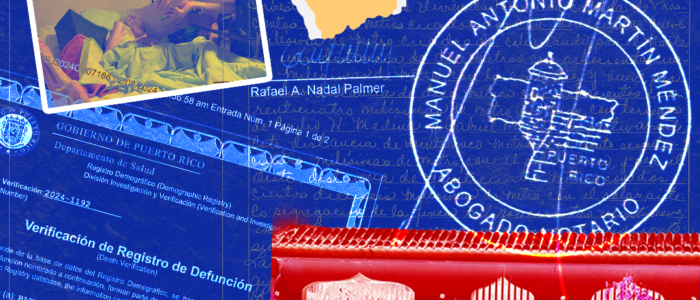



After reviewing thousands of transactions on the Property Registry’s online platform, an investigation by the Centro de Periodismo Investigativo (CPI) and Rayos X uncovered a scheme involving the submission and registration of documents for land supposedly sold by the Puerto Rico government. The documents include certifications and deeds that former government officials say bear their forged signatures, even though they never appeared before the notaries involved.
The land was allegedly sold by government agencies including the Department of Housing, the Puerto Rico Highways and Transportation Authority (ACT, in Spanish), and the Lands Authority (AT, in Spanish).
The scheme appears simple. Someone submits a fake certification or public deed that appears to be at least 10 years old to the Property Registry. For example, a deed dated 2003 is submitted in 2025. Once the property is registered in that person’s name, another individual or a corporation that had already been dissolved at the time of the transaction purchases the lot. The land is then subdivided into parcels that are sold and resold — almost always among the same group of people — until a new buyer emerges. By the time the deeds are submitted, many years later, most of the notaries who supposedly authorized them have died.
As a result, land belonging to the Department of Housing, the ACT and the AT in municipalities such as Isabela, Barceloneta, Guayama and Arecibo appears in the Property Registry under the names of people who did not pay the Puerto Rico government a single cent for it. That is according to the Department of Housing and former agency officials who examined a sample of the transactions investigated.
Screenshot | Rayos X
Julia Torres Hernández, former executive director of the Housing Development and Improvements Administration, described the scheme as “the robbery of the year.” It involved 38 lots irregularly registered in the Property Registry using deeds and certifications accompanied by sworn statements bearing forged signatures. The same group of people involved in these transactions submitted another 79 land purchases during the same period.
A certification is a document that can be used to sell parcels or grant property titles and may be registered in the Property Registry.
“They’ve stolen the land from our people,” Torres Hernández said when she learned what had happened.
The deeds and certifications identify Torres Hernández, former Housing Secretary Jorge Rivera Jiménez and former Public Housing Administration Administrator Carlos Gerardo Laboy Díaz as authorized representatives of the Puerto Rico government responsible for the sales. When the CPI and Rayos X separately showed the documents to the three former officials, they said their signatures or initials had been forged, incorrect Social Security numbers had been included, or duties they had never performed had been attributed to them, among other irregularities.
The investigation found that of 107 suspicious certifications and deeds involving land supposedly sold by the Department of Housing, the ACT and the AT and submitted to the Property Registry between 2021 and 2026, at least 29 are fake. Of those, 21 were officially registered, while eight expired or have not been registered. All 107 certifications and deeds are dated between 2001 and 2008 and were submitted to the Property Registry by a group of people whose names or email addresses repeatedly appear in the records. Some hold executive positions at the same corporation.

The transactions primarily involved Miguel Ángel Álvarez Pérez, who owns automotive service businesses in Cataño, and Waldemar Leonardo Fernández Rodríguez, a property developer convicted of tax evasion.
Félix Manuel Velázquez Sánchez, an attorney, notary and communications professor, provided notarial services and submitted documents to the Property Registry.
In an interview with the CPI and Rayos X, Víctor Sánchez Rojas said he delivered most of the documents Fernández Rodríguez gave him to Property Registry offices. He has known Fernández Rodríguez for more than 15 years and insisted his work was limited to courier services.
When submitting a document to the Property Registry, the person filing it must provide an email address to receive notices of deficiencies detected during the registration process. Sánchez Rojas said he used whatever email address he was instructed to provide. Among them was the address of José Manuel Pérez Fernández, who was a notary at the time. Pérez Fernández was suspended from practicing law and serving as a notary in 2024 for “inexcusable lack of diligence in correcting numerous deficiencies related to his notarial practice.”
Pérez Fernández said he has no idea why his email address appears in the certification filings. He suggested it might be because he was involved at some point in a subsequent sale of one of the properties. He added that he is not related to Fernández Rodríguez.
Certificates and deeds filed with the Land Registry, by municipality
Click on a circle or a town to see the affected areas.

The certifications and deeds were supposedly issued to other individuals, some of whom were already dead or incarcerated at the time. Nearly half are in the names of Miguel Ángel Álvarez Pérez and his mother, Miriam Pérez Colón, whose name also appears as Mirian. Properties were also registered under their company, Puerto Rico Warehouse Inc.
Puerto Rico Warehouse could not legally conduct business during that period because it had been dissolved in 2000, according to the Department of State.
Notaries Carmelo Pestaña Segovia, Roberto Rafols Dávila, José A. Díaz Algarín and Esteban García Malatrasi supposedly signed and authorized the deeds between 2002 and 2008. By the time the deeds were submitted to the Property Registry between 2020 and 2026, the notaries had died. In addition, Díaz Algarín was suspended from practicing law from January 2007 to April 2008, while Pestaña Segovia had been suspended since May 2015.
Puerto Rico’s Courts Administration Office confirmed to the CPI that at least 18 deeds identified as irregular by the investigation do not appear in the corresponding notarial indexes.
The Justice Department, which oversees the Property Registry, confirmed to the CPI and Rayos X that it launched an investigation into the fraud in October 2026, after the journalistic partnership asked the Department of Housing in April to verify the authenticity of a suspicious certification and five deeds of sale for land in the names of Álvarez Pérez, his mother and Puerto Rico Warehouse.
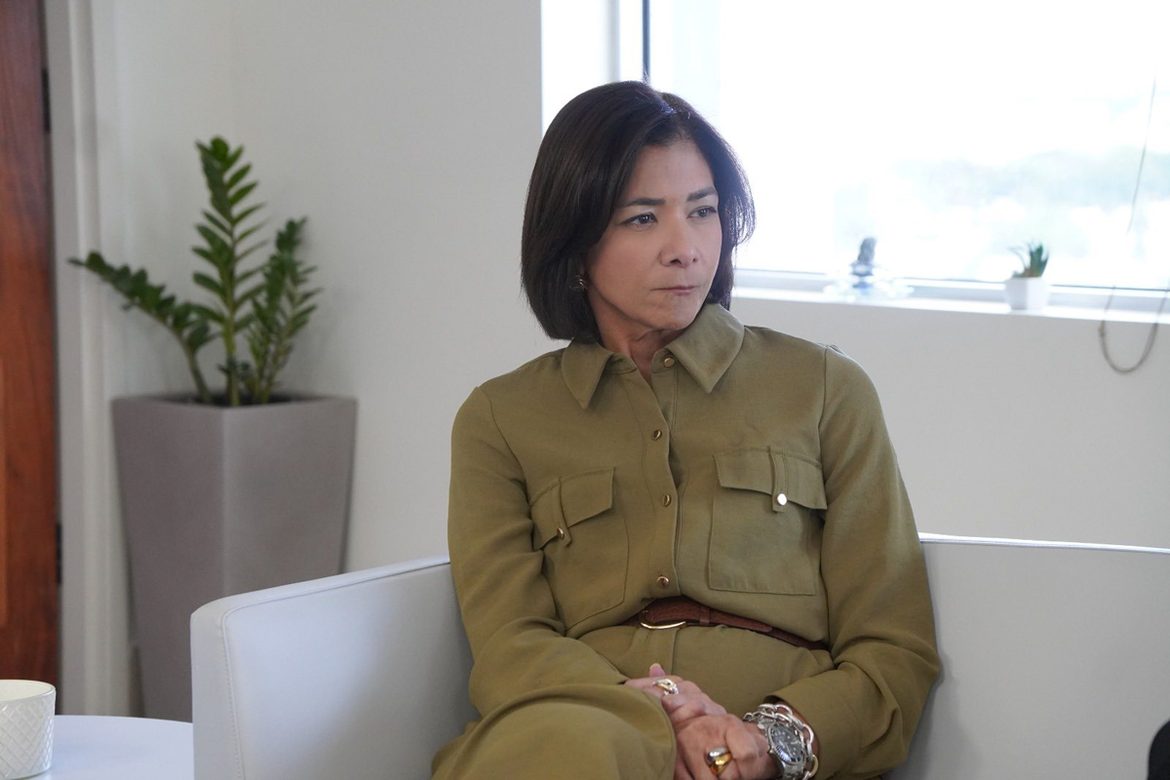
Photo provided
Housing Secretary Luis Augusto Martínez Román said in a written statement that, contrary to what the Property Registry documents indicate, the agency did not conduct those sales.
“After reviewing the information brought to our attention by the Centro de Periodismo Investigativo [and Rayos X], we can confirm that the Department of Housing did not carry out the transactions in question,” Martínez Román said in writing. “The Department continues to investigate this matter to gather all the necessary information. Once this process is completed, we will evaluate the findings and proceed with any appropriate referrals or administrative or legal actions.”
Lands Authority Executive Director Andrés F. Rosado Martínez confirmed to the CPI and Rayos X that “after a thorough evaluation […] there is no record, documentation or chain of title showing any subdivision or sale of the Palmas Altas property in the municipality of Barceloneta in favor of Mr. Miguel Ángel Álvarez Pérez.” Rosado Martínez said attorney Esteban García Malatrasi “was never a regular employee nor had any professional or notarial services contracts” with the agency.
Despite repeated interview requests, neither the housing secretary nor Property Registry Administrative Director Joaquín del Río Rodríguez was available.
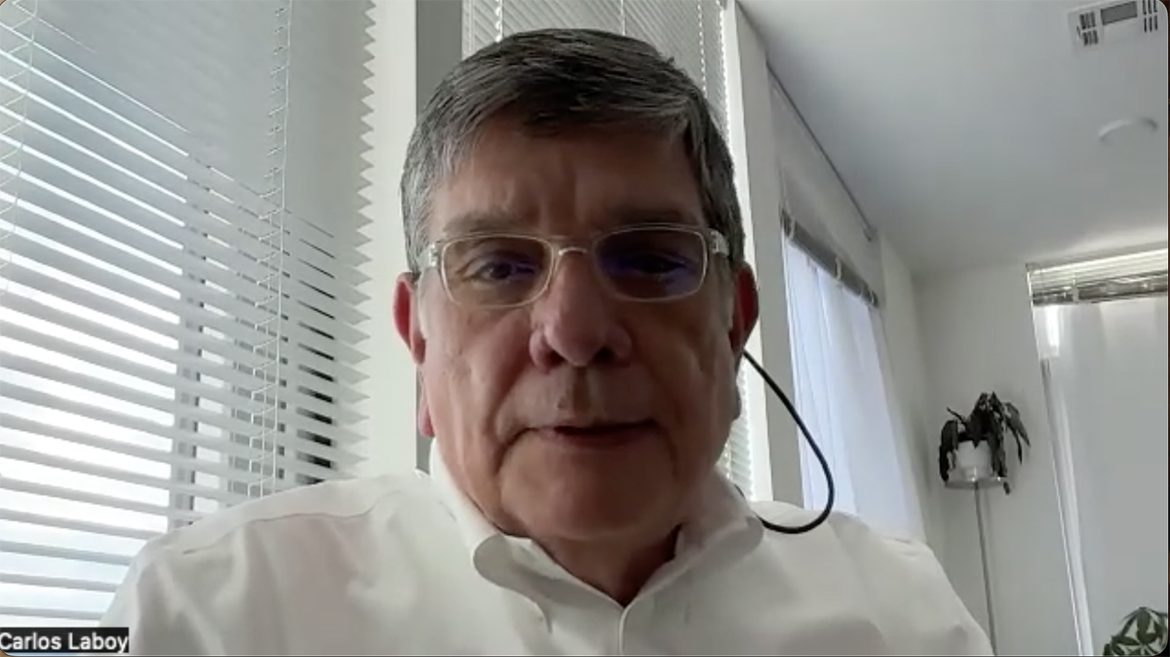
Laboy Díaz, who headed the Public Housing Administration from 2001 to 2008, was surprised when the CPI and Rayos X showed him three deeds signed by the deceased notaries Pestaña Segovia and García Malatrasi. He immediately noticed that his Social Security number and job title were incorrect. The documents identified him as “Administrator of the Department of Housing’s Property Administration,” a position he never held.
Screenshot | Rayos X
“I never authorized a document that didn’t have my correct title,” he said in a video interview from New York. “During my time at the [Housing] Department, I was administrator of the Public Housing Administration. I don’t even remember that title [‘Administrator of the Department of Housing’s Property Administration’] existing.”
“Someone literally stole my identity,” he added.
Laboy Díaz also said his responsibilities did not include working with the agency’s land parcel sales program.
Responding to these statements, Edgardo Zapata Torres, attorney for Miguel Ángel Álvarez Pérez, said the people who “found and presented properties to Miguel for acquisition” were attorneys Alfonso Rivera Valdivieso and Carmelo Pestaña Segovia, along with “a young man” who worked as a transaction facilitator and whose last name was Delgado. When asked, Zapata Torres did not specify the young man’s first name.
“Attorney Alfonso Rivera Valdivieso and his associates handled all the work involved in buying and selling properties at auction and other transactions, including the paperwork for the deeds. Miguel had no reason to doubt them,” Zapata Torres said. Rivera Valdivieso died Sept. 18, 2000, according to the Demographic Registry’s mortality database.
The Housing Development and Improvements Administration was the agency responsible for transferring or selling these parcels within the Department of Housing until 2006, when it was divided into two offices: the Office of Housing Project Management and Development and the Office of Property Acquisition and Sales. Property titles were conveyed through public deeds of sale executed before notaries.
However, Act 77 of 1977 authorized the Department of Housing to grant titles through certifications to expedite transactions and reduce government expenses. Unlike transactions executed before a notary, certifications are not signed by buyers or notaries and do not require the cancellation of tax or fee stamps affixed to public deeds.
Housing Department Certifications
By 2001, the Department of Housing had nearly stopped granting parcels, said Torres Hernández, who served as executive director of the Housing Development and Improvements Administration from 2001 to 2003. Although vacant parcels still existed, she recalled that the agency was primarily granting ownership titles to people living on land they held under usufruct agreements.
To obtain the title to a lot, a person had to live in a home built on the parcel being sold and could not own another home. For that reason, Torres Hernández found it suspicious, when reviewing documents gathered for this investigation, that some people had obtained more than one parcel for the nominal price of $1 during that period.
In the sample reviewed, the CPI and Rayos X found other people who bought more than one property for $1 each through Housing Department certifications. For example, one person acquired two properties in Santa Isabel on the same day for $1 a piece.
In another case, a person appears on five certifications for parcel purchases between 2001 and 2008, including two $1 purchases in Cataño and Guaynabo. Both properties were subsequently resold. The certification for the Guaynabo property was submitted to the Property Registry in 2024, 21 years after the supposed purchase. Miguel Ángel Álvarez Pérez bought that Guaynabo property in 2024 for $30,000 through a deed executed before notary Félix M. Velázquez Sánchez. He resold it that same year for $35,000.
Two other suspicious registrations also involve Álvarez Pérez, who allegedly obtained two parcels in Guaynabo within one week, on Jan. 21 and 28, 2002, for a nominal price of $1 each. Álvarez Pérez has owned at least 20 properties in 11 municipalities that the Land Authority and the Department of Housing sold and supposedly conveyed to him through certifications between 2002 and 2008.
Álvarez Pérez told the CPI and Rayos X in writing that he registered those properties 22 years later because “neither of the advisers [Rivera Valdivieso and Pestaña Segovia] said they had to be registered with the [Property] Registry and the CRIM [Municipal Revenue Collection Center] when they were acquired, and since we believed they would increase in value over time, we left them as they were.”
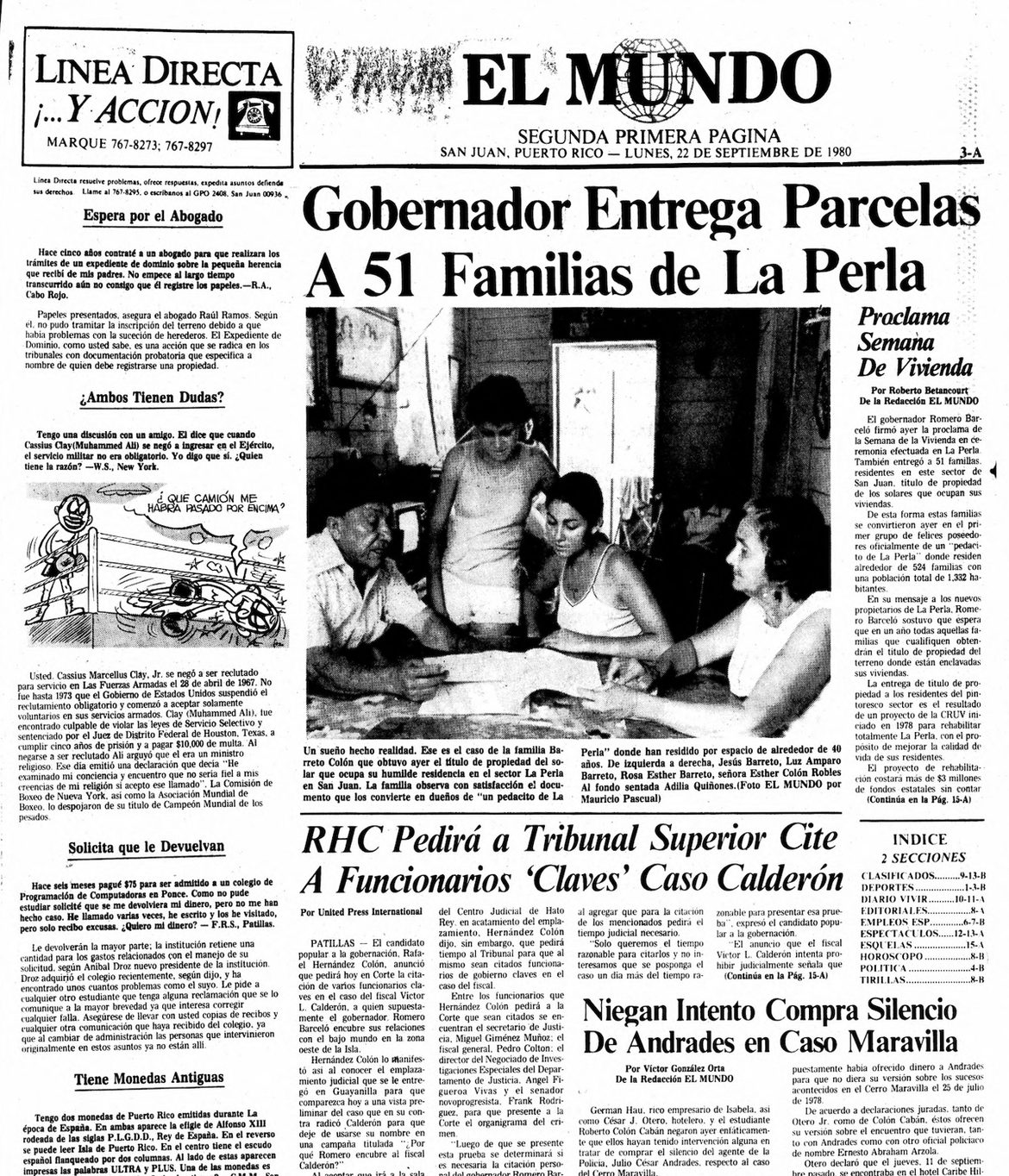
Beginning in 1941, under the Land Act, then governor Rexford Tugwell granted parcels under perpetual usufruct to families of agregados, as agricultural workers who lived on other people’s land in rural areas were known. Rural communities were established and eventually expanded into urban areas. In 1969, the administration of Luis A. Ferré began selling parcels held under usufruct to residents who wanted to purchase them for $1.
Over time, people built homes on land belonging to the Land Authority, the Land Administration, the Department of Transportation and Public Works, the Industrial Development Company and the General Services Administration. In 1975, these lands were transferred to the Department of Housing, which was then authorized to grant property titles for $1 to people whose homes stood on the parcels. If they did not meet the definition of a “low-income family,” the sale price would be determined based on an appraisal of the lot and the family’s income.
El Mundo newspaper collection
One case involved Lot 566 in the Sabana Seca neighborhood of Toa Baja. In September 2025, Waldemar L. Fernández Rodríguez tried to register a certification in the name of Atilana Surun Arias. The certification, dated 2008, stated that the Department of Housing had sold the land to Surun Arias for $9,000. However, the Property Registry notified Fernández Rodríguez that the parcel was already registered to married couple Juan Nieves Figueroa and Elisa Prieto Rivera and therefore could not be registered in Surun Arias’ name.
Yet two months later, the parcel was registered to Surun Arias. Courier Víctor Sánchez Rojas submitted a deed to the Registry stating that the couple had supposedly sold the property to Arias on Feb. 20, 2009. But Nieves Figueroa and Prieto Rivera were already dead by that date. Nieves Figueroa died Oct. 21, 1991, and his wife died May 9, 2004, according to the Demographic Registry’s mortality database. The public deed bears the signature of notary José O. Leduc, who died in August 2012.
Among the transactions examined by the investigative partnership, the communities of Sabana Llana near the San José Reservoir in San Juan, Villa Brava in Santa Isabel and Sabana Norte in Guaynabo were the locations where transactions involving members of the group appeared most frequently.
In addition to Puerto Rico Warehouse Inc., the group used Family House Investment, Corp., Genesis Land LLC, Emarr Contractors Corporation and 2020 Homes Inc. to buy or sell properties. Members of the group hold positions as presidents or other executives at these and 20 other companies, more than half of which have already been canceled in the Department of State’s records.
Land Near the Sea
The distribution of parcels during former Gov. Luis Muñoz Marín’s administration created the Jarealito community in the Islote neighborhood of Arecibo, according to José A. Colón García, who has lived there for 58 years. The neighborhood offers coveted views of the Atlantic Ocean and is a 10-minute walk from Poza del Obispo, a cliff that attracts tourists. In 1999, Colón García said, the Department of Housing sold him and his wife, Luz María Rodríguez Abraham, the parcel where they live for $1.
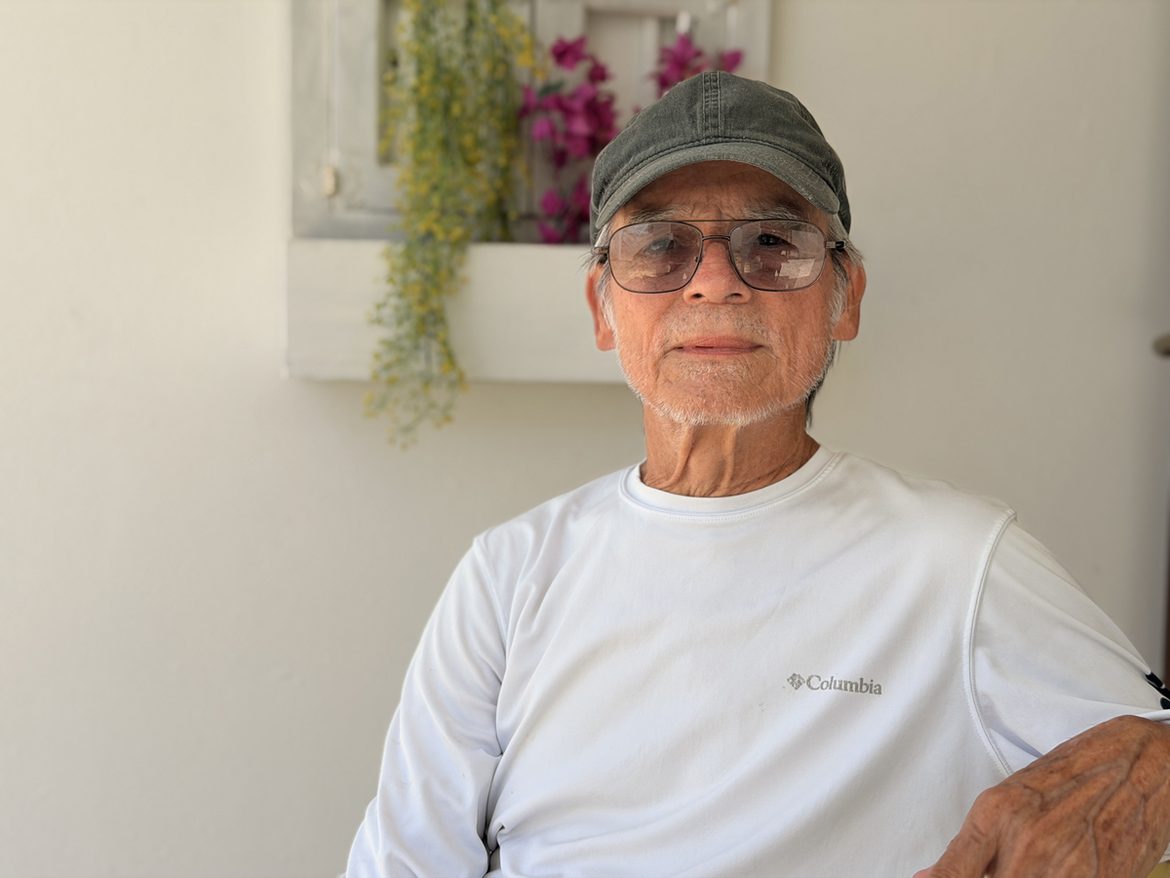
Photo by José Carlos Sánchez Cintrón | Rayos X
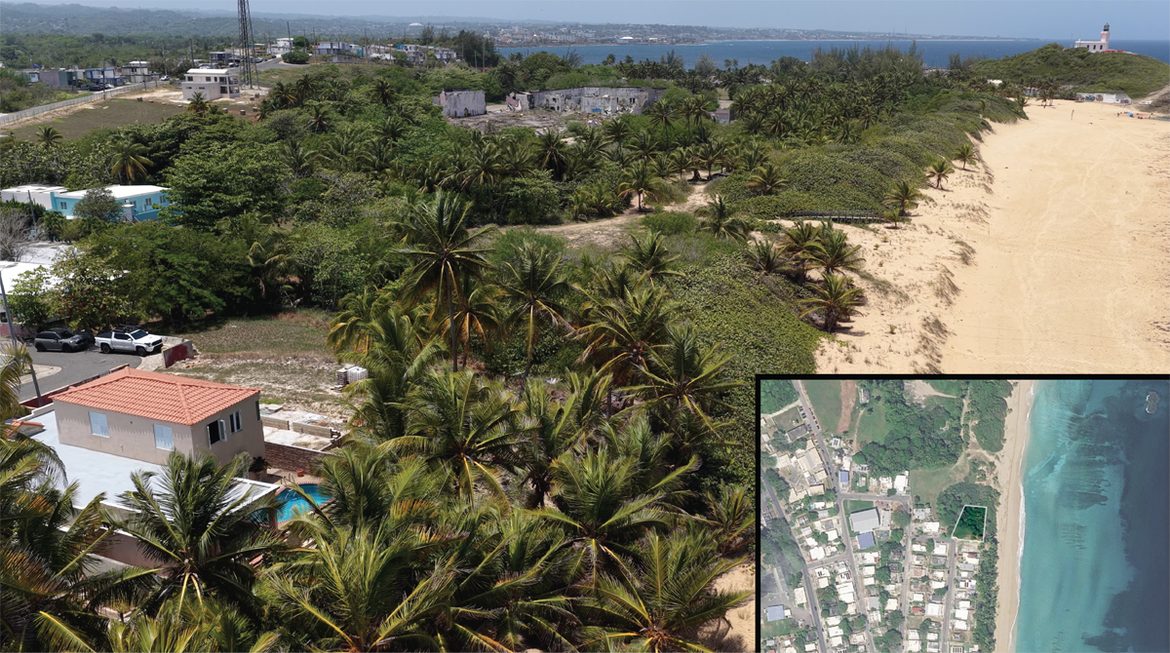
In 2024, the lot across the street and to the left of the home of José and Luz María was sold for $250,000 to Ocean 4 LLC. Colón García does not know his new neighbor. Chadbourn T. Sharpe, listed as an authorized person for Ocean 4 in the Corporate Registry, is a luxury residential developer and a beneficiary of tax incentives under Act 22, now Act 60.
Colón García also did not know the land had been sold because, as he understands it, the lot lies within Puerto Rico’s legally defined maritime-terrestrial zone and is a remnant of the subdivision of the community’s parcels. Colón García told the CPI and Rayos X that residents use the property as a right-of-way to reach the beach.
“If someone pulls a stunt like buying and selling that land, and illegally blocks access, we’re not going to allow it because we live here, and all that land back there is part of our community. This is our right-of-way, and it’s also for the people who come here, our relatives,” Colón García said about the land residents use to reach the beach.
According to the chain of title in the Property Registry, the Department of Housing, Miguel Ángel Álvarez Pérez and Emarr Contractors Corporation owned the land before Ocean 4 purchased it in 2024.
Screenshot | Rayos X
The first sale of that land supposedly took place between the Department of Housing and Miguel Ángel Álvarez Pérez in 2005. Several irregularities cast doubt on the transaction. First, the housing secretary told the CPI and Rayos X that the agency did not conduct the sale. Second, the deed through which Álvarez Pérez acquired the property identifies Carlos Gerardo Laboy Díaz as “Administrator of the Department of Housing’s Property Administration,” but the former official said he never held that position or sold parcels. The Social Security number listed on the deed is also not his.
In addition, the Courts Administration Office said deed of sale No. 1160, supposedly executed before notary Esteban García Malatrasi to authorize the transaction, does not appear in the attorney’s corresponding notarial index. When the deed was submitted to the Property Registry, Manuel García Malatrasi was listed as the notary, but the document bears a signature reading Esteban García Malatrasi, his brother.
“This is fraud on a massive scale,” Laboy Díaz said. “It’s absolutely unbelievable … This left me in shock.”
Jorge Rivera Jiménez, who served as housing secretary from 2005 to 2008, also confirmed that the deed was fake because it identified Laboy Díaz as “Administrator of the Department of Housing’s Property Administration.”
“I would definitely consider this [deed] fake because that position doesn’t exist. He didn’t hold that position, and the entity referred to there didn’t exist at the time either,” said Rivera Jiménez, who also served as the agency’s deputy secretary from 2001 to 2004.
But that is not the only deed that appears to be fake. The CPI and Rayos X obtained nine other deeds executed before notaries Carmelo Pestaña Segovia and Esteban García Malatrasi that identify Laboy Díaz by a title he never held.

Photo by Norenid Feliciano | Centro de Periodismo Investigativo
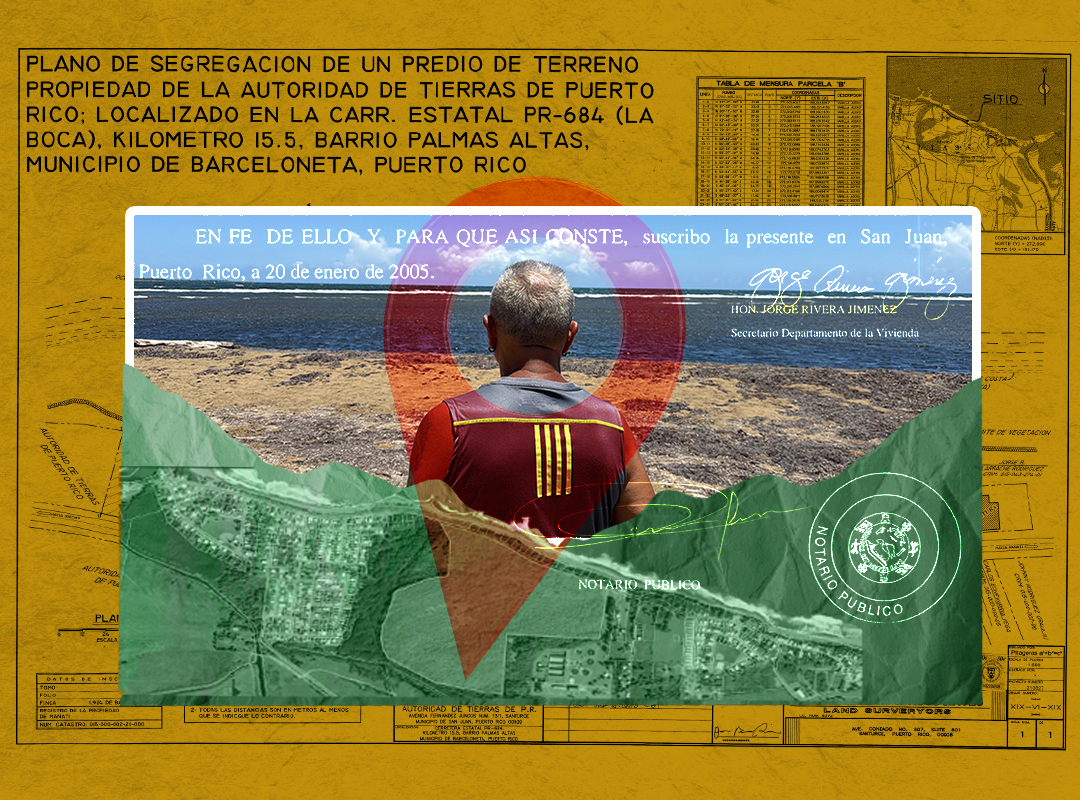
Five of these deeds were submitted to the Property Registry along with sworn statements supposedly signed by Rivera Jiménez before the two notaries. In the statements, Rivera Jiménez authorizes Laboy Díaz to represent the agency in contracts and deeds related to its Sales Office. Both former officials insist that this never happened.
When the investigative partnership showed Rivera Jiménez one of the sworn statements, he said the document appeared irregular. He explained that, in the case of a permanent delegation of authority, the normal procedure would have been to issue an administrative order rather than a sworn statement authorizing an official to represent the agency.
The sworn statements bear the former secretary’s signature and are dated Jan. 20, 2005, implying that Rivera Jiménez appeared before both Pestaña Segovia and García Malatrasi on the same day. Laboy Díaz and Rivera Jiménez said they did not recognize Pestaña Segovia or García Malatrasi as contractors for the Department of Housing or the Public Housing Administration during their respective tenures.
“I’m perplexed,” Rivera Jiménez said. “The government must conduct a thorough investigation to recover as much of the land as possible because this is the property of the people of Puerto Rico, and the people of Puerto Rico cannot be deprived of their property.”
No Community, but an Ocean View
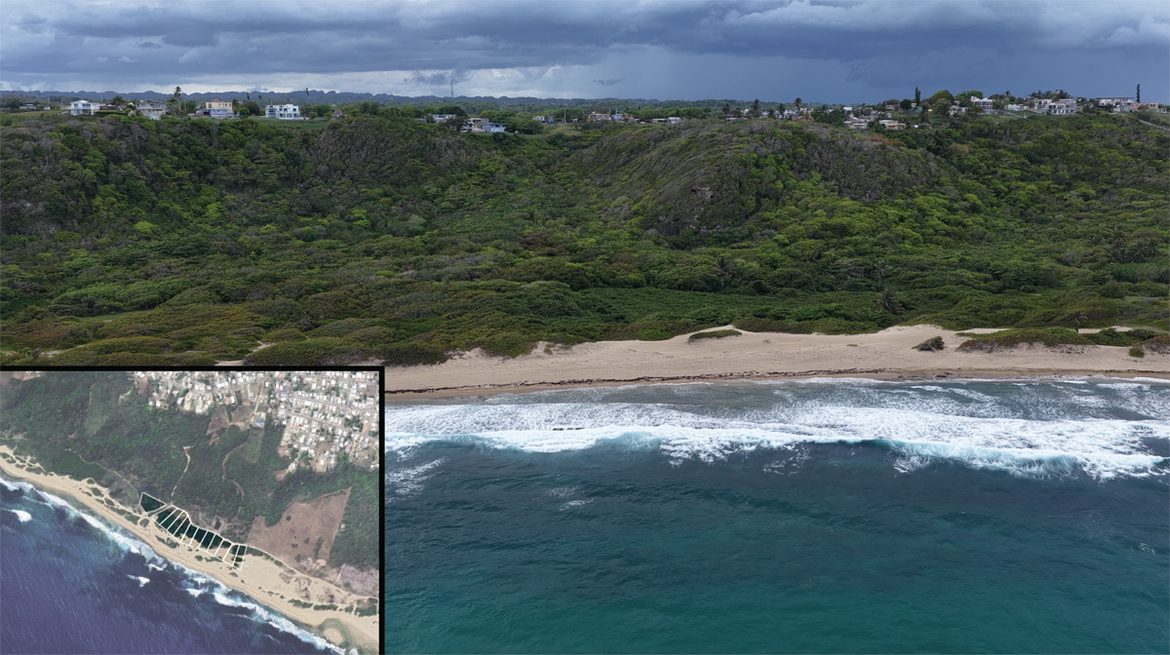
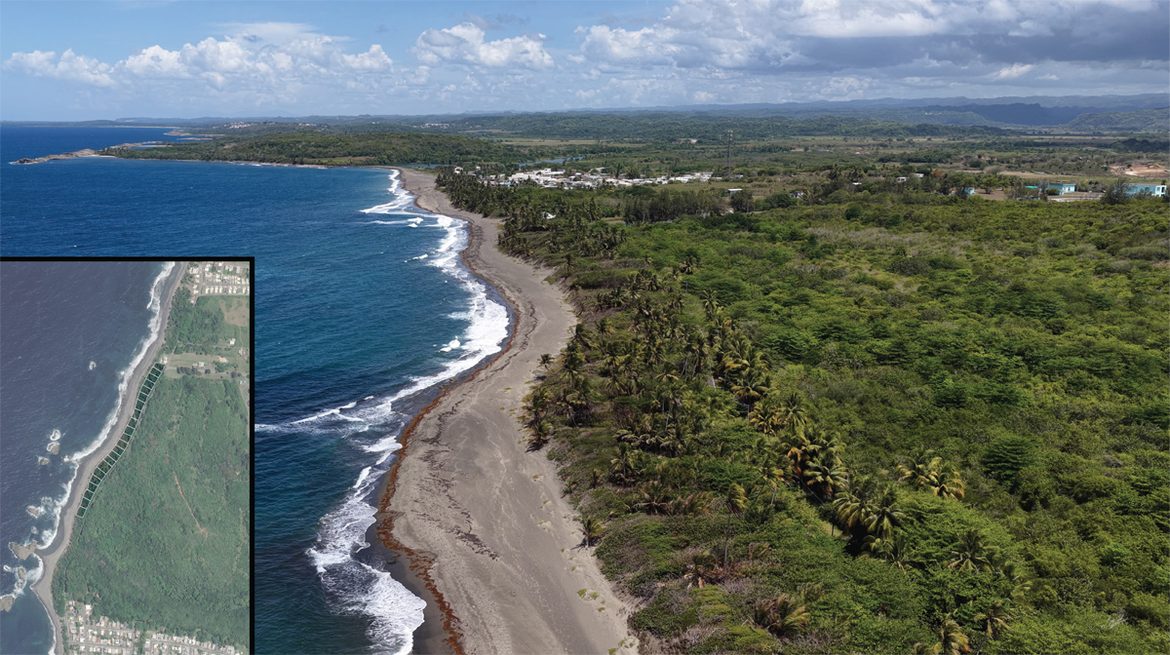
Twenty-two lots form a five-cuerda strip (approximately 4.9 acres) along the coast of the Palmas Altas neighborhood in Barceloneta. The land now belongs to Genesis Land, a company owned by Miguel Ángel Álvarez Pérez. Previously, it belonged to Edison Gómez Delgado, Víctor Luis Cruz Pagán and Miriam Pérez Colón, each of whom allegedly obtained land from the Department of Housing through certifications in 2002.
Screenshot | Rayos X
Most of the lots measure 900 square meters. This year, two of those lots were exchanged in a transaction valued at $280,000, and two others were sold for $150,000 each, nearly 32 times the 2002 price of $4,750 per 900 square meters.
However, former Housing Department official Torres Hernández said neither the signature nor the initials appearing on Miriam Pérez Colón’s certification for 1.8 cuerdas of land are hers. The Department of Housing supposedly sold Miriam the parcel for $38,000 to be “designated for housing,” or residential use, but the current housing secretary told the CPI and Rayos X in writing that the agency did not carry out the transaction.
Torres Hernández filed complaints and reports with the Department of Housing, the police and the Federal Bureau of Investigation, among other agencies, alleging identity theft through the forgery of her signature.
The former official explained that sales involving that amount were handled through deeds. There was also an attempt to register the land in Miguel Ángel’s name through a Land Authority deed, supposedly executed on behalf of the agency by Luis Rivero Cubano, but the filing expired before registration was completed.
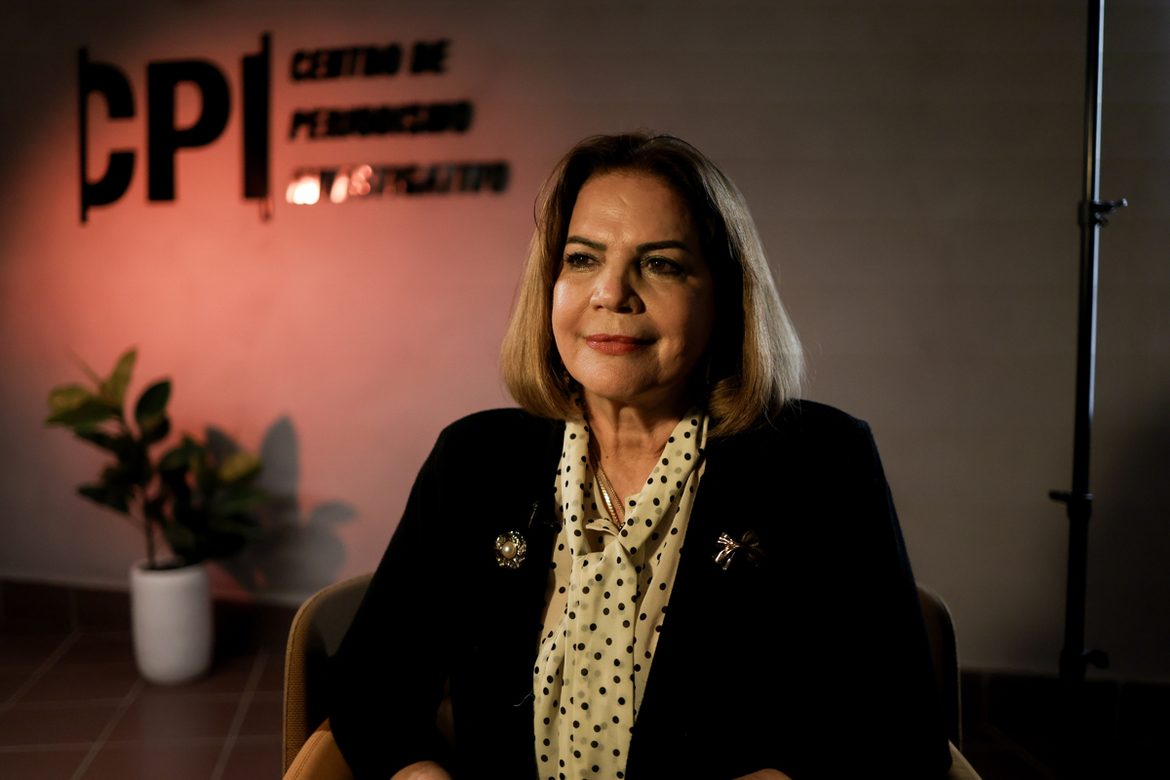
Photo by Norenid Feliciano | Centro de Periodismo Investigativo
“That’s impossible,” Rivero Cubano replied when asked whether he had authorized the sale. “I wasn’t the executive director of the Land Authority on Nov. 8, 2002 [when the deed was signed].” At the time, Rivero Cubano was secretary of agriculture. He headed the Land Authority for only six months, from January to June 2002.
The former official does not know Miguel Ángel Álvarez Pérez. Nor does he remember notary Esteban García Malatrasi, whose signature appears on the deed. Rivero Cubano added that all Land Authority sale or lease documents were signed by the agency’s in-house attorneys. He said it was highly unusual for the Planning Board to approve the subdivision of those lands as quickly as the deed indicates, because such procedures took more than a year. He also recalled that the Land Authority had specifically transferred the land in Barceloneta’s Palmas Altas neighborhood to the Development Company.
“I know where the property is. What I find curious is that this property is difficult to develop because practically 30 meters of it fall within the maritime-terrestrial zone. This is within the maritime-terrestrial zone. This is the part of the property facing the Atlantic [Ocean],” he said.
Everything points to plans for a private development called Las Casitas de Palmas Altas. Applications were submitted to the Office of Permit Management this year to verify the availability of water and electricity services on the land. The inquiries were made by engineer Heriberto Figueroa Marrero and identify Álvarez Pérez as the landowner and Genesis Land LLC as the owner of the Las Casitas de Palmas Altas project.
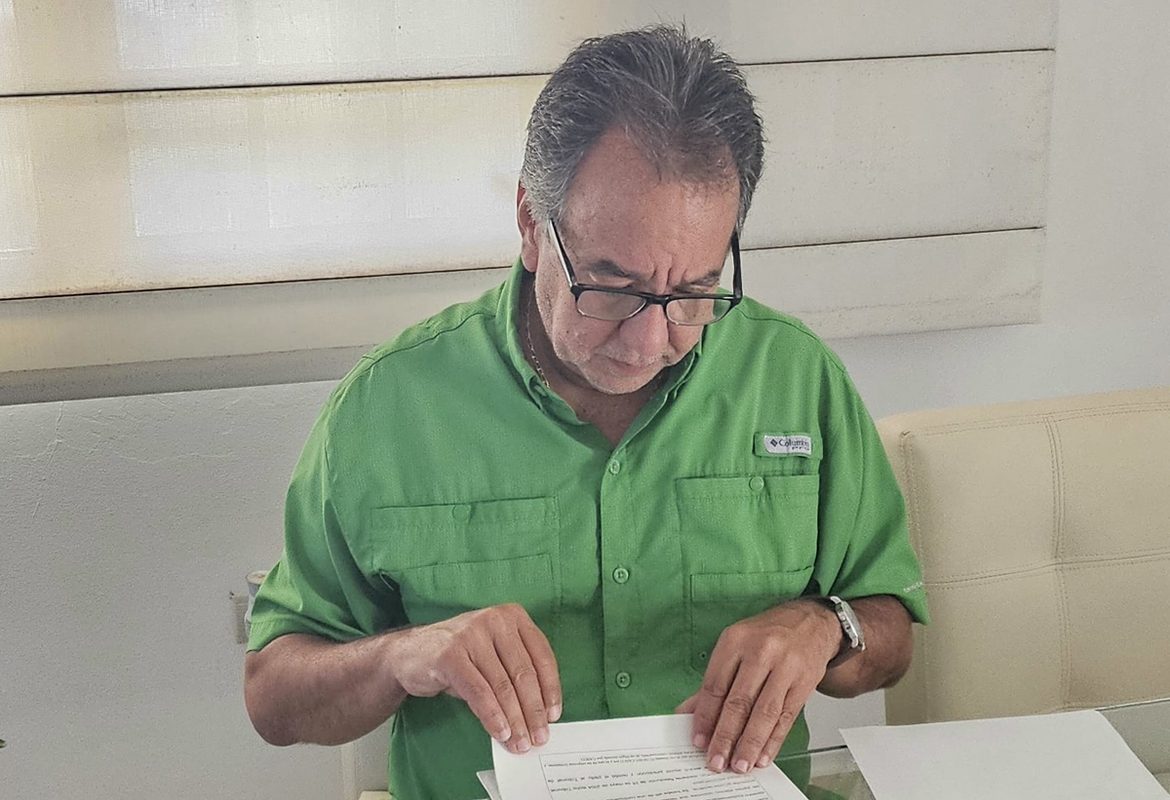
Photo provided
Miriam Pérez Colón was unavailable for an interview. Her son, Álvarez Pérez, referred questions from the CPI and Rayos X to attorney Zapata Torres, who said in a written statement that she is more than 85 years old and is receiving treatment after undergoing “a medical procedure.” Her primary care physician “has prohibited any exposure of Doña Miriam in this matter,” according to the attorney.
Last year, Pérez Colón appeared before notary Félix Manuel Velázquez Sánchez in Toa Baja, where she supposedly finalized the $45,000 sale of her Palmas Altas parcel to her son’s company, Genesis Land LLC. That is what Velázquez Sánchez said when asked whether Pérez Colón had signed the deed in his presence.
Velázquez Sánchez said he has an attorney-client relationship with Pérez Colón. “She’s Miguel’s mother and participates in Miguel’s businesses,” the notary told the CPI and Rayos X in a telephone interview. “Miriam has been to the office,” he added.
When the CPI and Rayos X told him that this and other certifications were fake, Velázquez Sánchez said, “I have absolutely no knowledge of that.” He added that nearly all the certifications he submits to the Property Registry come to him “through Waldemar [the developer], or occasionally through Miguel.”
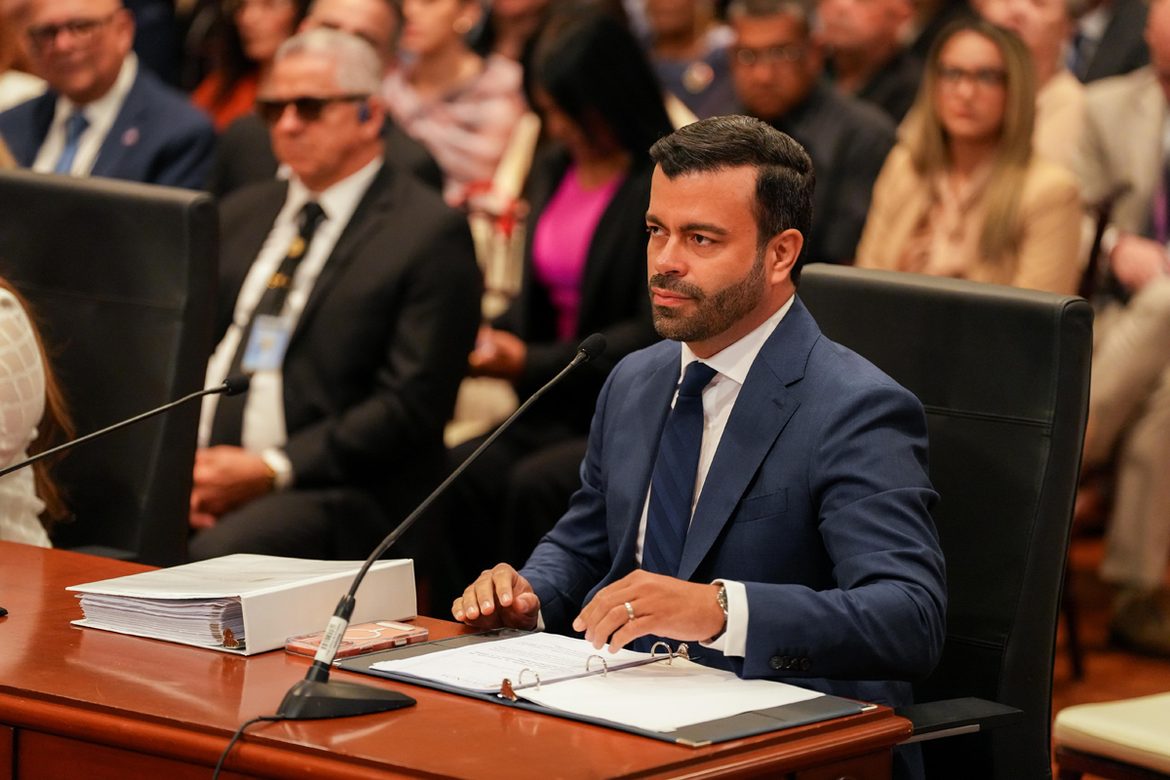
Photo provided
Velázquez Sánchez said he was not troubled by the number of certifications in Álvarez Pérez’s and his mother’s names because he knew that “years ago he [Miguel] was involved in purchasing properties at auctions and other properties” and had said he had “a whole lot of properties” awaiting registration. “I relied on that in good faith,” Velázquez Sánchez said.
He said he does not verify whether the documentation is legitimate but instead presumes it is authentic if it bears a signature and seal from the Department of Housing. “It’s like someone bringing me a deed from any other attorney with their seal and signature. I have no reason to presume it’s illegitimate; I presume it’s correct,” he said.
Velázquez Sánchez was referring to the legal authenticity conferred on public instruments bearing a notary’s signature through the authority granted to notaries by the government.
That authority, known as “fe notarial,” empowers notaries to formalize and attest to the authenticity of legal transactions such as property sales, mortgages, powers of attorney and wills, explained Belén Guerrero Calderón, who has practiced as a notary in Puerto Rico for 49 years and is a professor at the University of Puerto Rico School of Law.
Given the extensive authority notaries hold, the CPI and Rayos X asked Guerrero Calderón whether the principle of “fe notarial” should be reconsidered. “No, not the notarial authority itself,” Guerrero Calderón replied. “What needs to be reconsidered is who is being allowed to become a notary.”
“It Wasn’t a Sale, but a Mortgage Cancellation”
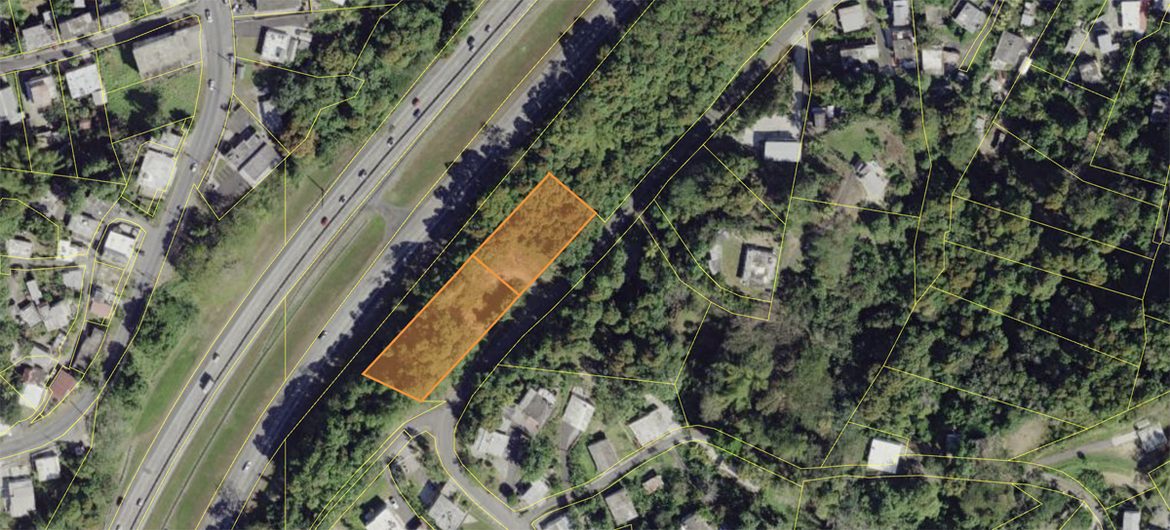
Puerto Rico Warehouse’s transactions were not limited to the Department of Housing. In 2008, the ACT supposedly sold the company two parcels in the San Antonio neighborhood of Caguas, alongside the Luis A. Ferré Expressway. The adjoining lots are classified by the Planning Board as transportation land, meaning land designated for transportation infrastructure, primarily highways, streets and roads.
After the CPI and Rayos X requested verification of the legitimacy of the $69,000 sale, the ACT, an agency attached to the Department of Transportation and Public Works, said it was investigating how the transaction took place.
The agency could not identify which officials participated in executing the deed because the file could not be located in the ACT’s Property Administration Office, agency spokesperson Juan Olmeda Reyes said in a written statement.
“To that end, we requested a copy of the deed from the San Juan Notarial Archive. The archive informed us that the notary had died, and when the deed was located according to its number, the legal transaction contained in it was not a sale but a mortgage cancellation. Given these inconsistencies, we are investigating this transaction,” he added.
According to documents in the property files, the sale was formalized Aug. 19, 2008, before notary Esteban García Malatrasi in public deed No. 1012. García Malatrasi died March 1, 2011.
Screenshot
Víctor Sánchez submitted the deed for this sale on June 8, 2021. A year later, the Property Registry sent a notice to Manuel García Malatrasi, brother of Esteban García Malatrasi, stating that ACT resolutions, along with a plan and a resolution approved by the Planning Board, were missing and required to register the parcels. By then, in 2022, Manuel García Malatrasi was no longer authorized to practice as a notary because his notarial bond had expired in 2016. He had also stopped practicing law in 2021, according to information the Courts Administration Office provided to the investigative partnership.
The properties were finally registered in December 2022, and a $10 credit was even sent to Manuel García Malatrasi, who died in 2024.
Notarial archives safeguard public documents, including deeds belonging to notaries who have died, been suspended or stopped practicing, explained Manuel E. Ávila De Jesús, director of the Office of Notarial Inspection (ODIN, in Spanish), which operates under the Puerto Rico Supreme Court.
Puerto Rico has 13 notarial archives, corresponding to the court system’s 13 judicial regions. The San Juan and Ponce notarial archives are administered by ODIN, Ávila De Jesús told the CPI and Rayos X. The others are operated by notaries in private practice appointed by Puerto Rico Supreme Court Chief Justice Maite Oronoz Rodríguez.
A Dissolved Company Still Doing Business
Puerto Rico Warehouse Inc. was incorporated May 24, 1995, by Miriam Pérez Colón, José Álvarez and Carlos Ithier Encarnación to engage in “the business of purchasing, leasing or otherwise acquiring and owning buildings, residences and any other structures, buildings or other property of a similar nature,” according to the Corporate Registry.
Although the Department of State canceled Puerto Rico Warehouse’s registration on April 16, 2014, for failing to file annual reports, the corporation had amended its articles of incorporation to cease existing on Nov. 30, 2000, according to its corporate file.
Puerto Rico Warehouse Inc. “was duly dissolved in our records on Nov. 30, 2000, upon expiration of its term of existence, through a certificate of amendment to the certificate of incorporation filed on Oct. 30, 2000, at 12:59 a.m.,” Gricel Falgas Rodríguez, then acting director of the Corporate Registry, certified in 2001.
However, the entity’s status was not updated in the Corporate Registry, so it continued to appear as active, the Department of State said in a written statement.
Could Puerto Rico Warehouse Inc. legally conduct business between 2000 and 2014?
“The answer must distinguish between the status reflected in the system and the legal reality of the corporate file. In the system, the entity appeared active. However, the file shows that the entity had submitted the corresponding transaction to terminate or dissolve its existence in 2000. Therefore, the entity should not have been treated as active for registry purposes after that transaction,” the Department of State added.
When the CPI and Rayos X asked how Puerto Rico Warehouse could purchase land if it was legally unable to do so, Zapata Torres, speaking on behalf of Álvarez Pérez, said the company “was dissolved by mistake, but it continued to be used for the purpose for which it was created.”
“It remained the entity that held [stored] the properties. Furthermore, it would not be the only corporation that continues to be used even after its registration is canceled by the Department of State,” he added in writing.
The name Puerto Rico Warehouse Inc. appears in at least 12 purchase, sale and subdivision transactions documented in public deeds, Department of Housing certifications and notarized corporate resolutions dated 2005, 2008 and 2025 on the Karibe platform, the CPI confirmed.
This translation was generated with the assistance of AI and reviewed by our editorial team to ensure accuracy and clarity.