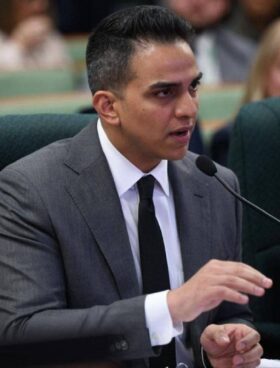


Trans activist Justin Jesús Santiago has observed a recurring pattern among transgender individuals who, after filing a complaint about a workplace issue, do not return to their jobs due to fear, insecurity, and a sense of vulnerability. According to Santiago, these incidents often turn the workplace into a hostile environment.
Upon revealing their trans identity, Santiago notes that employers simply stop communicating with these employees, pushing them toward informal work, including sex work, to survive due to the lack of opportunities. Some “engage in sex work and OnlyFans to make ends meet and survive… that’s what it’s about, unfortunately, given the historical circumstances we’re living in,” he said.
The 2016 Radiography of Trans Communities in Puerto Rico references a study by the TRANSforma Project, a joint team from the University of Puerto Rico and Florida International University, which revealed that 81% of trans women reported sex work as their only source of income. The study warns against perpetuating a stereotypical view of trans women as sex workers but acknowledges that many resort to this work due to the lack of job options in Puerto Rico. “This isn’t the lucrative, glamorous sex work we often see portrayed in film, but rather the kind that takes place in the most isolated corners of our streets,” the research states. According to Santiago, this situation has not significantly changed over the past decade.
Puerto Rico lacks official statistics on the number of transgender individuals, and it is unknown how many are in the formal labor force. This lack of data hampers the identification of the specific needs of the trans population and obstructs the creation of appropriate public policies, according to six interviewees who belong to or provide services to this group. Santiago emphasized the importance of being counted to exist on equal terms: “It’s important to be counted so we can exist on equal footing. What isn’t counted doesn’t exist — and that’s why they don’t want to count us.”

Photo by Ana María Abruña Reyes | Todas | todaspr.com
Pedro Julio Serrano, president of the LGBTQ+ Federation of Puerto Rico, asserted that trans people face serious difficulties getting jobs, one of the main issues affecting the trans community in the Island and worldwide. Despite laws in Puerto Rico prohibiting workplace discrimination, Serrano stated that the trans population continues to be excluded from the job market, placing them among the most impoverished and vulnerable populations.
Academic research supports this claim. The Radiography of Trans Communities in Puerto Rico highlighted that 74% of trans women earn less than $1,000 a month, and more than half are unemployed, according to the TRANSforma Project. A study published in 2019 in Transgender Health revealed that 67% of trans and gender non-conforming individuals in Puerto Rico have experienced workplace discrimination.

Photo by Brandon Cruz | Centro de Periodismo Investigativo
Serrano pointed out that the absence of official statistics on sexual orientation and gender identity in Puerto Rico contributes to the invisibility of the trans population. “We don’t have clear statistics on how many trans people live in Puerto Rico, which prevents proper identification of their needs and the creation of inclusive policies,” he stated. This lack of data, Serrano said, facilitates the promotion of measures against the trans community, which lacks figures, as it represents a small and vulnerable group.
Labor lawyer Rosa Seguí said this invisibility is an obstacle for the trans community to access the same rights and protections as others, directly impacting discrimination: “There is a refusal to accept that they exist, and that’s why they are made invisible. It’s a very violent level of discrimination not to be able to find [on official forms] who you are in order to exist and receive the same treatment as the rest of the population.”

Photo by Ana María Abruña | todaspr.com
Meanwhile, Marielle de León Toledo, a trans woman who will soon occupy a seat in the San Juan municipal legislature for the Movimiento Victoria Ciudadana (MVC) through the representation mechanism established by the Minority Law, noted the importance of having specific data to make the reality of the trans population visible. “It’s necessary to have that data to know the truth and to counter the myths that many people use against us,” she said.
A Legal Protection Not Fully Enforced
In Puerto Rico, the current legal framework establishes some protections against employment discrimination and recognizes the right to certain fair working conditions for everyone. Over time, some of these laws have been amended to expand their protections and adapt to social changes, including protecting LGBTQ+ individuals from discrimination in the workplace.
Since the approval of Act 22 of 2013, the Department of Labor and Human Resources (DTRH) is required to develop a compliance, education, and training protocol to combat discrimination based on sexual orientation and gender identity in employment. In response to questions from the Centro de Periodismo Investigativo, the agency assured that it has the protocol ready.
However, the agency must also provide training and education on the subject to government agencies, public corporations, and municipalities, according to the protocol. More than a decade after the law’s approval, there is no evidence of educational campaigns or specific training focused on trans people or the LGBTQ+ community in general. Although these specific actions for this population are not explicitly included in the official protocol, activists emphasize that they are essential components for public policy to have a meaningful impact in the workplace. The agency admitted that, so far, it has not developed programs, workshops, or initiatives to promote the labor inclusion of LGBTQ+ people.
Among the general inclusion efforts it does make, the Department of Labor mentioned the Puerto Rico está faja’o (“Puerto Rico is working hard”) campaign (2023), focused on promoting the employability of women, people with functional diversity, recipients of government aid, seniors, and former inmates, among others, and the “Dressed for Success” program, which provides appropriate clothing free of charge to people attending job interviews or starting a new job. None of these initiatives include the trans population.
Ivana Fred Millán, an advocate of the trans community, stated that Act 22 of 2013 “is often just for show,” as not all employers apply or know it. This lack of knowledge, she noted, forces many people to resort to legal processes to enforce rights that are already recognized.
For Fred Millán, the challenges faced by trans people, such as having to leave their jobs due to a lack of recognition and acceptance during their transition processes, or even having to resort to legal instances, demonstrate not only the absence of inclusive policies but also a marked insensitivity in work and social spaces. The lack of validation of gender identity, she warned, can thwart the educational and professional aspirations of many people. “No one knows, except those who live it, the pain and how hard it is to be limited in wanting to study and work simply because your identity is not validated,” she stated.

Photo by Ana María Abruña | todaspr.com
Santiago also expressed his concerns in the workplace: “There is a lot of fear. Not only of not being hired but also of not having your identity respected, being harassed, or being violated if you are hired.” In his view, ‘the laws are there, but the political and business will to enforce them is scarce.”
This perception aligns with Seguí’s view, who stated that the law “allows you to say: ‘this law protects me,’” and recognized its value as a tool to combat discrimination based on gender identity. However, she warned that its effective implementation still faces limitations, making it enforceable in every technical sense — filing the complaint, participating in the investigative process, achieving a favorable resolution, and having the employer comply — is “an uphill battle.”
Seguí emphasized that legal changes are not enough if they are not accompanied by a deeper transformation: “We need to rethink society. Puerto Rico has plenty of laws, and we can write more. But what we need is social transformation.”
Between Rejection and Survival
Beyond the legal framework, the experiences of trans people in the job search reveal a reality marked by ignorance of their rights, often due to a lack of education and training on equity and inclusion issues. Added to this is the weight of decades of struggle and the persistent marginalization they face in different areas.
Although certain advances in visibility and access to opportunities are recognized, the people interviewed agree that workplace discrimination remains a barrier. Even today, after years of activism, rejections and exclusions continue to affect trans people’s lives. Trans people face stigmas that hinder their professional development, even though, like any other citizen, they should enjoy the fundamental rights guaranteed by the Constitution of Puerto Rico, including the right to equality before the law, dignity, work, and protection against discrimination.
Fred Millán, a trans activist with 25 years of experience, explained that although she has not faced much direct discrimination in the workplace — partly due to her visibility as a community leader — she has accompanied many trans people who have experienced deeply painful situations. At the request of the CPI, the Civil Rights Commission reported that since 2013, it has received 10 complaints related to labor issues filed by trans people.
“It will be harder every time… we are a minority among all minorities, but they have used us as a spearhead for their agendas of hate and control. They will not be able to control us,” warned Fred Millán.
From her role in the MVC, De León Toledo highlighted the importance of education to promote respect and inclusion: “It is necessary to have some orientation so that trans people can know their rights.” She also noted that, in her experience, many employers often use as an “excuse” that the person “has not made the legal change” to deny them respect or dignified treatment.

Photo by Ana María Abruña | todaspr.com
“They say you are not ‘trans enough’ to respect you, but the reality is that if a person decides from one day to the next to use other pronouns, that should be respected. Every workplace should be safe for everyone, no matter the job,” she emphasized.
Are There Assistance Programs?
“It’s not that they don’t have the capabilities, it’s not that they don’t have the studies; what they don’t have are the opportunities,” expressed Fred Millán. In this context, the True Self Foundation has promoted several initiatives to support the inclusion of trans people in Puerto Rico’s workforce.
Miguel Vázquez Rivera, executive director of the foundation, explained that they have established alliances with companies interested in diversifying their work environments and fostering more inclusive spaces for the LGBTQ+ population, including trans people. True Self Foundation does not operate with federal funds, which, according to its spokespersons, represents an advantage given the current political landscape.

Photo by Brandon Cruz | Centro de Periodismo Investigativo
“The political landscape is not easy,” said Vázquez Rivera, who also noted the importance of building workspaces from a foundation of inclusion. “What we want is for trans people to have safe spaces that are created by the companies themselves, so they become safe for those who come next,” he said.
The challenges for the trans community go beyond the legal framework. The lack of effective implementation of laws, the absence of updated data, and limited institutional support are factors that continue to deter their full inclusion in the labor field.
Activists and trans people consulted agreed on the urgency of establishing concrete protocols, developing public policies based on real statistics, and promoting educational campaigns aimed at employers and the general population. Making the stories and challenges of the trans community visible is not only a matter of human rights but a social responsibility, they agreed.
Fred Millán criticized the contradictions in the political discourse toward the trans community: “For some things, they call us minorities, yet to attract public attention [for certain policies] and belittle our identity, they see us as a majority… so, where is the congruence?”
Regarding the immediate future of the trans community, Fred Millán mentioned: “If Puerto Rico adopts everything Donald Trump is proposing, we’re in trouble…”
This translation was generated with the assistance of AI and thoroughly reviewed by our editorial team to ensure accuracy and clarity.