
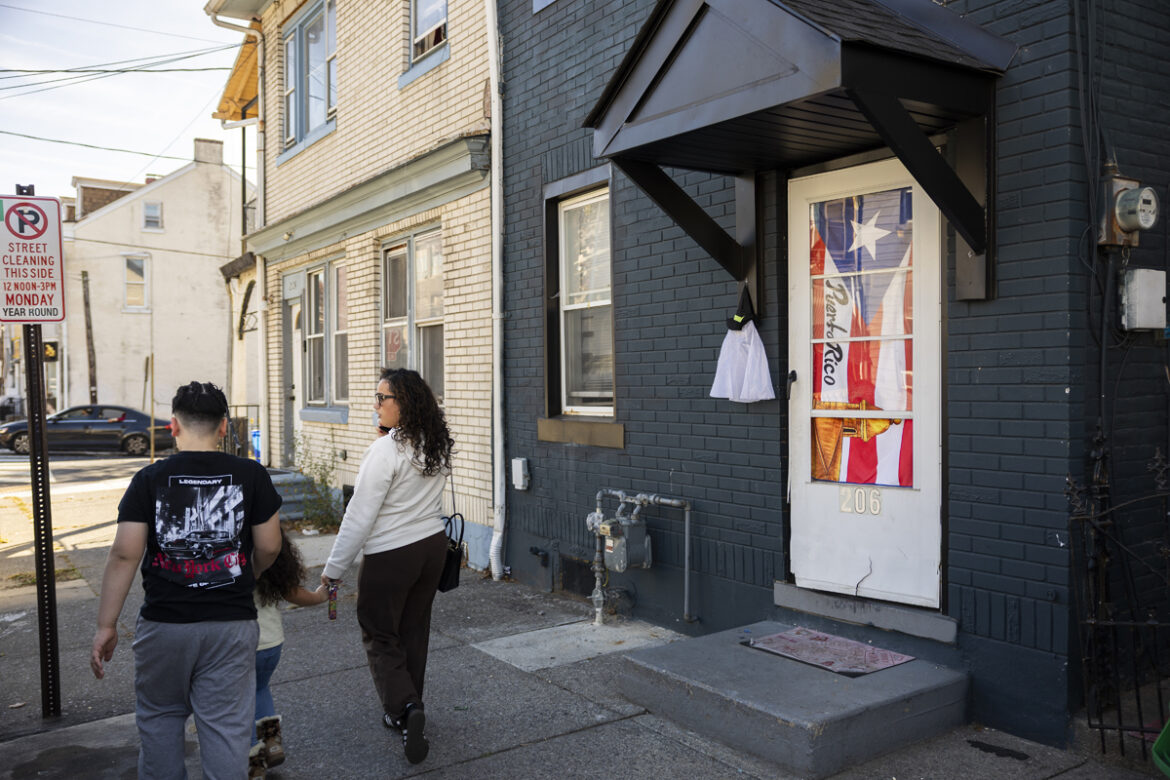

Pennsylvania’s 7th Congressional District, home to 78,000 Puerto Ricans, was the site of one of the closest races in the Nov. 3 midterm elections. Democrat Bob Brooks, president of a firefighters union, defeated Republican incumbent Ryan Mackenzie by more than 35,000 votes. The result was repeated in many traditionally Republican districts across the United States, giving the Democratic Party a sweeping victory and majorities in both the House and Senate.
The 7th District includes Allentown, a city in western Pennsylvania, in the Appalachian Mountains region, about 48 miles from Philadelphia. Getting there means passing vast green plains covered in ocher-colored vegetation, large reddish wooden barns with metal grain silos on one side and white houses with gabled roofs on the other. Amid this picturesque landscape, a giant billboard appears, featuring a photograph of an older woman with a horrified expression and the message: “Ryan Mackenzie Welcomes Data Centers.”
The message, intended to draw attention to the environmental risks posed by artificial intelligence data centers, is a reminder that we are entering a political battleground. By nightfall, Brooks will be declared the winner. But first, thousands of people will head to the polls.
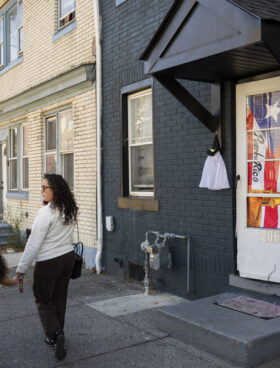
The 7th District covers Northampton, Carbon, Monroe and Lehigh counties. Allentown, the seat of Lehigh County, is home to nearly 35,000 Puerto Ricans. The city comes into view with the Art Deco PPL Corporation building, belonging to the energy company that supplies Allentown, rising on the horizon. On either side are tightly packed row houses sharing walls, one with a Puerto Rican flag flying from a pole. “There you go,” remarks the American photographer accompanying me when he spots it.
Once inside the city, we quickly reach a polling place at 1221 Front St., a brick building that once housed the Fearless Fire Company fire station and now serves as a community center. Standing at the entrance around 11 a.m. is Sheila Alvarado, wearing a blue shirt with yellow lettering that reads “We the People Have Had Enough” above a torn, upside-down American flag. A badge hanging from her neck identifies her as a Democratic Party volunteer. Beside her is her 13-year-old son, Eli Martínez, an eighth grader who says in Spanish, “My father and mother are Puerto Rican, I’m from Allentown, and I like this city.”
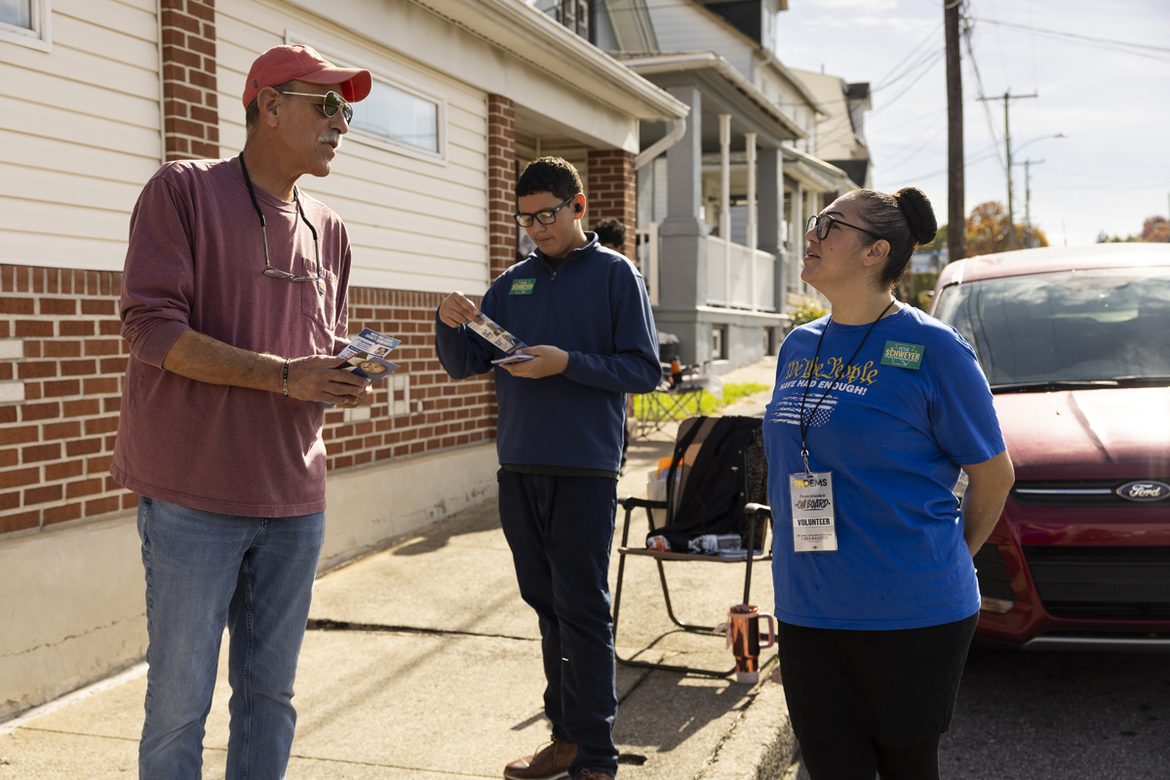
Photo by Ryan Collerd | Centro de Periodismo Investigativo
Alvarado, 41, was born here to Puerto Rican parents who migrated from the mountainous town of Orocovis, Puerto Rico. In addition to volunteering during elections, she is a legislative assistant to state Rep. Peter G. Schweyer. She is also vice chair of the Lehigh County Board of Commissioners, the legislative body of the county that includes Allentown, and the first Latina elected to that position. She says so in English, with pride but a calm demeanor. She wears black-framed glasses and has her dark hair pulled into a bun.
Before taking office and becoming a legislative assistant, she volunteered as an English-to-Spanish interpreter at polling places. She describes her work in the legislative office as constituent services.
“When constituents have questions, complaints or any kind of problem involving the state of Pennsylvania, they call our office. Then I navigate the complex workings of Pennsylvania’s government to see how we can help them. Basically, I solve problems; I’m something like an IT support technician. And we’re here for everyone, regardless of political affiliation.”
Her position gives her a unique vantage point from which to understand the problems most affecting residents of the district, particularly Latinos and Puerto Ricans.
“Over the past few months, the main issue has been housing. Finding more affordable places to live has been a real challenge. Some people are on the verge of eviction, and others have already been evicted and are now living in hotels. This has hit our community very hard,” Alvarado says as voters arrive, greeting them with “Thank you for coming out.”
One of those voters is Neishaliz Rodríguez, 18, originally from Guayama, a town in southern Puerto Rico. She has lived in Pennsylvania for 10 years, first in Bethlehem and then in Allentown for the past six. Today, she cast her first vote. When I ask what motivated her to vote, she says, “The president we have.”
At first, I think the current U.S. president, Donald Trump, motivated her to vote for candidates from his party, the Republicans. But her answer is ironic. Although Trump is not on the ballot, he has spent the past several months campaigning and urging people to vote in an election that has become something of a referendum on his performance. Instead, Trump inspired Rodríguez to vote for Democratic candidates.
“There’s no question that there has been dissatisfaction, even anger and disappointment, directed at President Trump,” says Carlos Vargas, a political scientist and director of public policy at the Center for Puerto Rican Studies at Hunter College in New York.
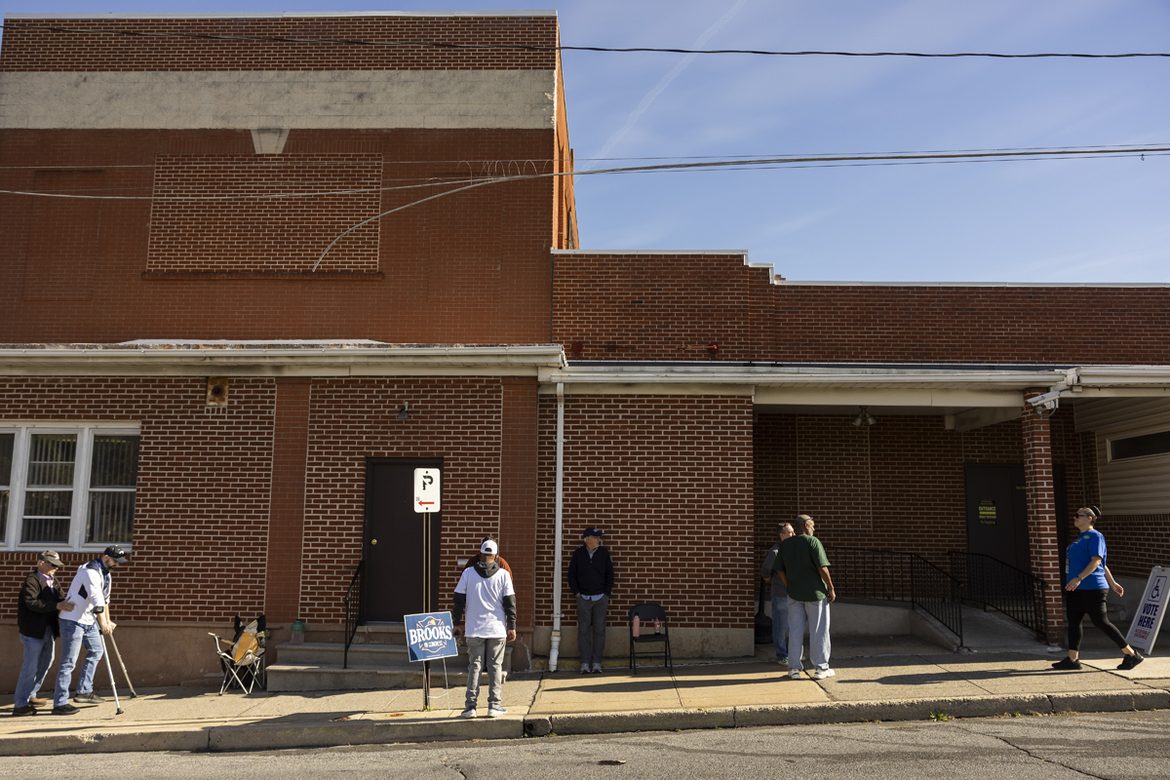
Photo by Ryan Collerd | Centro de Periodismo Investigativo
“This [vote for Democrats] is directed at President Trump and also against a Republican Party that had capitulated to President Trump, who dominated Republicans politically because he could determine who would be the Republican candidate in the primaries. That was the power Donald Trump had over his party,” Vargas adds.
The political scientist observed that Hispanic voters who supported Trump in the election two years ago concluded in the midterms that he had not improved their living conditions and turned against him. He also notes that although overall turnout appears to have been high in this election, it is still too early to have official figures, beyond exit polls, that shed light on Hispanic turnout, particularly among Puerto Ricans.
Outside the polling place in Allentown, I ask Rodríguez whether she voted for Brooks, the Democrat. She says yes. I ask whether anything in his campaign particularly caught her attention. She says no.
So was your vote more against Republicans than in favor of Democrats? “Yes, yes, yes,” says Rodríguez, who hopes to become a veterinarian but has not yet begun studying for that profession. Instead, she works at a Crayola factory. She lives with her family and worries about working conditions and housing costs. When I ask what bothers her most about Trump, she says everything, particularly what he is doing with U.S. Immigration and Customs Enforcement (ICE). Although it does not directly affect her because she is Puerto Rican and a U.S. citizen, she has seen its impact on her community and on immigrant friends who are afraid to leave their homes.
As Rodríguez votes in Allentown, nearly half a million Puerto Ricans could be casting ballots in 13 Pennsylvania districts, including the 7th, where Puerto Ricans make up the majority of Latinos. Between election night and the following day, it will become clear that Democratic challengers have unseated four Republican incumbents in those districts. Brooks defeated Ryan Mackenzie with 56% of the vote in the 7th District. In the 11th District, which covers Bucks County, Bob Harvie defeated Republican Brian Fitzpatrick. In the 8th District, which includes Wayne County, Paige Cognetti defeated Rob Bresnahan. And in the 10th District, which includes Harrisburg, Pennsylvania’s capital, Jenelle Stelton unseated Scott Perry.
Another concern Alvarado hears constantly in calls to the legislative office where she works is the lack of health insurance coverage and the cost of living in general.
“The difficulty of finding money to pay for medical appointments or copays, not to mention buying groceries … It’s a complicated situation. It’s essentially what we’re hearing nationwide. It’s affecting our community. I hear it every day, whether I’m in my office or somewhere else. When I hear a family talking, that’s exactly what they’re discussing: the struggle to afford groceries, daily meals and, really, the foods we’re used to eating, like rice and beans,” Alvarado says.
Before noon, which is expected to be the busiest time at the polling place because Election Day is not a day off and people take advantage of their lunch breaks, Greg Clark, a Lehigh County employee who tracks turnout, says 70% of the people who have entered the polling place are Hispanic. He has never seen anything like it in the 30 years he has been doing this work.
Most of the people arriving are middle-aged. They park or are dropped off, then picked up outside the polling place. Dominican and Mexican accents can be heard, along with people speaking English. Most have no reservations about saying whom they voted for. As they leave, they enthusiastically say “Democrat,” as though they already know their candidates are going to win.
Jonathan Marks practically runs out of a car. He crosses the street and goes inside to vote. He emerges in just as much of a hurry, wearing a gray cardigan with the magenta T-Mobile logo, because he is on his way to work. He tells me to make my questions quick because someone is coming to pick him up. He is 23, and his mother is from Salinas, a coastal town in Puerto Rico.
“I showed up voting because I know that it’s going to benefit us as a community, especially Puerto Ricans. They’re big on community and taking care of each other and not looking at it as a business but more as a family, you know, close together,” he tells me.
He says this in English. Marks identifies as an Allentown resident with Puerto Rican parents. He believes the job market in the United States is difficult.
“It’s hard, truthfully. I’m lucky to have a job because I’m bilingual. But even my girlfriend, who’s bilingual too, has a hard time. You can even have a diploma and be bilingual, and they still won’t give you an opportunity,” Marks says.
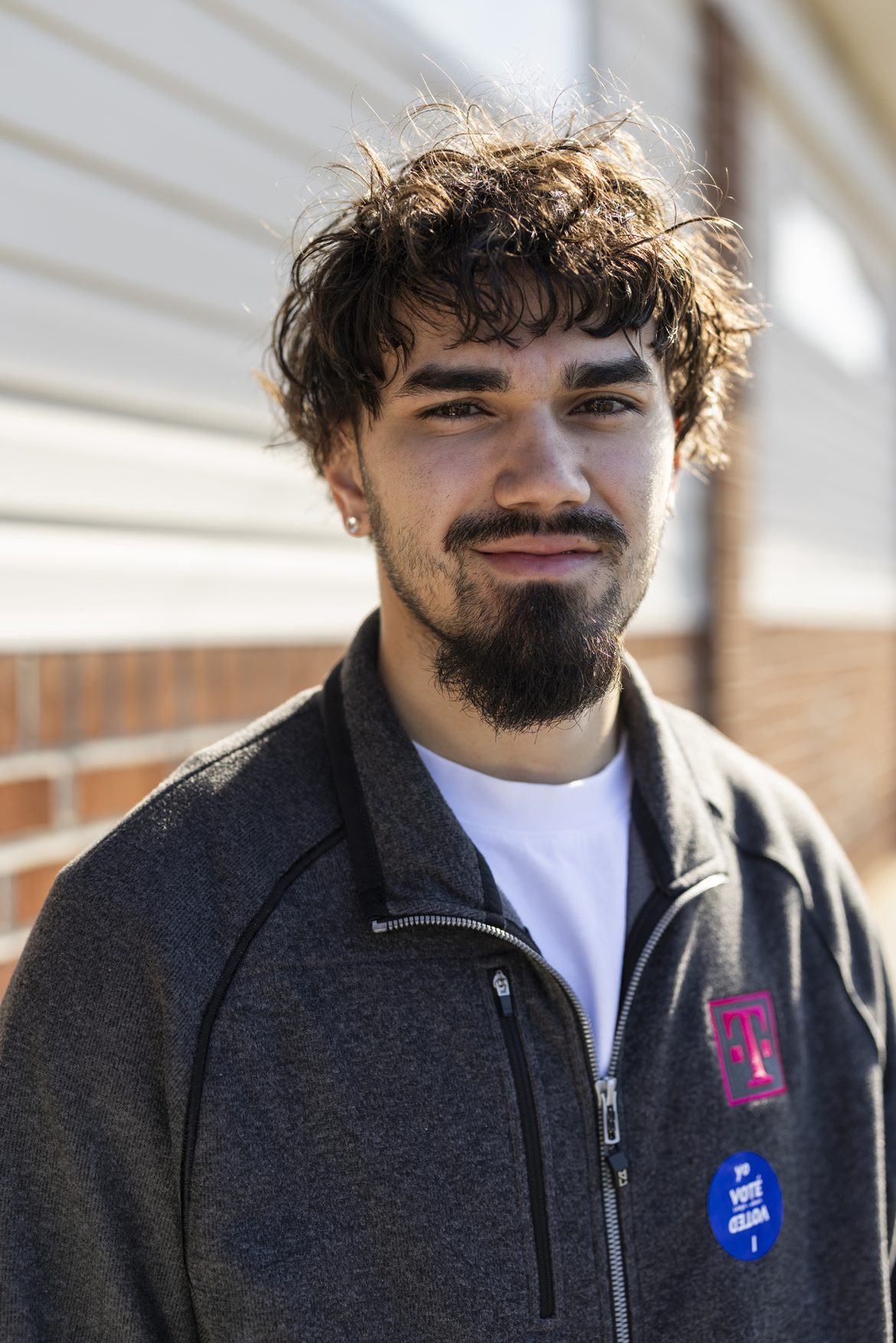
Photo by Ryan Collerd | Centro de Periodismo Investigativo
I ask whether any politician’s campaign caught his attention. “To be honest, no,” he says.
“I want to see Pennsylvania blue [Democratic]. It should have been blue when people voted in the presidential election. Unfortunately, it wasn’t. But hopefully, with the midterm elections, things will change.”
When the car arrives to pick him up, he leaves the way he came, running to get to work on time. Clark, the election worker, approaches me without being asked and says, “Here’s the count for the day so far: 246 in this area and 162 in the other,” referring to another entrance to the polling place. He hands me a small piece of paper with an “I Voted/Yo voté” sticker and the numbers handwritten on the back. He asks me to take it to Alvarado, who is on the sidewalk greeting voters. It’s noon, and those numbers are high, she says when she sees them.
Alvarado says Puerto Rican participation in elections has been low for as long as she has lived here, which is practically her entire life.
“We see how many people come out to our Puerto Rican Festival and the Puerto Rican Parade in Allentown, and I can’t help thinking: I wish all of you were just as engaged in our electoral process, because of how important it is,” Alvarado says.
But she also understands the obstacles many Puerto Ricans face when it comes to voting.
“I think part of the challenge is that our voting system and the structure of our government — meaning the different elected offices — are complex and difficult to explain. Sometimes it’s hard to convey what these positions involve and how they serve the public, whether at the local level, here in Pennsylvania, or at the federal level. The challenge is getting people to understand that structure and why voting matters, not just at the national level — where everyone knows they have to elect a president — but also in municipal elections, because those are the ones that have the greatest impact on our lives,” Alvarado adds.
She also places some of the responsibility for low voter turnout on politicians.
“When election season comes around, there always seems to be a heightened interest in winning the Latino vote. And we’ve been saying for far too long that we shouldn’t be reaching out to them only during election season; engagement with them should be ongoing,” Alvarado warns.
But judging by the turnout figures Clark reports, more people appear to be voting in these midterm elections.
When we tell Alvarado we’re going to visit another polling place in Allentown, she recommends a nearby school she attended, Harrison Morton Middle School.
Outside the school, we meet Zinnia Santiago, 32, and her mother, Migdalia Morales, 58. They have just voted. Morales has roots in Juana Díaz and Sabana Grande. Both moved from Brooklyn, New York, to Allentown after the 2001 attack on the Twin Towers because they considered it a much safer city.
“For a very long time, I’ve worked within the community and very closely with people in my neighborhood, and I see how choices on a large federal level, and even a local level, affect everyone and everyone in between. I think that oftentimes there’s this big notion that everybody’s voice is heard, and we are all equal, and realistically, that’s not necessarily the case. So, I think that’s ultimately why I came out today. Because it’s not just about me, it’s about my community, it’s about my people, it’s about our country, and where we end up 50 years from now, when people who are currently in office are dead and forgotten”, Santiago says.
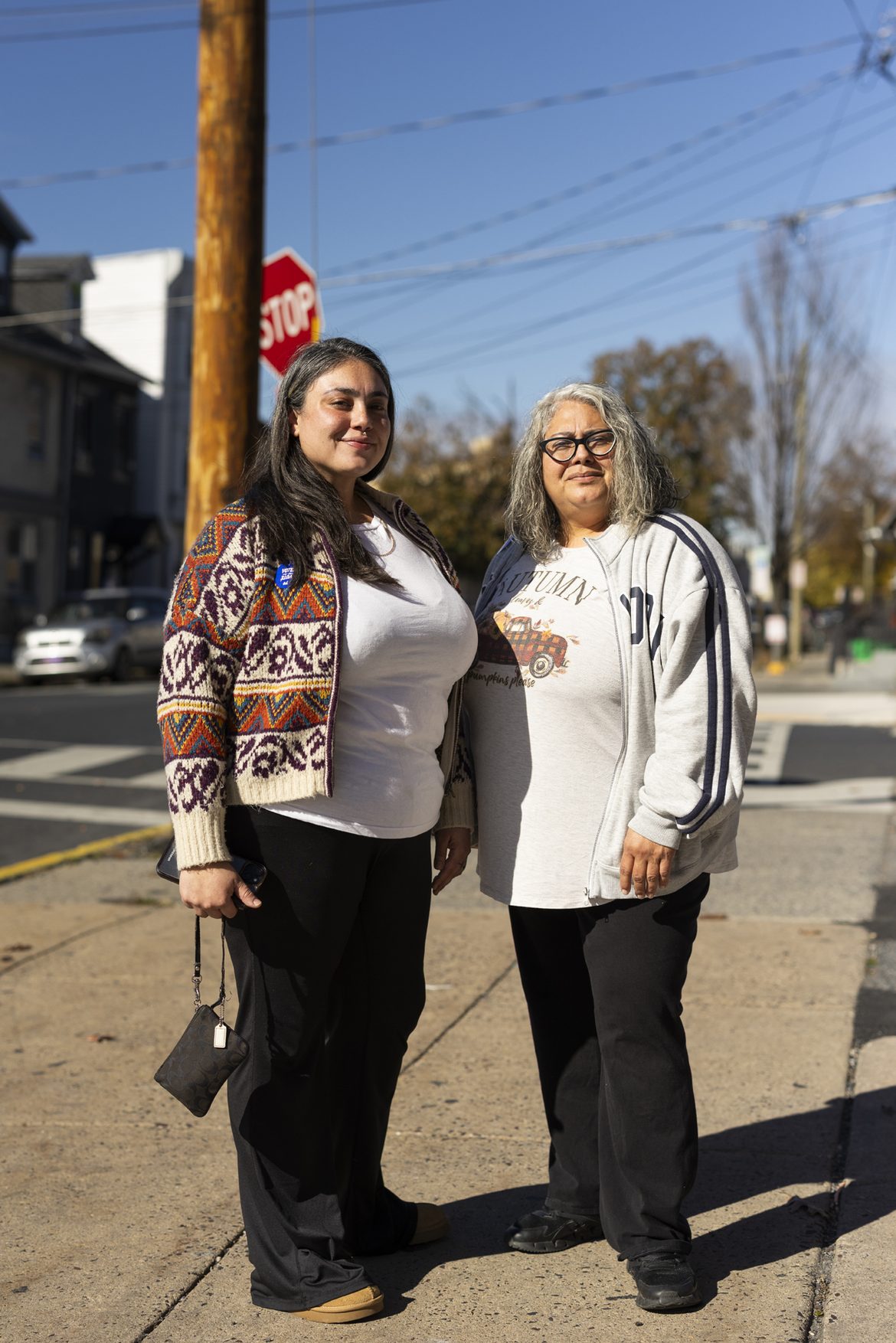
Photo by Ryan Collerd | Centro de Periodismo Investigativo
Among the problems facing the Puerto Rican community that concern Santiago is the lack of resources for learning English, even though Puerto Ricans and other Latinos have been settling in Allentown since the 1950s, drawn by jobs in agriculture, factories and the textile industry, as well as lower housing costs compared with major metropolitan areas such as New York or Philadelphia.
“There’s not enough accessibility for Puerto Ricans to learn English. Number two, there’s not enough resources that understand our culture and are willing to assist us in building and bridging the gap between where we come from on la Isla to what this is, the concrete jungle”, Santiago says.
Her mother, Migdalia Morales, who cares for older adults with special needs and mental health conditions, joins the conversation.
“Prisoners need more programs to be able to transition back into society. Prisoners, yeah. The crime rate has gone high and the prisoners are not getting educated, not getting provided the resources that they need, the training, the OVR, you know, and special needs. Also, special needs are on demand. There’s not enough people working, helping the needs, meeting the needs of individuals with mental health and autism.”
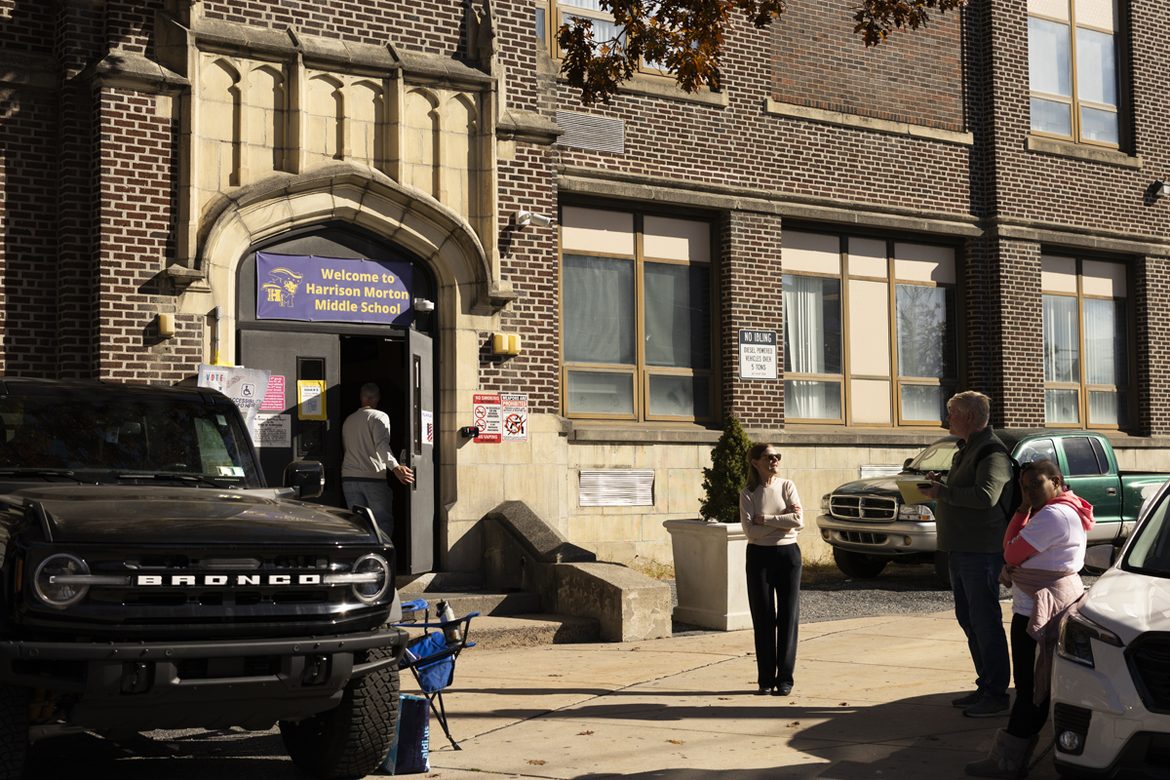
Photo by Ryan Collerd | Centro de Periodismo Investigativo
Santiago, who owns a transportation and logistics company, adds: “And that’s just a generalization, but when you really narrow it down to black and brown communities, we suffer the most. And so, absolutely, any representatives and anybody who’s willing to step in and actually see that black and brown people have been overlooked. And yes, there are a lot of ways for us to be able to, you know, get ahead, if you will, but it’s still just not enough.”
Just after Santiago and Morales leave, Brenda Nieves, 54, emerges from the polling place. She was born and raised in Allentown after her family moved from Patillas, Puerto Rico. She also cares for older adults and had voted earlier at another polling place. But she is here working, helping an older Puerto Rican woman in her care cast her ballot.
What motivates her to vote? “Everything,” Nieves replies.
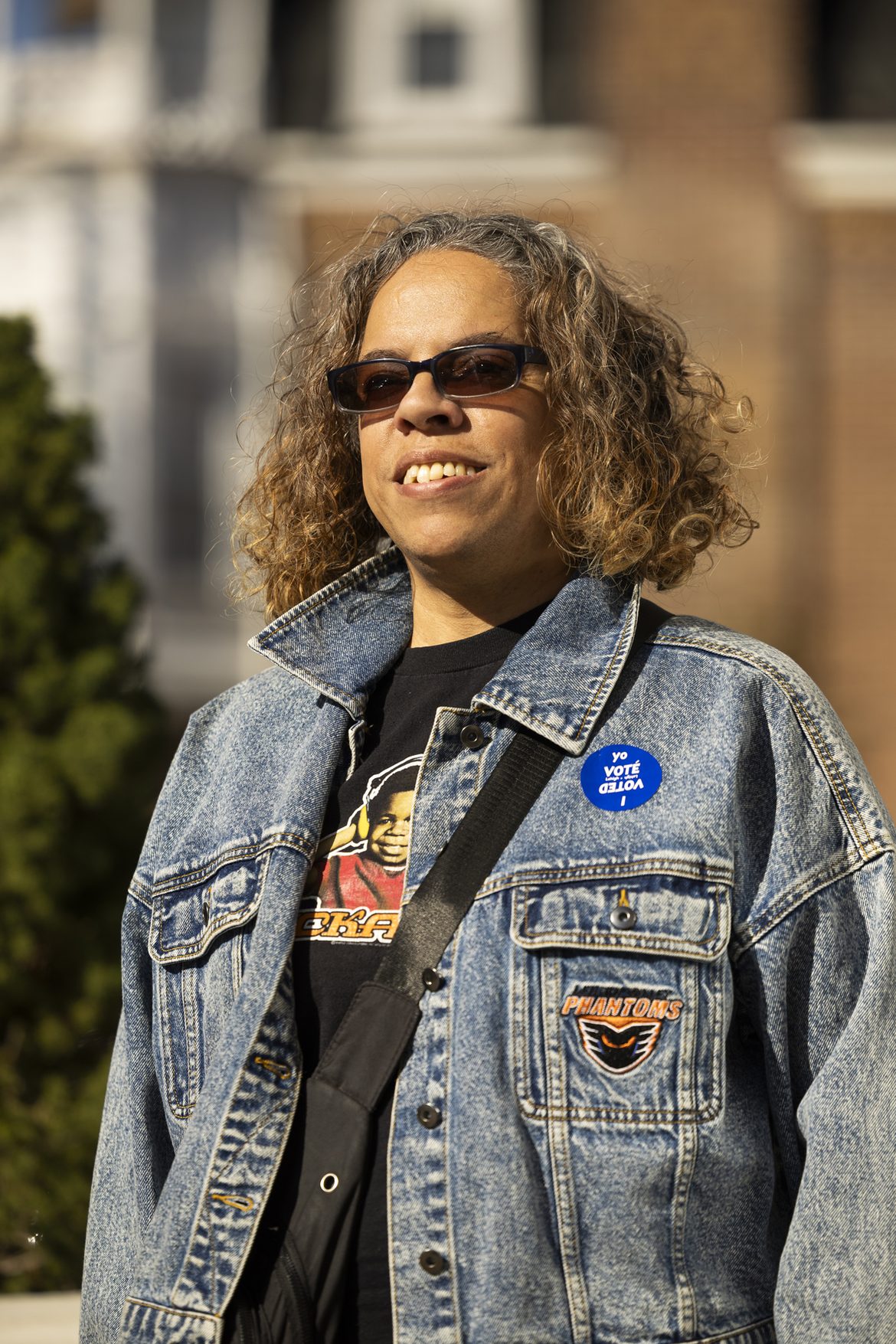
Photo by Ryan Collerd | Centro de Periodismo Investigativo
“I mean, I’m a caregiver for her, and I’m a caregiver to my husband, and there’s not enough things that are going good for people that need caregivers. So we need some more, some pools, some extra hours, some PTO, and they’re fighting for that. Two, the hate. The hate has to stop. Unfortunately, things that are going on, we need to work together to make this work. We need world peace. I mean, unfortunately it’s cliche, but it is what it is. Three, there’s so much I can’t even think straight about it, but pretty much she’s an elderly person. She needs her coverage. Medicare, Medicaid. I have Medicaid. I’m a diabetic. I need it. People right now want to take it away. I work. How am I, I mean, unfortunately the company I work for does not offer their own type of insurance, health insurance,” Nieves says.
I ask what she thinks of Mackenzie, the Republican who has represented her district since January 2025.
“He’s not doing the work of the people. He’s doing the work of Trump. He is not going for helping the people. He’s helping Trump,” she replies.
This translation was generated with the assistance of AI and reviewed by our editorial team to ensure accuracy and clarity.