
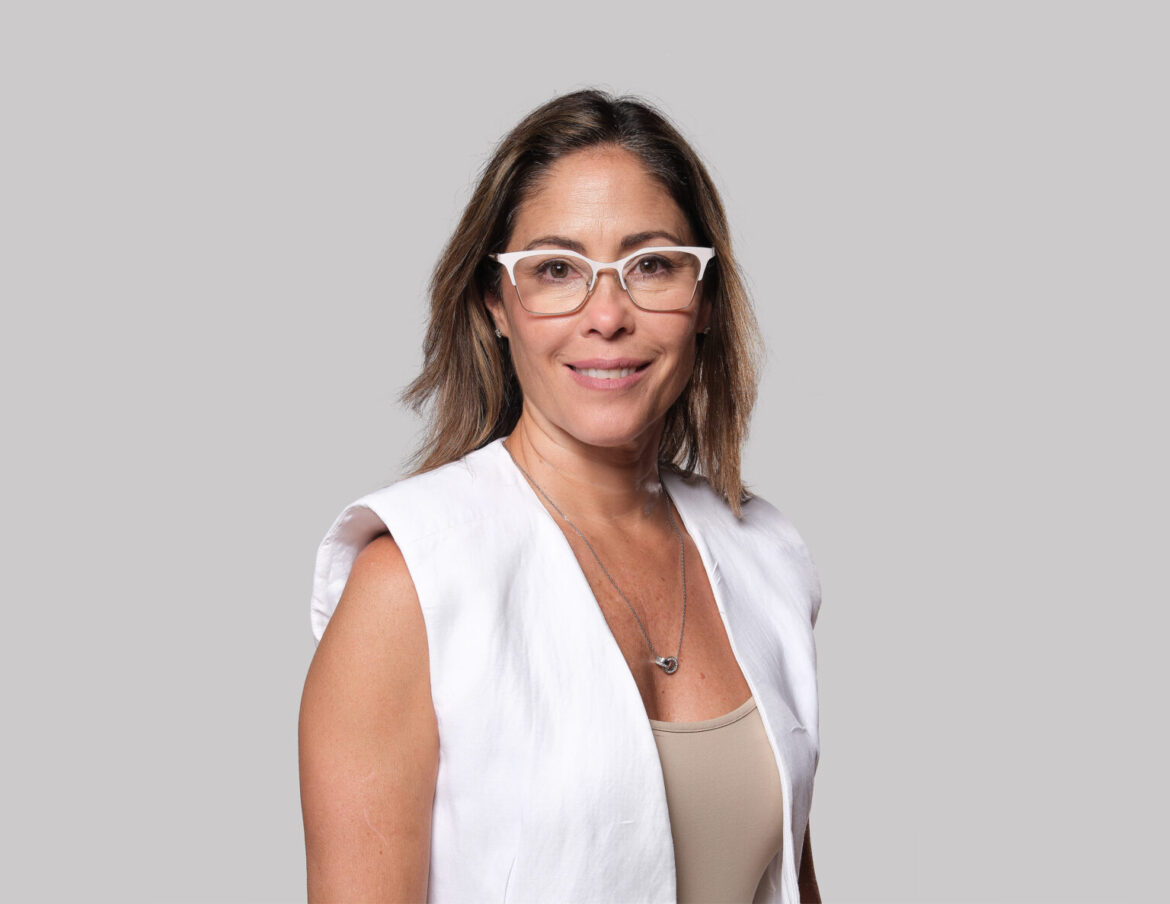

San Juan, Puerto Rico – The Columbia University Graduate School of Journalism announced Wednesday that Puerto Rican journalist Omaya Sosa Pascual is among the four recipients of the prestigious Maria Moors Cabot Prize this year. The award honors journalists and news organizations whose outstanding work fosters a deeper understanding of the Americas.
“We are filled with pride knowing that the co-founder of the Centro de Periodismo Investigativo and editor of special projects has been selected for this international honor, previously awarded to highly respected journalists across our hemisphere such as Alma Guillermoprieto, Marcela Turati, Oscar Martínez, Giannina Segnini, Marina Walker, Martín Caparrós, Hugo Alconada, and Graciela Mochkofsky,” said Carla Minet, executive director of the CPI.
“Omaya Sosa Pascual has been a tireless advocate for investigative journalism and a champion of cross-border collaboration in the Caribbean, Latin America, and the United States. Her fearless pursuit of truth, commitment to holding governments accountable, and dedication to mentoring the next generation of journalists, distinguish her among this year’s Cabot honorees,” Minet added. “She represents a new generation of investigative journalists: entrepreneurial, handling large amounts of data, fluent in multiple languages and platforms, and deeply committed to collaboration.”
The award will be presented by Claire Shipman, interim president of Columbia University, during a ceremony at the university’s New York campus on October 8, 2025.
Established in 1938 by Godfrey Lowell Cabot, the Maria Moors Cabot Prize is the oldest international award in journalism. It is administered by the Columbia Journalism School and recognizes journalists and media outlets whose work strengthens inter-American understanding.
In awarding the prize to Sosa Pascual, the university’s trustees noted that “investigating power in the Caribbean with few resources and often alone is a daunting task for journalists, especially on small islands where job opportunities are scarce.” They added: “Sosa Pascual’s commitment under these circumstances has made her a role model and mentor for many.”
Sosa Pascual said she received the news with pride and emotion.
“I have no words to describe the immense pride I feel that they turned to Puerto Rico to recognize the important work we’re doing in this region of 40 million inhabitants —a region long neglected and colonized. This award isn’t just for Puerto Rico, the CPI, or my colleagues, but for the journalists of the Caribbean islands who, with great effort, began working with us about 10 years ago, across seas and in four languages,” the journalist said.
Winners are selected by a jury of 11 professionals and academics who consider nominations submitted by the dean of the Journalism School. Each year, three to five recipients are chosen, although the number may vary. Selection criteria include a demonstrated commitment to journalistic excellence and service to the profession.
Sosa Pascual is an award-winning investigative journalist and media entrepreneur with 25 years of experience. In addition to her leadership at CPI, she has led cross-border reporting efforts with Caribbean journalists for the past seven years. Her work has appeared in both local and international outlets and has earned recognition from journalism organizations in Puerto Rico and abroad.
Among her most celebrated investigations is her reporting on the death toll from Hurricane Maria in 2017, which was republished and cited by over a dozen national and international media outlets. That reporting laid the groundwork for the year-long project Los Muertos de María, produced in partnership with Quartz and The Associated Press, which documented over 500 deaths linked to the disaster—vastly outnumbering the official government tally of 64.
Previously, she co-founded NotiCel.com, a digital news outlet where she served as co-editor and managed its development and business operations. She currently leads Es Mental, her latest venture: a Spanish-language digital magazine focused on mental health.
Before transitioning to digital and nonprofit media, Sosa Pascual worked in traditional Puerto Rican outlets such as the newspaper El Nuevo Día and the radio station Red 96. Her stories have been published in more than a dozen Puerto Rican and international media organizations, including The Washington Post, The New York Times, CNN, The Miami Herald, El Nuevo Herald, La Nación, Listín Diario, Diario Libre, El Caribe, El Tiempo, La Prensa, El Vocero, and Metro.
She is a member of the International Consortium of Investigative Journalists (ICIJ), which was a key contributor to the Pulitzer Prize-winning Panama Papers, the largest investigative journalism collaboration in history. Through the CPI’s Training Institute, she has mentored journalists in Puerto Rico and the Caribbean. Her vision for the Caribbean Investigative Journalists Initiative has helped train and connect more than 60 journalists across islands that speak five languages, in a region that remains largely underreported.
In addition to Sosa Pascual, this year’s Maria Moors Cabot Prize recipients are:
- Nora Gámez Torres, reporter for The Miami Herald and El Nuevo Herald
- Isabella Cota, Mexican journalist specializing in corruption and financial crime, and a member of the ICIJ
- Natalia Viana, investigative journalist at Agência Pública in Brazil
This year’s jury included Rosental Alves, chair of the Board of Directors and founder/director of the Knight Center for Journalism in the Americas at the University of Texas at Austin; Abi Wright, executive director of Professional Awards at the Columbia Journalism School; Juan Enríquez Cabot, president and CEO of Biotechonomy, LLC; Elena Cabral, associate dean of Academic and International Programs at the Journalism School; Carlos Fernando Chamorro, founder and editor of Confidencial; and Angela Kocherga, news director at KTEP and a border affairs reporter. Also on the jury were Marjorie Miller, administrator of the Pulitzer Prizes at Columbia University; Hugo Alconada Mon, investigative journalist at La Nación; Boris Muñoz, Venezuelan-American journalist, author, and editor; Ginger Thompson, chief of correspondents at ProPublica; and Adriana Zehbrauskas, documentary photographer.