

When the event ended, several women still had their hands raised. There were more questions and comments, but time had run out. Last May, during the Community Symposium for Women’s Health, organized by Taller Salud at the Puerto Rico Convention Center in San Juan, one of the most heavily attended events was a talk on endometriosis by Dr. Cristina Ortiz Gómez, a family physician.
The packed room was no coincidence. It confirmed something Ortiz Gómez and Aida Judith Edwards Clemente, coordinator of Taller Salud’s Community Health Promoters Program, have long seen in clinics and in the community: Black people with uteruses face more obstacles to having their pain heard, investigated and diagnosed in time.

Photo provided
Endometriosis is a condition that affects millions of women and people who can become pregnant around the world. The World Health Organization estimates that one in 10 people with a uterus of reproductive age worldwide has the condition. It involves the growth of glands and endometrial tissue outside the uterus and can cause symptoms such as pelvic pain and infertility, significantly affecting the health and quality of life of those who suffer from it. But the diagnosis depends on the skin color of the person who has it, as documented by scientific evidence and multiple testimonies gathered by the Gender Investigative Unit, a partnership between Todas and the Centro de Periodismo Investigativo (CPI).
“When I studied medicine, in 2001, at the Medical Sciences Campus, we were still being taught that this was a disease that affected white women more,” Ortiz Gómez said in an interview with the Gender Investigative Unit. “Racial disparities were not taken into account, nor were all the obstacles Black women and other women of color face in getting a diagnosis.”
The idea that endometriosis was an illness specific to white women arose from methodologically flawed research conducted a century ago, according to a 2022 article published in the scientific journal Reproduction & Fertility and available through the National Library of Medicine.
In the 1920s, U.S. physician John A. Sampson, who is credited with the most widely accepted theory about the origin of endometriosis — retrograde menstruation — was studying infertility at a time of social concern over declining birthrates among upper-class white women in the United States. In that context, gynecologist Joseph Vincent Meigs proposed in 1938, that endometriosis was linked to contraceptive use and delayed motherhood, factors associated with upper-class women who had access to private medical care. By then, family planning clinics were already promoting diaphragms with spermicide, condoms and vaginal douches with antiseptic solutions, methods available mainly to upper- and middle-class white women.
Meigs argued that prolonged, uninterrupted menstruation, the result of postponing pregnancy, caused changes that led to the disease.
That theory persisted for decades because of studies that compared white patients treated in private clinics with Black patients treated in hospitals and public health centers, without considering racial bias or differences in access to medical care between the two groups. Racial bias refers to the conscious or unconscious tendency to treat people unequally based on their race or ethnicity, favoring some groups while restricting opportunities for others.
Although some challenges to Meigs’ claims had emerged by the 1950s, it was not until 1976, with the work of Black physician Dr. Donald L. Chatman, that the narrative truly began to change. Chatman documented that one in five of his private Black patients had endometriosis, but 40% of them had been wrongly diagnosed with pelvic inflammatory disease, showing how the myth of racial “immunity” to the disease was harming their medical care.
By then, the false notion had already made its way into textbooks and shaped generations of doctors. Reference texts in gynecology, such as Speroff’s Clinical Gynecologic Endocrinology and Infertility and Blueprints Obstetrics & Gynecology, described endometriosis for decades as more common among white women, often without citing any source to support the assertion.
Ortiz Gómez experienced that as a medical student in Puerto Rico. What she heard in classrooms never reflected what the evidence shows today.
“Now people are talking more about systemic racism and how it affects people, but when I was studying, more than 20 years ago, that was not discussed,” she said. “What the science says is that there should not be a higher prevalence in one race than another.”
What the Numbers Say, and What They Fail to Explain
The scientific review on which the 2022 Reproduction & Fertility article by researchers Olga Bougie, Ikunna Nwosu and Chelsie Warshafsky is based summarizes studies that did find differences in diagnosis rates among racial groups. Black and Latina women have historically been less likely to receive an endometriosis diagnosis than white women, while Asian women showed higher rates. An analysis of medical records in the United States found that 70% of people diagnosed with endometriosis were white, compared with just 4.7% who were non-Hispanic Black women.
Those statistics, as the authors make clear, do not prove that the disease is less common in Black or Latino bodies. Rather, they show that the studies that produced those figures had serious methodological flaws. One was that the samples were composed mostly of white women, and the studies almost never examined factors as relevant as the number of years a diagnosis was delayed or the severity of symptoms by racial group. Science, the researchers noted, ended up documenting who received the diagnosis, but not necessarily who had the condition.
That matters because pelvic pain, the main symptom of endometriosis, has historically been minimized in Black patients. According to the researchers, medical education has perpetuated stereotypes about Black patients and their experience of pain.

Photo by Ana María Abruña Reyes | Todas | todaspr.com
Pelvic pain is the main symptom of endometriosis, which involves the growth of glands and endometrial tissue outside the uterus.Photo by Ana María Abruña Reyes | Todas | todaspr.com
That medical racism did not emerge in a vacuum. Much of the history of modern gynecology in the United States is marked by the many brutal experiments performed on enslaved Black women who underwent surgeries without consent, anesthesia or painkillers. Those experiments continued in the 20th century on the bodies of Black, migrant and Puerto Rican women, as documented in “La operación,” a 1982 film by Puerto Rican filmmaker Ana María García.
Despite all the information now available, according to the 2022 article, the notion that patients of color have a higher tolerance for pain persists among some health providers. It is a belief with no biological or scientific basis that has resulted in less attention and less treatment for chronic pain in this population, increasing the violence they endure every day.
Puerto Rico Has Fewer Diagnoses, but Not Fewer Cases
If the data in the United States are already alarming, the situation in Puerto Rico is even more complex due to a lack of information. Ortiz Gómez researched the issue to prepare her talk at Taller Salud’s symposium and came across a figure that surprised her. Endometriosis is estimated to affect 10% of women globally. In Puerto Rico, a 2007 study led by Puerto Rican researcher Idhaliz Flores found a prevalence of 4.5% among 1,193 women surveyed.
That figure never convinced Flores, co-founder of the Puerto Rican Endometriosis Patients Foundation and a women’s health researcher at Ponce Health Sciences University. The reason: In the questionnaire used for the study, about half of the women who did not have an endometriosis diagnosis said they had experienced severe, disabling pain during their periods. “What we have presumed since then is that it is being underestimated, that that 4%, almost 5%, had to be much higher.”
“What happens is that we are not diagnosing them. We are not believing them that that pain could be endometriosis,” Flores said. If half of those cases of severe, undiagnosed pain were in fact endometriosis, she said, “we can go from 5% to 10%, which is the global figure.”
That question led to a 2019 study by Fourquet et al. that analyzed disparities in health care services among women with endometriosis who had private and public health insurance. As a result of that research, the estimated prevalence of endometriosis in Puerto Rico was 7.5%.
For Flores, it is vital to close Puerto Rico’s diagnostic gap so that “all women, regardless of where they live or their socioeconomic level,” can have access to more effective treatments.
She is hopeful that goal is getting closer. Recently, the American College of Obstetricians and Gynecologists came out in favor of no longer requiring laparoscopy for diagnosis.
“This could be a game changer, because it would allow more doctors, from primary care physicians to gynecologists, to use the symptoms to make this presumptive but fairly accurate diagnosis based on the symptoms and begin treatment earlier,” Flores said
That urgency to diagnose the condition in time is key, and it is the same concern Ortiz Gómez has. She warns that an endometriosis diagnosis can currently take five to 12 years from the onset of symptoms.
“The longer a patient goes undiagnosed, the more the condition can continue to progress. The earlier the diagnosis and the faster the appropriate treatment — whether the patient begins some kind of hormonal medical treatment or is referred to an endometriosis specialist for some type of intervention — the more it helps prevent the disease from continuing to progress,” Ortiz Gómez explained. “And that is a very big problem, because the more it progresses, the greater the pain and the more quality of life is affected.”
In clinical practice, Ortiz Gómez has seen patients who have suspected for years that they have endometriosis without anyone confirming it. Sometimes women receive the diagnosis only when they try to have children and struggle to conceive.
The Intersection of Race and Class
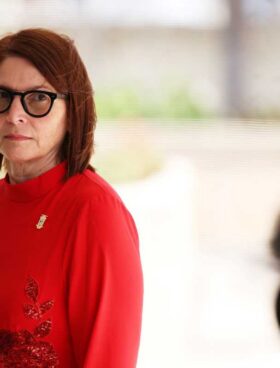
Alexa Paola Figueroa, a 34-year-old Caguas resident, is one of those women. Her period began in fifth grade, and she has lived with pain ever since. Her mother also suffered from menstrual pain, so in her home, it was seen as normal.
“I always had severe menstrual pain, for as long as I can remember. It got worse especially during adolescence. But because it happened during my period, and my mother also had pain, it was very normalized,” she said.
She began to question it at 24, when the pain started appearing during ovulation, too.
“That was when I said, ‘Something has to be wrong,’ because the pain was disabling me for 15 days with a very sharp stabbing ache,” she recalled.
She went to a gynecologist. That first doctor told her everything was normal and that the pain would go away after she gave birth.
“I lived with that diagnosis until I said, ‘Wait, it is impossible that I am in pain all 30 days of the month and that I have to go have a baby so I won’t feel pain.’ That made no sense to me,” she said.
That comment from the first gynecologist echoes a myth Figueroa has heard from several doctors over the years.
“There are many gynecologists who say the alternative is to try to give birth so this can be relieved. That is very unfair, as if that were my only alternative,” she said. “But if I do not want to be a mother, what is my alternative for the pain?”
The myth that endometriosis is cured by pregnancy is false, according to the Mayo Clinic. Medically, pregnancy can temporarily pause symptoms, but it does not eliminate the disease, which is chronic and can reactivate after childbirth or when breastfeeding ends.

Photo by Ana María Abruña Reyes | Todas | todaspr.com
Figueroa did not accept that first “diagnosis” and trusted her intuition. She saw a second doctor, who diagnosed her with polycystic ovaries, now called polycystic ovary syndrome, without mapping or an MRI. Then she saw a third doctor, until she found a gynecologist who finally took her pain seriously. By then, almost 15 years had passed since her symptoms began.
Through that process, Figueroa identified a pattern tied to the intersection of race and social class.
“For me, there is a racial factor, but there is also a class factor. I think poor people have to swallow their pain even more. Because I am Black, because I have an Afro, people assume I am lower class, that I come from poverty. And that alone changes the way they treat you,” she said. On more than one occasion, she said, certain treatment options were not even mentioned to her because doctors assumed she could not afford them.
“Sometimes they don’t even offer it to me. It is like, ‘This is very expensive.’ But how do you know whether I can pay for it or not? That’s what hurts the most, that association: because I’m Black, I’m poor, and because I’m poor, they limit my possibilities,” she said.
In the process, Figueroa also experienced what she describes as obstetric violence when an intrauterine device was inserted without any painkillers. She ended up in the emergency room that same night because of the pain.
That device came after a hormonal vaginal ring, the first treatment she was prescribed before surgery, caused an arrhythmia she had not had before. Since then, she has taken heart medication. Today, Figueroa does not see just one doctor, but an entire team.
“Now I’m all in with the cardiologist, who is trying to figure out why my heart is still racing. I go to the endocrinologist, who has helped me a lot with the hormonal side. This also causes skin flare-ups, so I have to see a dermatologist. And my therapist, the psychologist, all in,” she said.
She has also turned to natural medicine, which she said has helped her tremendously with the pain.
“Acupuncture has also helped me, therapies, massages, even chiropractic care.”
But every specialist represents an expense, and her private health insurance does not cover all of them.
“[The health insurance] covers everything that has to do with female reproduction, all the hormones. It does not cover anything related to pain. Not pelvic floor therapy, not robotic surgery, not innovative pain treatments,” she said.
Figueroa has private health insurance and still pays out of pocket for much of her treatment. She also described how limited the pool of endometriosis specialists is in Puerto Rico and how difficult it is to reach them.
“Neither of the two doctors treating me now in private practice accepts health insurance for visits, so the first appointment is $200. And when I had to change doctors, the surgeon required an assistant who cost $1,000,” she said. “There are like 10 specialists in all of Puerto Rico. If they don’t take health insurance, the ones who do are giving appointments five, six, seven months out. If you want to be seen quickly, then you find the money and pay.”
Psychological support has also been central to her recovery, especially after the effects of hormonal treatment.
“The ring was the hardest part. It was like a mental fog and an endless low. This whole process has been so hard that I have spent many years in psychological therapy to be able to cope with it. Definitely, without therapy, I don’t think I would be the same,” she said.
Figueroa is currently awaiting a hysterectomy, which would be her second surgery. The decision to have surgery has not been only physical. It has also been an emotional process because, although becoming a mother was not in her plans, she would have liked to have the option.
“They really put you at a crossroads. At 34, yes, remove my uterus … but I’m also not a mother. It’s quality of life or pain at the level I’m already at, after so many years operating through pain. So being a biological mother may not be an alternative for me,” she said.
That is why, when asked whether she has any advice for other young women, she goes straight to the myth that followed her for years.
“Do not normalize pain. If a relative, a gynecologist or whoever tells you that pain is normal, no, that has to stop now. And don’t get tired of seeking a diagnosis until you feel sure. If you went through three gynecologists and didn’t like them, go to the fourth,” she said. “And that part about pain and motherhood: You don’t have to wait for motherhood to feel relief. There are different treatments, including for adolescents. If I had been taken to a gynecologist in time, I wouldn’t have spent 25 years suffering from chronic pain.”
The Promoters Who Go Where the System Does Not
While science tries to document bias in the medical literature, the organization Taller Salud has spent years addressing the problem on the streets through its Community Health Promoters Program. Aida Judith Edwards Clemente, who coordinates the program, explained that endometriosis is part of the sexual and reproductive health curriculum received by women training as promoters in towns across the island, from Loíza, on the northeastern coast, where the project began, to Salinas on the south coast.
“There are many women who are going through this situation and do not have reliable, real information, or the steps they need to take to address and face this,” she said.
That was one reason the organization dedicated one of its talks at this year’s community health symposium to endometriosis.
“It is a topic women continuously bring up, and they don’t have much information. Because of bias, because of racism or because of existing limitations, many times they hold back and continue with pain. They don’t have alternatives,” the promoter said.

Photo by Ana María Abruña Reyes | Todas | todaspr.com
Edwards Clemente does not hesitate when asked whether racial bias is present in the health care spaces Black women in Puerto Rico access. “One hundred percent. Those biases are there all the time. “It doesn’t matter how much education you have or how much data you can present — those biases are still there,” she said.
That is why the promoters’ work is not limited to providing information. It is about creating safe, confidential spaces where women can put into words what they have experienced, including medical racism, without fear, and connecting them with available community resources.
Those biases, she said, are compounded by a more concrete barrier: access. Edwards Clemente said the type of health insurance a person has and the distance between that person’s community and endometriosis specialists largely determine whether they will get an adequate and timely diagnosis and treatment.
That gap between insurance plans is documented in a 2019 study published in the American Journal of Obstetrics & Gynecology, in which Flores took part. The study analyzed 342 cases of women with endometriosis in Puerto Rico who were enrolled with the same insurer, which offers both public and private coverage. It found that patients with private plans used medical services — including hospital visits, laboratory tests, and pathology and radiology studies — three times more often than those with public plans. Patients with public coverage were also 3.5 times less likely to undergo laparoscopy, the procedure that confirms the diagnosis, and 2.7 times more likely to be prescribed opioids. Only 29.5% of patients with public plans used gynecology and obstetrics services, compared with 70.5% of those with private plans.
The Pain
There is a phrase Edwards Clemente hears again and again in promoters’ spaces: the idea that women, and Black women in particular, are made to withstand pain.
“Apparently, we’re expected to endure pain and everything else that comes our way. And that’s where the idea that we’re ‘resilient,’ comes from, right? But we have to turn that around,” she said.
To reverse that narrative, she said, women need knowledge. They must be taught that they have a right to informed consent, that they can ask questions, demand explanations and defend their rights before a health care system that often does not listen to them.
“That’s why we have to take ownership of that information,” she said, explaining that the curriculum of the Community Health Promoters Program includes that empowerment component.
“Our main goal is to develop women’s leadership and strengthen them so that, no matter where they go, they can defend their rights and make demands. Not only for themselves, but also for their community,” Edwards Clemente said.
A Law Still Waiting
The void documented by science and the community is also reflected in Puerto Rico’s public policy. Senate Bill 174, introduced by Sen. Ada Álvarez Conde at the request of the Endometriosis Patients Foundation in Puerto Rico, seeks, among other things, to require public and private health insurance plans to cover endometriosis treatments. The bill was unanimously approved in the Senate, but has not moved in the House of Representatives since October of last year, when it was referred to the Health Committee.
In 2024, the Senate also approved Senate Bill 1204, authored by then-Sen. Ana Irma Rivera Lassén, which sought to guarantee early diagnosis and accessible treatments, but the House of Representatives did not take action on the measure.
The legislative delay is part of the same pattern described by Ortiz Gómez, Figueroa and Edwards Clemente: a system that takes too long to recognize the pain of people with uteruses.
Meanwhile, in spaces like the Community Symposium for Women’s Health, the rooms continue to fill. And the questions about pain, diagnosis and the right to be heard keep coming.
This translation was generated with the assistance of AI and reviewed by our editorial team to ensure accuracy and clarity.