

Communities have always played a key role in environmental struggles in Puerto Rico because they are often the first to learn when a project will affect their quality of life.
A prime example is the fight against the U.S. Navy in Vieques in the early 2000s. Driven by the expropriation of their land, abuses by the military and threats to their livelihoods, Vieques fishermen waged some of the earliest protests at sea. After David Sanes was killed by a bomb, residents, religious groups, politicians and union leaders established more than a dozen protest camps on Vieques, also known as Isla Nena. Opponents of U.S. military exercises on their land gained allies, organized historic mass marches, risked arrest for civil disobedience, secured referendums and forced the U.S. military to stop using the land for military purposes. The Vieques community succeeded in expanding its struggle into a cause embraced by Puerto Ricans of all political stripes, in every corner of Puerto Rico.
The Navy’s departure from Vieques remains one of the most memorable community struggles.
In recent years, environmental struggles have continued, with protests and encampments against projects such as the Applied Energy Systems (AES) coal plant in Guayama, the proposed channelization of the Río Piedras in San Juan and illegal construction projects such as the swimming pool at the Sol y Playa condominium complex in Rincón. These battles have also moved to social media, where many communities have made information part of their activism, drawing on investigative and educational skills.
For the past four years, I have covered environmental and climate change issues for the Centro de Periodismo Investigativo. Several of my investigations have involved communities active on social media that have provided me with data and documents during the reporting process.
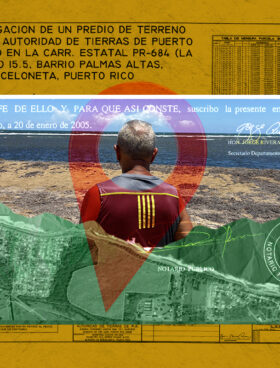
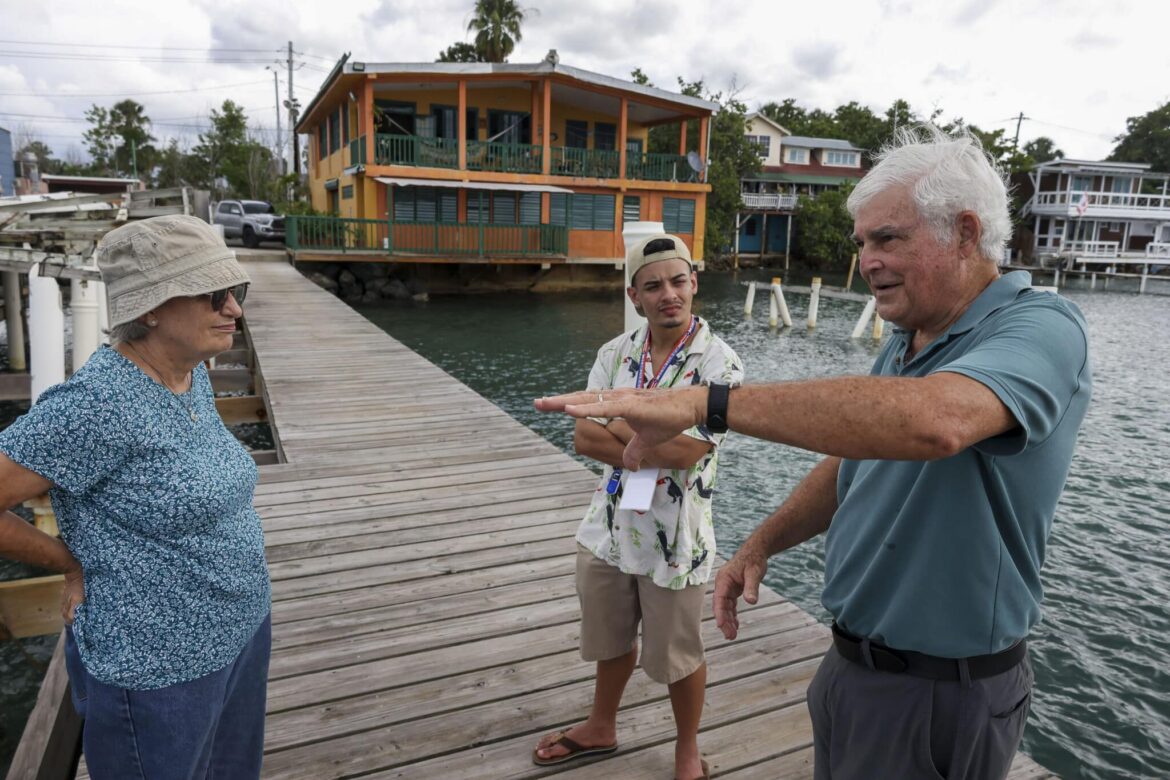
When I was just starting out as an investigative journalist, one of my first stories focused on the Islote community in Arecibo. I spoke with a resident who described how several members of a family with close ties to those in power were destroying dunes, blocking access to the coast and improperly taking possession of homes with complete impunity. Some time later, a community leader shared a list of properties the family had improperly taken over. That list proved vital to our investigation after we set out to verify its accuracy using government documents, official data and interviews with neighbors, experts and government agencies.
In another investigation, this one about the El Maní community in Mayagüez, an internet user provided a crucial piece of the puzzle. For years, residents of the coastal neighborhood had complained that modifications to the road running through their community caused their properties to flood every time it rained. Intrigued by their complaints, I reviewed the entire construction file from the Puerto Rico Highways and Transportation Authority. It was the internet user who connected me with key witnesses whose accounts helped substantiate my investigation and put a human face on the problem, as well as providing photos and videos documenting the flooding, which I experienced firsthand when I visited the community.
For each of my investigations, members of the communities I reported on guided me, shared their stories and provided crucial documents, photographs, videos and testimony that helped me identify and corroborate my main findings.
More recently, environmental, civic and residents’ organizations have mobilized against the Esencia project in Cabo Rojo. The groups have used social media to share information about every new finding, complaint or development involving the project. They have formed alliances with content creators and citizen journalists who have amplified their concerns. Esencia’s developers are in the process of obtaining all the permits required for the project.
At the Centro de Periodismo Investigativo, we have used data, documents, testimony and expert analysis to verify what we have published in our investigative series What’s Behind Esencia, which broadly examines the project’s environmental, tax and real estate impacts.
Each of these stories illustrates how communities are at the center of environmental struggles.
Community groups have made use of available resources to denounce environmental, social, economic, cultural and health impacts they consider harmful to their neighborhoods, which are generally affected by poverty or inequality. They use social media to share documents, scientific assessments and complaints that news organizations, in turn, gather, verify and cross-check. Sometimes, this is the only way communities can try to counter the large public relations budgets and paid media commentators that the government or developers frequently hire to build support for their projects or initiatives, rather than investing in ensuring that residents’ concerns are addressed and that they are included in the planning and design of these types of developments.
Communities do not want to be victims. They want to be agents of change, seeking to protect and manage their natural resources against the threat of having their quality of life compromised solely to benefit private developments.
During Earth Week, I believe it is important to remember that journalists have a responsibility to determine what information is accurate by checking it in every possible way before publication, and to listen to experts and affected communities about the real benefits of these types of developments.
This translation was generated with the assistance of AI and reviewed by our editorial team to ensure accuracy and clarity.