

Declaring a fertilized egg a “natural person” under the law inevitably places the rights of pregnant people in a subordinate position to those of the pregnancy.
Many of the consequences of this type of statute are already known from U.S. states where similar measures have been implemented: heightened surveillance and suspicion of pregnant individuals, criminalization, justification for denying essential medical care, and even obstacles for people who want to become parents through in vitro fertilization treatments.
If signed by the governor, Senate Bill 504 — sponsored by Senate President Thomas Rivera Schatz and intended to amend the Civil Code to recognize “the conceived” as a natural person — would move Puerto Rico closer to the group of states and territories that, against medical and legal recommendations, grant legal personhood to an embryo. The mandate could apply even against the will of, and despite the medical risks to, the pregnant woman or trans person.
A Medical Crisis Treated as a Crime
One example occurred in Georgia in March, when a 24-year-old woman who suffered a miscarriage was charged with concealing the death of another person and with abandoning a body.
According to local reporting, she was found unconscious and bleeding at an apartment complex in the city of Tifton. During the emergency response, another person alleged that she had placed the fetus in a bag and thrown it in an outdoor trash container.
Her mugshot went viral on social media as news outlets framed what was in fact a medical crisis as a criminal act.
The charges were later dismissed after an autopsy confirmed she had miscarried at 19 weeks of pregnancy.
A Pretext to Deny or Delay Basic Health Care With Legal Consequences
In Ohio, another woman, Brittany Watts, was charged with “abuse of a corpse” after flushing the toilet following a miscarriage at nearly 22 weeks of pregnancy in 2023.
Her water had broken prematurely, and her physician told her the pregnancy was not viable and that she needed to go to the hospital because there was a “significant risk” to her health and life. When she arrived at the religiously affiliated hospital, she believed labor would be induced. Instead, as The Washington Post reported, doctors and hospital officials spent hours debating the “ethics” of providing her care. Over two days, she made two hospital visits and waited a total of 19 hours. One physician wrote: “My recommendation, rather than waiting for the mother to be at death’s door before proceeding with treatment, is that she deliver this baby.”
The woman’s attorney, Traci Timko, told the court that the delay in providing medical care stemmed from hospital staff’s fear that treating her might constitute an abortion and whether the doctors could legally perform it. Exhausted from waiting for a decision, she went home, where she miscarried in the toilet. With an IV still in her hand after a weeklong hospitalization, a police officer entered her room to interrogate her. Two weeks later, the same officer arrested her.
Although a grand jury later declined to indict her, she was forced to appear in court as a criminal suspect, obtain legal representation, and listen as police and expert witnesses dissected the most intimate details of her medical history while she mourned the loss of a wanted pregnancy.
In January, she filed a federal lawsuit against several of the medical professionals who treated her, accusing them of causing her harm by conspiring with a police officer to fabricate the criminal case against her.
When Death or Prison Becomes a Real Possibility
In the United States, an estimated 30% to 40% of pregnancies end in miscarriage. That means the likelihood of similar legal cases arising in Puerto Rico, if Senate Bill 504 is approved, is very real, according to constitutional law attorney Yanira Reyes Gil, first vice president of the Puerto Rico Bar Association.
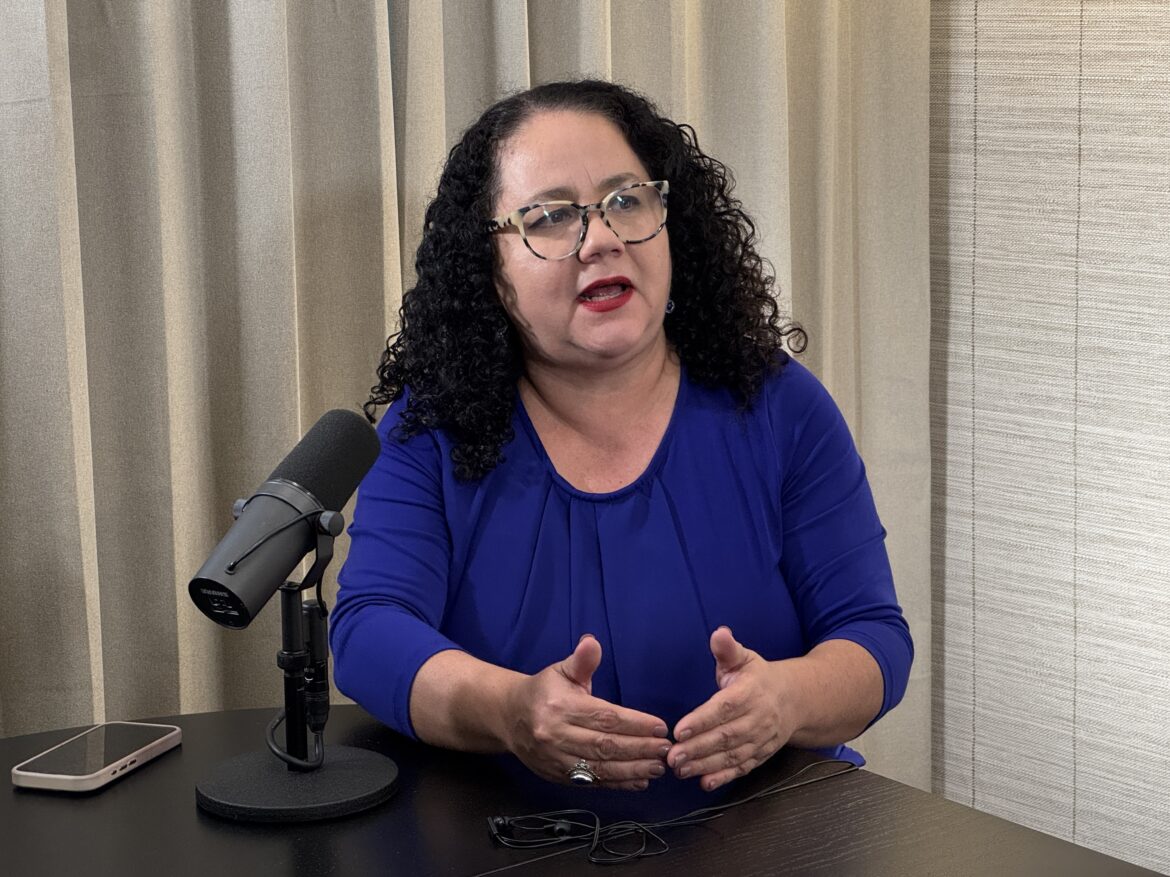
Photo by Brandon Cruz | Centro de Periodismo Investigativo
“This criminalizes and places under surveillance the conduct of women and pregnant people throughout the entire pregnancy. It’s as if all their rights were suspended during that time, and this includes not only the possibility of ending up in prison for behaviors during pregnancy but also having limited access to the health services they need to save their lives,” Reyes Gil said. She pointed to chemotherapy for people diagnosed with cancer as one example.
For Mayra Díaz Torres, director of the anti-racist organization Colectivo Ilé and spokesperson for Aborto Libre Puerto Rico, if Puerto Rico adopts a similar interpretation, the result could be dozens of women suffering health complications from miscarriages that were not properly treated or being prosecuted as suspects accused of harming “a person.”
Díaz Torres, who has personally experienced the loss of several wanted pregnancies, said: “Pregnancy itself brings major challenges, especially here in Puerto Rico with the shortage and closure of labor and delivery rooms and the limited availability of obstetrician-gynecologists. A measure like this would make an already extremely complicated situation even more difficult.”
Prolonging a Pregnancy After Death and a Family’s Grief
One of the most widely publicized cases in the United States was that of Adriana Smith, a 30-year-old Black woman, mother of a 7-year-old boy, and resident of Georgia. At eight weeks pregnant, she was declared brain-dead on Feb. 19 and placed on life-support machines without her family’s consent. According to her relatives, doctors intended to keep her body functioning for months so the pregnancy could continue until a cesarean section could be performed on Smith’s lifeless body. They believed that ending the pregnancy would violate Georgia’s anti-abortion law.
The state’s LIFE Act (Living Infants Fairness and Equality Act) defines a natural person to “include an unborn child” and extends full legal recognition to the fetus.

Photo from GoFundMe
Smith’s mother, April Newkirk, launched a GoFundMe campaign to cover the extensive medical costs generated by the hospitalization.
“We are heartbroken to know that we had no say regarding her lifeless body or her child. Adriana was only two months along when she was placed on life support, and we were given no option but to wait months, only to learn that her baby would suffer from an illness that would cause severe disabilities,” Newkirk wrote in the fundraising appeal.
She set a goal of $600,000. As of this report’s publication, the campaign is close to reaching that amount but has not yet met it.
The cesarean section was performed in June, and the baby has remained in the neonatal intensive care unit ever since.
“They call it a birth, but it was really the extraction of a fetus from the body of a dead woman we were mourning,” Díaz Torres said.
A similar case unfolded in Texas between 2013 and 2014. Marlise Muñoz, a 33-year-old paramedic who had told her family she did not want to be kept on life support, was declared brain-dead after suffering a pulmonary embolism. Because she was 14 weeks pregnant, doctors placed her on a ventilator, arguing that a state law prohibiting the withdrawal of life support from a pregnant woman required them to treat the fetus as a separate patient, even against her previously expressed wishes.
“It’s very frustrating because we know what our daughter wanted, and we can’t honor it because of this law,” Muñoz’s mother, Lynne Machado, told ABCNews.com in January 2014.
Shortly afterward, Muñoz’s family sued the hospital to honor her wishes, and a judge granted their request.
New Tools for Systemic Racism
Both Smith and the woman charged in Ohio were Black. Muñoz was part of a Latino family.
Díaz Torres, who is also an anti-racist activist, noted that these cases show how women racialized as nonwhite, women living in poverty, and those from marginalized communities bear the greatest burden of surveillance, punishment, and the consequences of limited access to medical services.
Multiple studies in the United States have documented that since the COVID-19 pandemic, Black, Indigenous, and Latina women have experienced significantly higher maternal mortality rates.
“Maternal and infant health indicators for Black people are nowhere near where they need to be. A measure like this would only make those outcomes worse, making it even harder, almost impossible, for a Black woman to carry a pregnancy and give birth in peace, without being subjected to violence,” Díaz Torres said.
Threats to Assisted Reproductive Treatments
Laws that declare an embryo a “person” have also created obstacles for people seeking to have children through in vitro fertilization.
In vitro fertilization requires combining an egg and sperm outside the body in a laboratory before the embryo is implanted in the uterus of the person who wishes to carry the pregnancy. One or more embryos may be transferred once they are ready, but they can also be frozen indefinitely.
In Alabama, the state Supreme Court issued a ruling on Feb. 16 of last year declaring that embryos created through in vitro fertilization must be considered children. Since then, several IVF clinics in the state have suspended services.
The case that led to the ruling began in 2020, when a patient at an Alabama hospital that housed a fertility clinic entered the area where frozen embryos were stored, opened one of the tanks, and grabbed several. Embryos are kept at subzero temperatures, so when the individual touched them, he burned himself and dropped them to the floor.
One of the couples who had paid for the creation of those embryos sued the hospital and clinic for the “wrongful death of a minor.” Although a trial court dismissed the claim, the couple appealed to the Alabama Supreme Court, which ruled that the state’s Wrongful Death of a Minor Act applies “to all unborn children without limitation.” The court added that “this includes unborn children who are not located in the womb at the time of their death.”
The couple is seeking damages for what they describe as the negligent death of “their children.”
“These are absurd consequences of an absurd proposal,” Reyes Gil said.
For that reason, she explained, the leap from granting legal personhood “from the moment of conception, which is an abstract and mythical notion,” to the official prohibition of in vitro fertilization is very small — “because the interpretation becomes that these treatments involve ‘discarding persons,’ when what we are actually talking about is fertilized eggs,” said the law professor at the Inter American University School of Law.
Anti-Abortion Strategy Driven by Fundamentalist Sectors
Granting legal personhood to an embryo or fetus is directly tied to criminalization and to violations of the health rights of pregnant people. It is a tactic used by conservative sectors, driven by religious ideology, to prohibit abortion under any circumstance.
In the first two years after the U.S. Supreme Court overturned Roe v. Wade (from June 2022 to June 2024), the organization Pregnancy Justice documented 412 cases in which women were criminally charged for conduct related to pregnancy under child abuse statutes, fetal endangerment laws, and similar provisions. In total, 441 charges were filed. In most cases, prosecutors pursued charges under statutes that allowed them to obtain convictions without proving that the pregnant person harmed the fetus. Of the 441 charges brought, 378 required no evidence of actual harm.
Even before Roe v. Wade was overturned, hundreds of women had been charged under similar statutes, most of them in Oklahoma, Alabama, and South Carolina, states where courts had broadened the definition of “child” to include fetuses, fertilized eggs, and embryos.
Most charges were for child abuse, neglect, or endangering a minor. The majority stemmed from allegations that women had used substances such as opioids, methamphetamine, marijuana, cannabis or THC, cocaine, benzodiazepines, alcohol, heroin, or other prescription drugs.
“Pregnancy criminalization is often carried out under the pretext of addressing pregnancy and substance use. These arrests reflect the evolution of the fetal personhood movement and the drug war into mechanisms to criminalize pregnant people for acts and omissions that would not otherwise be considered crimes but for their pregnancy,” the Pregnancy Justice report states.
Reyes Gil noted that pregnancy criminalization has been aimed at a specific demographic: Black women, immigrant women, and women living in poverty, who are also the groups most frequently charged with drug-related offenses.
“These outcomes are absurd, but we have already seen them in practice, not only in women who use illegal drugs, but even in cases where a woman is taking a prescribed medication that could endanger the fetus and ends up charged with negligence, or cases where a woman under the influence of alcohol gets into a car accident and is accused of endangering the fetus,” she said.
Suspicion and Public Shaming
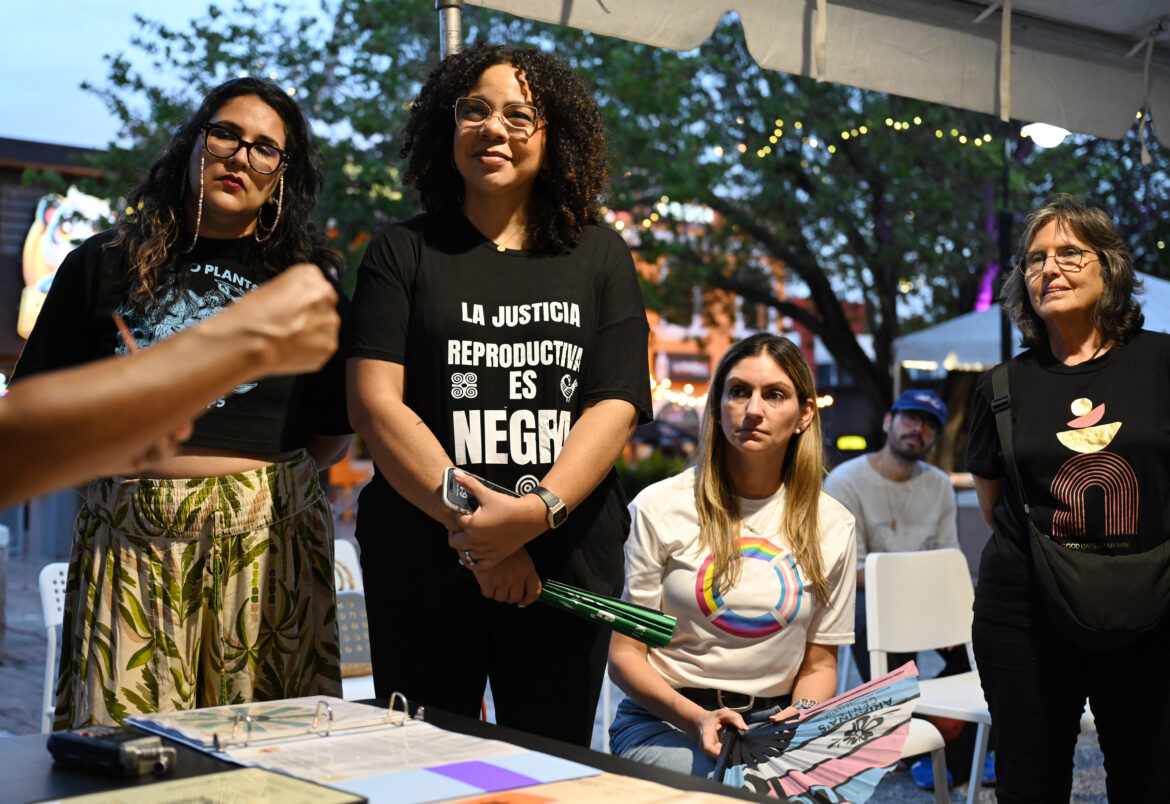
According to Díaz Torres, the goal is to permanently impose surveillance and suspicion on women and anyone capable of becoming pregnant. It is a way to control and confine women through gender stereotypes.
Credit: Photo by Ana María Abruña Reyes | Todas
“What happens if I’m cleaning my house and I fall and lose a pregnancy, or accidentally cause harm to the fetus? Accidents happen. But with a law like this, the lines become so blurry that anyone with any motivation can claim that the person intentionally put the pregnancy at risk,” she said.
“Anyone could use this bill as grounds to judge how a pregnant person is managing their pregnancy. Anyone can say a woman worked too much, or didn’t rest enough, or didn’t eat properly, or whatever else they want to make up,” she added.
A Deterrent to Pregnancy Itself
It also works counter to efforts to boost birthrates, she warned.
“Pregnancy in Puerto Rico is incredibly complicated. Adding state surveillance over every action, or every inaction, during pregnancy is gender-based violence. It’s another way in which mistrust, criminalization, and violence toward motherhood can take unimaginable forms,” Díaz Torres said.
“If this bill becomes law, people will not want to become parents, because if giving birth means that anyone can criminalize my actions during such a difficult and vulnerable process, then who would want to go through it? It’s completely contradictory for a government that claims it wants to increase birthrates,” she added, pointing to the documented consequences of similar measures in U.S. states and other countries..
Experts Warn the Governor the Bill Has No Scientific Basis
Senate Bill 504 seeks “to clarify that the human being in gestation, or nasciturus, is a natural person, including the conceived at any stage of gestation within the maternal uterus.” It was approved by the House of Representatives on Nov. 13 without public hearings in either chamber and was sent to Gov. Jenniffer González Colón on Nov. 20. The governor has until Dec. 20 to sign or veto it.
More than 300 physicians signed a letter to González Colón detailing how the proposed legislation disrupts the doctor-patient relationship as well as medical decision-making and urging her to veto the measure.
The letter states that the medical community was not consulted during the drafting process “about the serious implications that such measures have on the practice of medicine, and it lacks any scientific basis to justify its necessity.”
This translation was generated with the assistance of AI and reviewed by our editorial team to ensure accuracy and clarity.