
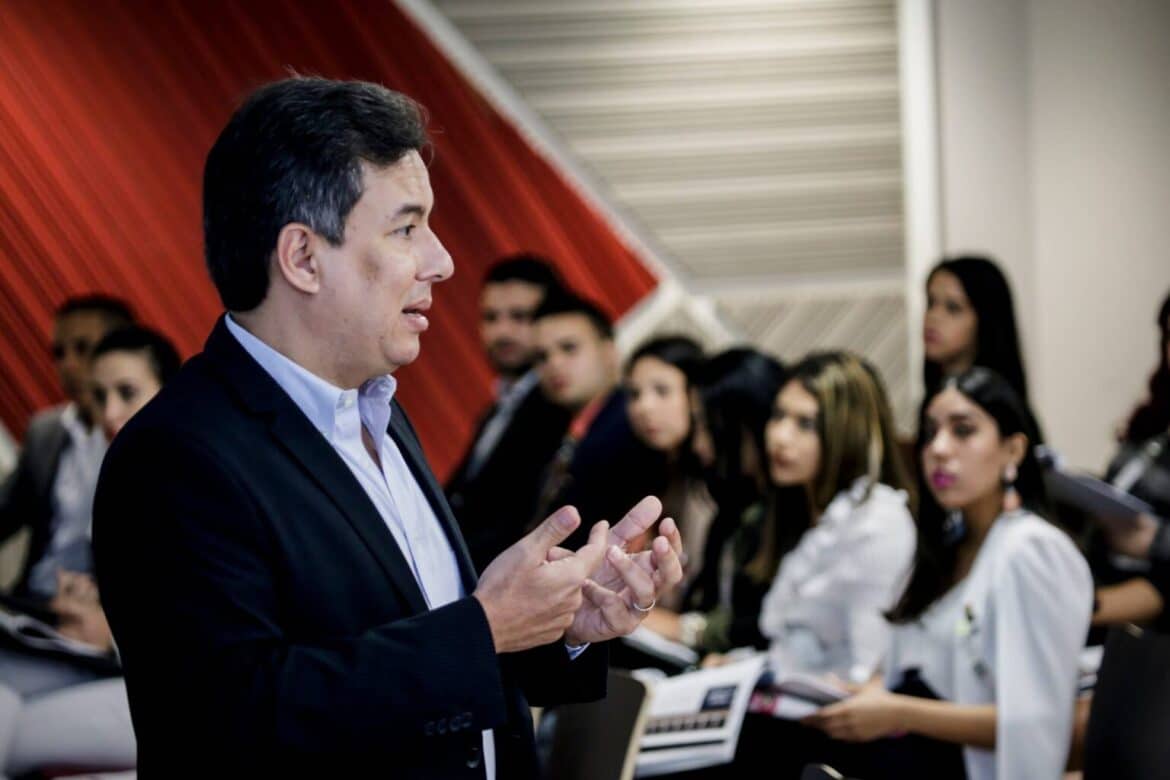

Former Electoral Comptroller Manuel Torres Nieves told the Centro de Periodismo Investigativo (CPI) that he is the sole owner of Politank, the lobbying firm founded in 2010 by the current Chief of Staff, Francisco J. Domenech.
“The shares of Politank are divided between me, as the main shareholder, and the corporation itself,” said Torres Nieves, who also assumed the role of chief executive officer of the company on January 3, following Domenech’s departure.
But his version contradicts those who claim there is more than one owner behind Politank, among them Senate President Thomas Rivera Schatz, who said in May that there were “some passive partners who lent money to Politank” to facilitate Domenech’s exit. Rivera Schatz did not respond to the CPI’s request for clarification on the source of that information.
The senator’s comments stand out because the new owner of Politank once served as secretary of the Senate during Rivera Schatz’s first presidency (2009–2012). In 2012, Rivera Schatz confirmed him as Puerto Rico’s first Electoral Comptroller. In 2017, Torres Nieves resigned from that position, only to return the very next day as Senate secretary, again under Rivera Schatz’s leadership. In 2020, the Senate president unsuccessfully pushed to appoint Torres Nieves as Puerto Rico’s Comptroller. That same person now claims to be the sole owner of Politank.
In response to the CPI’s questions, Torres Nieves insisted that Politank “has never had, and does not currently have, any silent partners,” and that the company “has not received any third-party capital investments nor has any verbal or written commitments to provide financial benefits to individuals who are not shareholders.”
Little is publicly known about the transaction through which the now Gov. Jenniffer González’ Chief of Staff severed his ties with Politank. In April, during her confirmation hearing for the ultimately unsuccessful nomination as Secretary of State, Domenech’s wife, Verónica Ferraiouli, testified that “Politank bought its own shares,” that the agreement was signed “on December 20 or 21, 2024,” and that her Financial Ethics Report details the sale price.

Photo by Brandon Cruz González | Centro de Periodismo Investigativo
However, the exact amount for which Politank was sold has never been made public, nor, perhaps more crucially, who owns the firm after Domenech’s departure. The financial report remains confidential, according to the Office of Government Ethics (OEG in Spanish), and is available only for legislators’ review as part of Ferraioulli’s confirmation process.
The OEG told the CPI that “the transaction related to Politank is reflected in sections 8 and 14 of the document,” which correspond to the declarant’s accounts receivable and sales transactions, respectively. This statement contradicts what both Domenech and Torres Nieves have said, that there was a single payment made to Domenech for his stake in Politank.
The OEG added that audits of the financial reports submitted by Ferraiuoli and Domenech are still underway and in their final stage.
Since June, the CPI has requested an interview with the Chief of Staff, but despite multiple follow-ups, Domenech has never been available to answer questions on the matter.
In May, the official, who wields significant authority over government contracting, told El Nuevo Día that before taking office on January 2, “I ceased to be an officer, director, shareholder, employee, and contractor of Politank.”
Politank’s Clients
Out of the 25 companies Politank lists as clients in the Department of Justice’s Lobbyists Registry, at least 12 have obtained or renewed contracts during the current administration, totaling more than $295 million, according to the CPI investigation.
Politank’s client list includes Elevance Health, the parent company of health insurer MMM; Centuria Opportunities Fund, an investment firm developing a luxury housing project in the San Juan Convention Center District; TeleOnce’s parent company, Lieberman Media Group; Duncan Solutions, the parent of private toll operator AutoExpreso, Professional Account Management (PAM); consulting firm Intervoice Communications; and TURO, a peer-to-peer car-sharing platform similar to Airbnb, which announced plans this year to enter the Puerto Rico market.
In January, TURO obtained its operating permit from the Bureau of Transportation and Other Public Services. In July, the Puerto Rico Highways and Transportation Authority extended AutoExpreso’s contract with PAM through 2027, despite the government’s 2022 order to replace the contractor following a cyberattack. That same month, health insurer MMM secured $246 million in contracts with the Health Insurance Administration.
On October 1, the Department of Health awarded Intervoice a $14.1 million contract for project management services.
Also on Politank’s client list is Grupo Editorial Mundo (GEM), publisher of health-focused magazines such as Medicina y Salud Pública, where former Senate President and Politank lobbyist Kenneth McClintock hosts a podcast. In May, Mundo Editorial Inc., a GEM subsidiary, signed a $244,600 contract with the Department of Health to plan the “Advanced Response Management Training Summit for Public Health Emergencies.” In June, the company obtained another contract for $85,300 to organize the “First Meeting of the Network of Collaborators to Address the Psychoactive Substances Crisis.” Then, one day before that event, Mundo Editorial signed a third contract with the Department of Health, this one worth $149,207, to organize a training session for school nursing staff.
In August, Mundo Editorial Inc. filed for Chapter 11 bankruptcy protection in federal court.
Politank has also expanded its client base. While in 2025 the lobbying firm identified 25 clients, in 2019 it had listed only five in the Department of Justice’s Lobbyists Registry.
One of its new clients is the reconstruction firm Horne LLC, which previously appeared as a client of another lobbying company, Globalize. Since 2018, Horne has secured more than $349 million in contracts, mostly for reconstruction projects after Hurricane María, through the Department of Housing. Last April, the company obtained its first contract with the Office of Management and Budget, worth $3.9 million, to administer a federal program intended to fund the installation of solar panels. The Trump administration later canceled that program in August.
Recently, it was announced that multinational accounting firm BDO would return to Puerto Rico after acquiring Horne’s local operations and its contracts.
In March, the Department of Education awarded a $122 million contract to GM Sectec, a subsidiary of GM Holdings and another Politank client, to install and monitor security cameras in public schools.
But in May, the Bid Review Board overturned the award and ordered a new competitive process after finding flaws in the proposals submitted by both participating companies, GM Sectec and Genesis Security, as well as in the Department of Education’s own handling of the process.
The public controversy surrounding the bid, including an alleged intervention by Domenech on behalf of Politank clients, prompted Rivera Schatz to file a resolution calling for an investigation into what happened.
At the time, Domenech denied intervening on behalf of GM Sectec, a Politank client.
“It is false that I handled Politank’s affairs, referred its clients to government agencies or third parties, or recommended anyone to hire its services. Attempting to link me to any action related to that company is simply untrue,” Domenech told El Nuevo Día.

Photo by Ana María Abruña Reyes | Centro de Periodismo Investigativo
On June 30, the Senate Committee on Innovation, Reform, and Appointments, chaired by Rivera Schatz, issued a final report on Senate Resolution 180, concluding that “the actions of the Bid Board were irregular,” having awarded a contract “without valid economic justification,” and that the process “did not fully comply with the law or with its own regulations.”
Regarding “potential conflicts of interest and troubling external influences,” the report noted that “although no direct corruption was found, these circumstances — even at the level of appearance — undermine public confidence in the integrity of the process.”
On September 15, the final report was withdrawn and returned to the committee, according to the legislature’s electronic tracking system.
The Buyback Transaction, According to Politank
Torres Nieves said that to complete Domenech’s exit from Politank, the company carried out a share buyback, in which Politank paid Domenech an undisclosed sum in exchange for his ownership stake.
This type of transaction typically occurs when one of the owners wishes to leave the company, either to retire or, as in Domenech’s case, to assume a public position that prevents maintaining ties with the firm. To compensate the departing partner, the company may use its own capital or take on debt, such as a loan.
In this instance, there was no loan, and the money came directly from Politank, according to Torres Nieves.
Politank’s most recent annual report filed with the Department of State shows that between 2023 and 2024 — the year the alleged buyout of Domenech’s stake took place — the company’s capital quintupled, rising from $1 million to $5.1 million.
Torres Nieves said he learned of Domenech’s intention, whom he described as a friend of 20 years, to “sell and retire from the company,” and decided to purchase it. Without disclosing the amount, Torres Nieves stated that Politank “made a payment for the full value of the shares to Domenech,” who “completely separated from the firm, leaving no payment or employment commitments.”
Both Domenech and Ferraiuoli have insisted that there is no ethical conflict because the transaction was “paid in full” on January 1, a day before they both assumed public office. According to them, this means there was no longer any financial interest in the company.
However, the Office of Government Ethics (OEG in Spanish) told the CPI that part of the Politank transaction was reported under section 8 of the Ethics Report, which only includes accounts receivable resulting from contracts or business transactions, and loans exceeding $1,000 made to any person.
As Chief of Staff, Domenech holds broad powers over government contracting processes. Allegations of undue influence and favoritism involving the lobbying firm Politank have circulated since the beginning of the González Colón administration. The Senate president has mentioned Politank in nearly a dozen public statements referring to possible irregularities within the current government.“If anyone knows or believes there have been improper requests or pressures, for example, from Politank [its active or passive partners], acting on behalf of their clients [past, present, or future], or any intervention from La Fortaleza [the governor’s office] or the Legislative Assembly, they should go to local or federal authorities! It’s easy and quick. It’s a duty!” wrote the Senate president on social media on Friday, September 19.
The following Monday, Rivera Schatz rejected efforts to create a full Senate committee to investigate allegations related to the Puerto Rico Innovation and Technology Service (PRITS) and the withdrawal of appointments to that office amid claims of pressure from contractors and lobbyists. He argued that it would not be prudent to investigate a vetting process he himself had conducted as a senator.
Regarding Politank, Rivera Schatz reiterated that there is more than one owner, that they remain “anonymous,” and that he does not know whether Domenech continues to have any ties to the lobbying firm because “I haven’t seen that transaction.” Months earlier, during Ferraiuoli’s confirmation process, he had access to the Ethics Report that, according to the then-Secretary of State nominee, contains information on the Politank transaction.
Torres Nieves told the CPI that the allegations and rumors about Politank’s ownership come from “groups with various economic and personal interests against Politank,” seeking to “carry out personal and corporate revenge and advance their own financial agendas.”
The “Rumor Mill” Around Politank’s New Owners
Three sources linked to the governing New Progressive Party (PNP, in Spanish) told the CPI separately that within the party, it is rumored that lobbyist and Globalize LLC owner Alfredo Escalera Navarro may have provided at least part of the money that facilitated Politank’s purchase transaction.
Between 2001 and 2004, Escalera served as deputy mayor of San Juan under Mayor Jorge Santini. He founded Globalize in 2009.
The CPI contacted Escalera Navarro to request an interview, which he declined. When asked for a comment regarding his alleged connection to Politank, the physician and lobbyist responded with a sworn statement but requested that his remarks not be published on the record.
In September, both Escalera and Domenech denied to El Nuevo Día any link between Globalize and Politank.
Politank’s chief executive, Torres Nieves, also rejected any relationship, direct or indirect, between the firm he leads and Escalera Navarro.
“No. Dr. Escalera has no relationship whatsoever with Politank,” he said.
According to Torres Nieves, the narratives surrounding Politank’s sale, including those involving Escalera, originate from “unregistered lobbyists and political commentators who also act as lobbyists, with economic interests aimed at damaging Politank and its clients.” When pressed by the CPI to identify these individuals, Torres Nieves declined.
He added that compliance with the Department of Justice’s Lobbyists Registry requirement “has allowed unregistered lobbyists, including law firms, individuals, and the companies that hire them, to use the information disclosed in the registry for their own economic benefit, launching all kinds of attacks, always ‘from anonymous sources or trusted insiders we can’t name,’ without any evidence, just the old motto: ‘Repeat it enough and something will stick.’”
Old Acquaintances from the Senate
“Who bought Politank?” former gubernatorial candidate for the Citizen Victory Movement, Alexandra Lúgaro Aponte, asked former Senate President and now lobbyist Kenneth McClintock during a televised interview on April 28.
“You’d have to ask that question to the person who sold it. […] I wasn’t involved in that. I’m just a contracted employee for Politank. I don’t hold any ownership,” McClintock replied. He also hinted that Politank’s client base had grown this year, saying, “We have more clients” and “we’ve never had more than 21 or 22 clients before.”
“So, there’s another person of flesh and blood behind Politank who isn’t Francisco Domenech,” Lúgaro pressed.
“Or people,” McClintock clarified, opening the possibility that there may be more than one shareholder, a statement that contradicts the version offered by his boss, Torres Nieves, who maintains that he is Politank’s sole owner.
Two weeks later, on the same show, Rivera Schatz responded to McClintock’s remarks:
“Kenneth knows who bought it. Kenneth knows who the owners are. Kenneth knows the dynamics with Politank. He knows. Save that interview, because it might be useful later.”
Then, during that same interview, Rivera Schatz gave his own version:
“There are some silent partners who lent money to Politank, and Politank made the purchase.”
The Senate president did not respond to the CPI’s questions about the origin of that claim.

Photo provided
McClintock declined to speak with the CPI for this story. He did, however, provide a written statement clarifying that “contrary to what [radio] commentator Rubén Sánchez suggested on the air [on WKAQ 580], I am not and have never been a partner nor have I held any ownership interest in the firm. My relationship has been that of an employee or contractor providing lobbying services.”
Politank’s story begins in Puerto Rico’s Senate two decades ago, when McClintock served as Senate president from 2005 to 2008. It was in 2005 that the three men first crossed paths at the Capitol: McClintock as Senate president, Torres Nieves as Senate secretary, and Domenech as legal adviser and director of the Office of Legislative Services, a position he held until late 2008.
In 2010, Domenech founded Politank, and in 2013, McClintock joined the lobbying firm after completing his tenure as secretary of State under former Gov. Luis Fortuño.
Since then, the duo has lobbied for clients such as the Puerto Rico College of Physicians and Surgeons, then led by current Health Secretary Víctor Ramos Otero, and even for a group of hedge funds that purchased portions of Puerto Rico’s central government and Puerto Rico Electric Power Authority debt. They also worked together in partisan politics within the Democratic Party of Puerto Rico between 2004 and 2016. Both served as Puerto Rico delegates to the Democratic National Convention and headed Hillary Clinton’s presidential campaigns on the island in 2008 and 2016.
While leading Politank, Domenech also managed Jenniffer González Colón’s last three political campaigns, for resident commissioner in 2016 and 2020, and for governor in 2024. His wife, Verónica Ferraiouli, worked as an adviser and deputy director in González Colón’s Washington office. At the same time, Ferraiouli represented Politank in court pro bono, as she stated during her confirmation hearing.

Photo provided
Before assuming the public post closest to the governor, Domenech, whom González has described as a longtime friend, had to step away from Politank. A corporate resolution signed by Domenech on December 19 appointed Torres Nieves as the company’s president, effective January 3.
In 2021, following his failed confirmation as Puerto Rico comptroller, Torres Nieves founded his own consulting firm, Legisgov Consulting Group LLC.
Over the past three years, Legisgov has obtained more than $1 million in government contracts, according to the Office of the Comptroller, including work for the Public-Private Partnerships Authority, the General Services Administration, the Senate, and the Office of Management and Budget, the latter as part of the governor’s transition team.
Although Torres Nieves is registered as a lobbyist and heads Politank, his company Legisgov renewed in July a $90,000 contract it has held since 2024 with the quasi-judicial entity, the Industrial Commission. He told the CPI that the services provided under this contract include legislative tracking and monitoring, advising on government processes, and liaising with labor organizations.
This translation was generated with the assistance of AI and reviewed by our editorial team to ensure accuracy and clarity.