


“The Americans entered Puerto Rico through this bay on the southern coast. Guánica was then little more than a village, a neighborhood that was built around the dock little by little. (…) Like every year, we swam across the Guánica Bay, the hardest part was waiting under the sun, those slow hours slipping by in the chaos of the town’s patron saint festivities.”
So wrote Puerto Rican author Edgardo Rodríguez Juliá in his chronicle El cruce de la Bahía de Guánica, describing how each July 25 the bayshore filled with people, kiosks selling fritters, and families looking for shade under the trees at the water’s edge. That tradition, which commemorates the U.S. invasion in 1898, lasted at least until the 1980s.
Over the past century, a handful of factories were established along the waterfront, operating for decades before environmental regulations were in place. The factories left behind a complicated legacy of contamination that, more than fifty years later, is only now beginning to come into focus.
This year, the U.S. Environmental Protection Agency (EPA) launched an investigation into the eastern side of the bay, where there is a high concentration of polychlorinated biphenyls (PCBs), a probable carcinogen. The goal is to prevent future exposure risks. By February, about 8,600 tons of contaminated soil had already been removed from the residential area of the Esperanza neighborhood.
Although the concentration of these toxic chemicals in the bay itself remains unknown, the Municipality of Guánica has proposed rebuilding the boardwalk that lines the bay. Meanwhile, the Puerto Rico Ports Authority — one of the agencies potentially responsible for the contamination — is considering reopening its dock for commercial use in the long-abandoned industrial zone. The House of Representatives is also studying the area’s development potential under House Resolution 261.

Photo by José Miguel Morales | Centro de Periodismo Investigativo
For now, the boardwalk project is on hold. The designs proposed by the municipality have yet to receive EPA’s approval, raising concerns for Mayor Ismael Rodríguez Ramos, as the federal funds allocated for the project are set to expire in 2027. In late August, the House of Representatives conducted a site visit at the request of District Legislator Omayra Martínez Vázquez, who supports the commercial development of the area. The Ports Authority has said it has $5.8 million available to invest in rehabilitating the pier.
With the removal of contaminated soil, one of the first public health protection measures taken, the health risks within Barriada Esperanza have been eliminated, according to the EPA. Additionally, fishing warnings issued by staff from the Guánica State Forest have resulted in a decline in the number of shoreline fishers visiting the area, as documented by biologists since 2020. This, in turn, reduces the risk of exposure to toxins through the food chain.
To further protect public health, the EPA is still awaiting the assessment being conducted by the Agency for Toxic Substances and Disease Registry (ATSDR), which began two years ago, to determine how people are exposed to the contaminant and how best to safeguard them. The ATSDR told the Centro de Periodismo Investigativo (CPI) that not all potential exposure pathways have been investigated.
Meanwhile, residents of the town center and the Barriada Esperanza neighborhood are working to form a committee that will bring together all sectors involved in the cleanup. Their concern is that the process could take more than 25 years — the average time it has taken the EPA to complete each phase of cleanup at active Superfund sites in Puerto Rico, according to CPI’s analysis.
Historical documentation of the contaminated site suggests that it may have originated as an illegal dumping ground for chemical containers, locally referred to as “drones.” Although the containers are no longer present, it remains unknown who was responsible for their disposal. These findings emerged during investigations carried out by the Puerto Rico Environmental Quality Board in the early 1990s.
The EPA first became aware of the contamination in Guánica in 1994 but did not formally begin investigating it until 2018. That action followed findings by the National Oceanic and Atmospheric Administration (NOAA) and the University of Miami, which identified the pollution in Guánica Bay between 2009 and 2014.
Thousands of Tons of Contaminated Soil Removed
Early this year, U.S. multinational fertilizer company WR Grace completed an emergency removal of about 8,598 tons of PCB-contaminated soil from the yards of 20 homes and businesses in Guánica, as well as from Highway 333 in Barriada Esperanza. The removal began in May 2024 and was completed in February 2025. The company carried out the work through Guánica-Caribe Land Development Corporation, a firm it incorporated in the 1990s after dismantling its facilities on the contaminated site.

Photo by Norenid Feliciano | Centro de Periodismo Investigativo
According to the International Agency for Research on Cancer, PCBs are probable carcinogens. Long-term environmental exposure has been linked to chronic conditions, including liver disorders, type 2 diabetes, cardiovascular disease, and effects on the immune and reproductive systems.
The chemical spread through runoff into Barriada Esperanza and the bay, originating from the site where the Ochoa Fertilizer plant once operated. The facility, also known as Caribbean Nitrogen and earlier as González Chemical, was owned by WR Grace during its years of operation, according to the EPA.
Due to the high concentrations detected by the EPA in the community, along with other scientific studies that also identified PCBs in Guánica Bay, the contaminated parcels were added to the National Priorities List under the Superfund program. The program targets the most polluted sites in the United States and its territories for cleanup.
Residents, some of whom have lived their entire lives in Barriada Esperanza, told the CPI that the removal process has been complicated due to limited access to information during the process. They also consider it long overdue, given that six decades have passed during which they believe they were exposed to multiple sources of environmental contamination.
“When we found out about this situation, it was very alarming because no one had ever told us, and by then we had spent our entire lives here,” said 72-year-old Benjamín Toro, who grew up in the neighborhood. “I’m talking about five or six families on this street, all the way to where the neighborhood begins, who have had throat cancer, stomach cancer, and some, like me, skin cancer,” he said.
Toro explained that representatives of WR Grace in Puerto Rico visited his home in 2024, following his family’s repeated insistence that the company test the soil in their yard. When they finally arrived, however, they only took samples four inches outside his fence. “They never entered my backyard,” the resident recalled, adding that he is still waiting for the results of those samples taken last year.
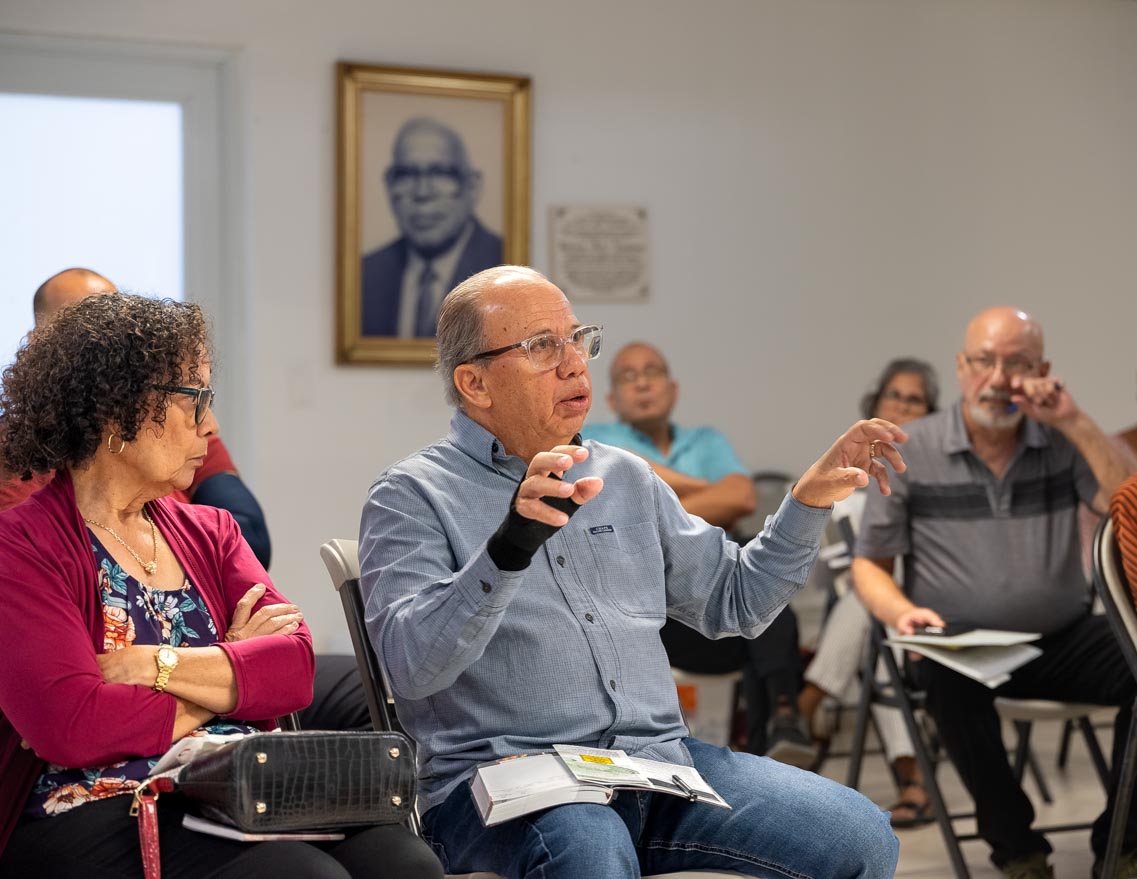
Photo by José Miguel Morales | Centro de Periodismo Investigativo
“How do I know the land is clean? The ball is in their court. How do I know what they did at my house was effective? How do I know why they didn’t clean the rest?” asked Toro, who is also a church leader and heads a community organization in the neighborhood that has become a gathering place for cancer survivors. For now, he said, the community has no evidence that their properties are free of PCBs, no knowledge of which homes were affected, and no clarity on how deeply WR Grace decontaminated the soil.
The CPI asked both the EPA and WR Grace about Toro’s claims, but neither would comment.
After completing the emergency soil removal, the EPA maintains that, for now, no health risks are known in Barriada Esperanza. In February, the agency initiated the remedial investigation phase to assess the extent of PCB contamination in nearby areas and Guánica Bay.
During the remedial process, “other removal actions could take place, depending on whether contamination is found that poses an imminent danger,” Guillermo Hernández, the EPA’s Superfund site coordinator for Guánica, told the CPI.

Photos provided
Nearly 89.7% of the material removed from Esperanza by WR Grace was disposed of at the nearby Peñuelas Valley Landfill. According to Superfund program supervisor Adalberto Bosque, the landfill had been specifically prepared to handle that material. The remaining 10.3% was shipped to the Waste Management landfill in Lake Charles, Louisiana, because it contained PCB concentrations above 50 parts per million. The EPA told the CPI that Puerto Rico does not have any landfills capable of disposing of contamination at those levels.
After the cleanup, Peñuelas’ municipal legislature approved an ordinance in October 2024 that banned further PCB disposal in its landfills and imposed penalties for violators. The EPA noted that the disposal of contaminated soil in Peñuelas had been completed prior to the mayor signing the measure.
Historically, PCBs were used as lubricants in electrical transformers and other industrial equipment until the EPA banned their manufacture in the United States in 1979.
In 2015, a team of University of Miami scientists found the second-highest concentration of PCBs in the world in Guánica Bay. WR Grace was identified as one of three potentially responsible parties. The others were the Puerto Rico Electric Power Authority, which owns roughly one acre of land where a power substation still operates, and the Puerto Rico Ports Authority, owner of another parcel where the same fertilizer production line once operated.
After failing to reach an agreement with any of the parties to finance the remedial investigation, the EPA took on the work in February in collaboration with the U.S. Army Corps of Engineers. In August, the agency contracted a private firm to begin the next phase of work, during which other responsible parties could be identified.
“If the agency carries out the work, then it also has the authority to pursue the responsible parties to recover the money,” Bosque clarified.
On average, it has taken the EPA eight years to complete this kind of remedial investigation at the 19 other active Superfund sites in Puerto Rico.
In Guánica’s case, however, it took the agency 28 years to investigate and recommend the site for inclusion on the National Priorities List. According to the CPI’s 2023 findings, the New York regional office that oversees Puerto Rico had classified the case as “low priority” back in 2000.
Shoreline Fishing Declines in the Bay
PCBs are a type of chemical that the scientific community calls “persistent organic pollutants” because they degrade very slowly and accumulate in the environment.
According to the EPA, “the types of PCBs that tend to bioaccumulate in fish and other animals, and to adhere to sediments, turn out to be the most carcinogenic components of PCB mixtures. As a result, people who eat fish or other animal products contaminated with PCBs, or who come into contact with PCB-contaminated sediments, may be exposed to mixtures that are even more toxic than those to which workers were exposed or that were initially released into the environment.”
In 2013, three types of PCBs were detected in Guánica Bay. A small sample of fish revealed concentrations of 3.77 parts per million (ppm). The safe limit for fish is 2 ppm, according to the U.S. Food and Drug Administration (FDA).
Darien López Ocasio, director of the Guánica State Forest — a nature reserve managed by the Department of Natural and Environmental Resources that borders the bay — said her team took the initiative to install two signs recommending catch-and-release fishing only in Guánica Bay. The aim was to prevent people from consuming potentially contaminated fish.

Photo by José Miguel Morales | Centro de Periodismo Investigativo
“This came directly from the interagency meetings we’ve held with the community, where the need for some kind of warning was identified. So, we reviewed the wording and decided to put up two signs specifically warning that only catch-and-release fishing is recommended,” López Ocasio told the CPI.
Survey data collected by Guánica State Forest staff from bay fishers since 2020 show that visits and fishing activity have declined since the signs were posted in mid-2024.
“It seems the information has spread, and some people have decided to fish elsewhere. We still survey them, but compared with previous years, there are fewer,” said the forest director.
Despite the observations of biologists who have monitored the area, at least two local fishers see things differently. “I haven’t seen any change at all: people are always around, fishing along the shore, hanging out, drinking and fishing,” said the manager of the only fish market still operating in the area. Other visitors and residents told the CPI the same.

Photo by José Miguel Morales | Centro de Periodismo Investigativo
Exposure Pathways Still Unknown
The EPA is awaiting further evidence to take additional measures to protect the health of those who use the bay. The Agency for Toxic Substances and Disease Registry (ATSDR) initiated its investigation in March 2023 and told the CPI that it expects to conclude by early 2026, with the findings to be published on its website. A 30-day public comment period will follow the release.
To evaluate Superfund sites, the ATSDR uses EPA data to identify exposure pathways. Its work largely depends on the progress of the EPA’s remedial investigation to continue assessing health risks.
Residents interviewed by the CPI, along with Guánica’s mayor and community organizations, confirmed that they know nothing about ATSDR’s progress. Although the agency declined an interview, it stated in writing that the work is nearing completion.
In response to the CPI’s questions, Centers for Disease Control and Prevention (CDC) communications officer Gabriel Alvarado said exposure to PCBs through air had not been studied, despite findings from a University of Miami research team, which between 2013 and 2019 documented that the contaminant is also transported by air in the boardwalk area. That same team also found evidence of PCB accumulation in fish. When asked whether ATSDR had investigated airborne exposure, the agency did not respond, saying only that it would release information when the report is published.
In a written statement, the EPA said both agencies will continue to collaborate during the remedial investigation to assess risks as the EPA collects additional samples. Although it has the authority to do so, ATSDR is not required to take its own samples to study every exposure pathway under the Comprehensive Environmental Response, Compensation, and Liability Act (CERCLA), which created the Superfund program.
Reconstruction of the Boardwalk on Hold Amid Contamination
While the EPA completes its investigations, the Municipality of Guánica has been allocated $4.5 million from the U.S. Department of Housing and Urban Development’s City Revitalization Program to rebuild the town’s boardwalk. The structure, heavily damaged by the 2020 earthquakes, sits directly on the area where the highest concentration of PCBs in the bay has so far been detected — 129.3 milligrams per kilogram of sediment.
After completing 60% of the design work and beginning the permitting process in 2021, the Puerto Rico Department of Housing consulted multiple agencies. The EPA was the only one to oppose the project as proposed by the municipality, warning that it would disturb contaminated sediments in the bay.
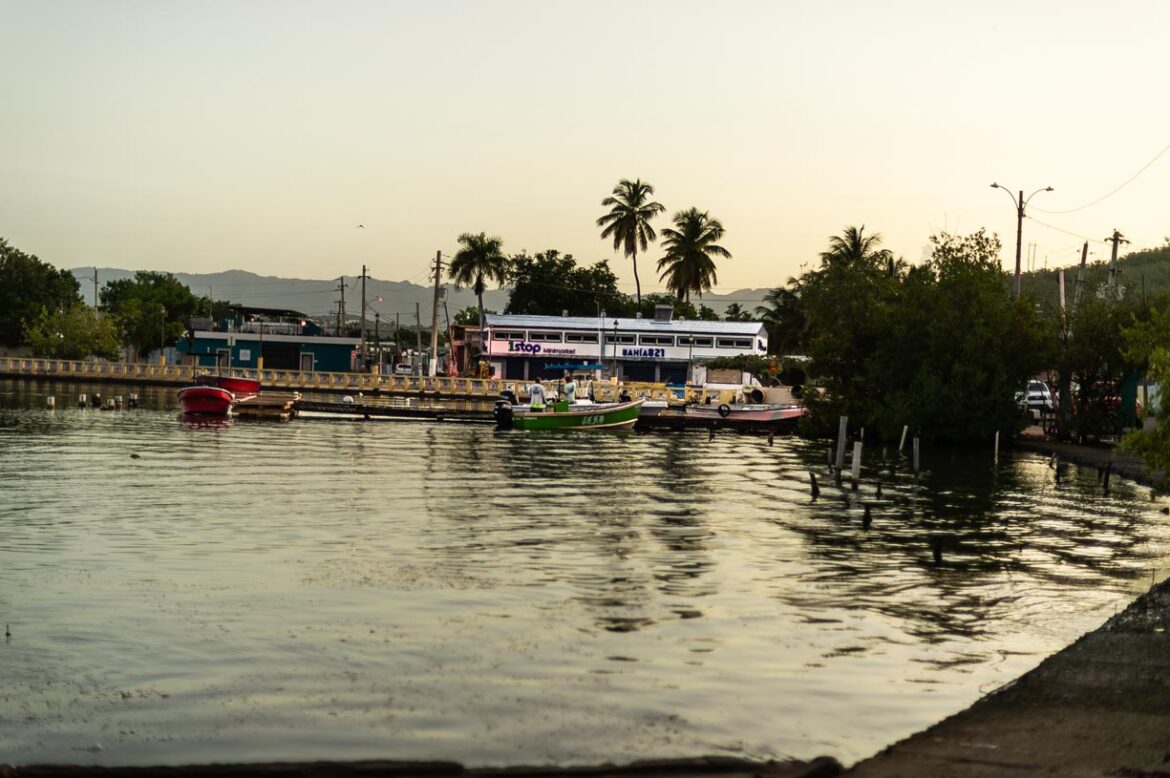
Photo by José Miguel Morales | Centro de Periodismo Investigativo
“We submitted comments expressing concerns about the design and how and when it would be carried out, because this area is adjacent to the Superfund site, where the remedial investigation is just beginning. That investigation aims to identify the magnitude and scope of PCB contamination,” said Carmen Guerrero Pérez, director of the EPA Puerto Rico.
Amid negotiations between the municipality and the EPA to adjust the design so it would not interfere with the agency’s work, Guánica Mayor Ismael Rodríguez Ramos said he feels trapped in a difficult position.
“They raise concerns about not disturbing the seabed or moving any material, but every day, fishermen go out from that ramp, disturbing the water, the sand, the land. Boats leave daily from the very area they are worried about. So, when will they address it? When will these studies be done?” Rodríguez Ramos asked in an interview with the CPI.

Photo by Norenid Feliciano | Centro de Periodismo Investigativo
On August 15, the EPA rejected the fourth revision of the design after “noting that the proposal also includes the construction of structures on land,” according to a letter the agency sent to the municipality. “We understand the importance of this project, and we are not here to block it. I think it’s a matter of timing — when the project should be carried out, considering all these investigations,” Guerrero Pérez concluded.
“We have a boardwalk that is exposed, and yes, we’re worried about the environmental risks, but we’re also worried about people’s safety. The rods [of the structure] are sticking out, pieces of cement could fall on people, and part of the slab has been giving way. Even though we’ve put up barriers to keep people out, there are always some who go in,” the mayor warned.

Photo by Norenid Feliciano | Centro de Periodismo Investigativo
If the EPA does not approve the design, the project cannot move forward. Mayor Ismael Rodríguez Ramos fears that the deadline for using the government funds — currently set for 2027 — will expire before a solution is reached.
Guánica Residents Form Community Advisory Committee
Amid negotiations among the many agencies and sectors involved in investigating and cleaning up the Superfund site, Guánica residents are organizing to improve communication and take a more active role in what promises to be a lengthy process.
“There are so many rumors and so many agencies involved that I’m confused, and we’d really like to know who’s who.” With these words, 75-year-old Barriada Esperanza resident José Marcián Jusino introduced himself at the most recent EPA community meeting. The gathering aimed to orient residents interested in forming an EPA-recognized Community Advisory Committee.

Photo by Gabriela Carrasquillo Piñeiro | Centro de Periodismo Investigativo
The federal agency’s process allows communities directly affected by contamination to participate and help coordinate communication among all parties involved in cleaning up the Superfund site.
This is currently the only committee of its kind in Puerto Rico. Its creation marks another step in the community’s long history of demanding access to information about contamination in an area burdened for decades by industrial activity — and more recently by the destruction caused by the 2020 earthquakes.
“When the EPA launched the Superfund process, we were already working,” recalled community coordinator María de los Ángeles Ortiz Rodríguez.
“We know we have a problem, and I think strategies can be put in place so that, while dealing with the contamination, we can also pursue economic development — obviously within the parameters set by the EPA and the relevant agencies,” Ortiz Rodríguez noted. “We have a beautiful bay, a spectacular boardwalk, but we also have many problems there.” Ortiz, an educator, has spent the past decade teaching about the contamination since serving as principal of Áurea E. Quiles Claudio Occupational High School, which was destroyed in the 2020 earthquakes.
Since 2014, a University of Miami team led by scientist Naresh Kumar has collaborated with teachers from that school, alerting the community to the contamination and studying the health effects of PCB exposure in Guánica — risks the Puerto Rico Department of Health never addressed. The Graduate School of Public Health at the University of Puerto Rico’s Medical Sciences Campus later joined the effort, conducting a study last summer on the prevalence of chronic diseases.
Separately from the Superfund process, the CPI learned that the EPA is also collaborating with the U.S. Fish and Wildlife Service, NOAA, and the Guánica Dry Forest in a Natural Resource Damage Assessment. Still in its early planning stages, the project aims to assess the impact of PCB contamination on the area’s biodiversity, as well as its economic implications for the community, according to María Elena García, the EPA’s community involvement coordinator.
This translation was generated with the assistance of AI and reviewed by our editorial team to ensure accuracy and clarity.
