



At just 12 years old, Ian M. Ayala Martínez has undergone five surgeries on his right ankle and leg, procedures that have been grueling for him. He has faced each one with courage, supported by his mother, whose only wish is for her son to live without pain.
Ian was born with a rare condition called fibular hemimelia, which affects the normal development of the bones in the legs. As a result, one leg is longer than the other. The condition has led to additional complications, including calcaneovalgus, a deformity that causes his heel to turn outward. These problems make it difficult for Ian to walk.
The boy, who also has level 1 autism, has had to rely on 12 orthopedic devices to walk, along with surgeries and therapy. Adding to the family’s distress is that Ian’s coverage under Vital, Puerto Rico’s government health insurance plan, does not include these expensive treatments, and the family lacks the resources to pay out of pocket.
Like Ian, thousands of children and adults in Puerto Rico facing complex health diagnoses are forced to endure financial strain, often relying on debt and desperate juggling of expenses, despite the existence of a multimillion-dollar, little-known government program intended to help them: the Fund for Services for Remediable Catastrophic Illnesses.
Managed by the Puerto Rico Department of Health, the fund has operated for years under a significant deficit because its allocated budget is insufficient to cover all the applications approved by its Evaluating Board. According to agency records, the fund has approved more than $97 million in grants beyond its assigned budget over the past decade. Since 2020, a portion of each year’s budget has been used to pay off prior debts, ranging from 6% to 34% of the fund, according to the most recent documents provided. The Department of Health has delivered three separate sets of budget numbers to the Centro de Periodismo Investigativo (CPI).
There are also no clear rules governing the distribution of the money. While more than 97% of applicants have received only one grant, some have been awarded as many as 12, the CPI found. The grants are awarded at the discretion of the Evaluating Board members. On average, only 151 people apply each year, according to data from the Department of Health. The agency has not publicized the existence of the fund to the public, despite it being a potentially lifesaving resource. Most applicants find out about it through referrals from doctors or politicians familiar with the program.
Ian’s most recent surgery took place this past July, when doctors performed an osteoplasty and an arthrodesis, procedures aimed at reconstructing his ankle and alleviating the pain that often forced his school to call his mother to pick him up before the end of the school day, according to his mother, Sorelis Martínez Trinidad.
The operation was performed in the United States after Martínez searched for alternatives to improve her son’s quality of life. Because it was conducted off the island, the procedure was also excluded from health insurance coverage.
Faced with this situation, she mobilized to raise the money. She called the Office of the Patient Advocate, which referred her to the fund. The program provides grants to patients with a “remediable catastrophic condition” that requires treatment not covered — or only partially covered — by their health insurance plan, or when the treatment is not available in Puerto Rico and the patient or their family cannot afford to pay for it.
The data show that the fund provides grants to people across socioeconomic levels. Most awards went to applicants earning less than $25,000 a year. Still, in the last two four-year terms, more people with annual incomes above $70,000 also began benefiting, according to a CPI investigation. Twenty-eight percent of recipients had private health insurance, 70% were covered by Vital, and 2% had no insurance.

In Ian’s case, however, he did not receive this assistance. His mother said that when she called the fund, she was told her son would only be eligible if he came out of surgery “cured.” She pointed out that this was impossible, since he would still need additional treatments and therapy. This stands in contrast to the fact that the fund has awarded grants for evaluations and treatments such as “rehabilitation therapy,” “speech therapy,” and “cochlear implants,” an electronic device that improves hearing but does not cure hearing loss.
“They didn’t even give us the chance,” his mother said. She managed to pay part of the operation thanks to donations from the public after turning to social media and the press for help.
The surgery cost nearly $160,000. However, Nemours Children’s Hospital in Orlando, Florida, granted a 50% discount because the procedure was not covered by health insurance and established a payment plan.
Sorelis, a single mother from Vega Baja, still carries that debt, paying it off monthly with help from Ian’s father, while her son continues to recover. Two months after surgery, he remains in a wheelchair because he still can’t walk.

Photo provided
When they returned to Puerto Rico after the operation, she contacted the fund again, intending to visit the office with her son in a wheelchair so they could see that his case “was real.” She was told they could not pay for a surgery that had already taken place. She then asked to begin the application process in advance, since the doctor had informed her that Ian would need another operation within a year to 18 months. But the staff refused to let her complete the application, instructing her instead to call two weeks before the surgery. That, however, was exactly what she had done for Ian’s July operation — and at that time she had been told two weeks was not enough notice.
The Catastrophic Illness Fund was created in 1996 by the Puerto Rican government to support patients with extraordinary needs following the privatization of the public health system through the sale of public hospitals and the development of what became known as the Health Reform, now known as Vital, the health plan for low-income residents. The fund’s money was intended to be equally accessible to all citizens based on medical criteria and the family’s lack of economic resources to cover treatment, regardless of their income. But that is not how it has worked in practice.
For at least a decade, the Catastrophic Illness Fund has operated irregularly. Over the past 10 years, it has approved more than $217 million in grants arbitrarily — without consistent criteria — while running deficits and failing to pay providers, some of whom have refused to accept new patients as a result, a CPI analysis of data and minutes from the fund’s Evaluating Board meetings found. A pattern emerged in which the fund approved grants nearly double its annual budget year after year.
Yesarel Pesante Sánchez, assistant secretary for Service Coordination and Health Assistance at the Department of Health, insisted that the fund does not reject anyone due to budget constraints and that board members look for ways to find money to cover debts after the fact.
Over the past decade, the fund’s various boards have approved grants for up to 61 different types of treatments. Eighty-five percent were for transplants, other surgeries, and medical evaluations — the latter two mainly carried out in the United States. In most cases, the CPI found, the fund covered the entire treatment as well as additional expenses.
More than 70% of the procedures were performed in Puerto Rican hospitals for patients enrolled in the Vital health plan, with the largest share going to individuals aged 45 to 64, followed by infants under 4 years old. Nearly 70% of children under 14 traveled to the United States for treatment.
Municipalities in the San Juan metropolitan area topped the list of those most frequently benefiting from the fund. But when adjusted for population, the towns of Guayanilla, Aguas Buenas, and Quebradillas ranked highest.
The Department of Health does not promote the availability of the fund to citizens. In towns such as Maricao and Culebra, no residents applied for assistance in the past 10 years.
Before the CPI’s analysis period — covering 2015 through 2025 — the fund’s board decisions had even reached the courts. In 2013, for example, an attorney and the father of her daughter sued the fund on behalf of the child, who had been diagnosed with anoxic encephalopathy after undergoing open-heart surgery at 5 months old. The lawsuit, filed for damages, came after the board denied a grant to cover the deductible left unpaid by the family’s insurance for spinal surgery the child required. The board argued the girl’s condition did not qualify as a remediable catastrophic illness.
The child’s parents “argued in the lawsuit that they were discriminated against by the Evaluating Board for being professionals, without any consideration of the expenses incurred caring for a disabled child or the emergency situation she faced,” according to the Court of Appeals ruling that reviewed the case after a lower court dismissed it. The appeals court concluded the lower court erred in dismissing the lawsuit, found that the parents had grounds to pursue a discrimination claim, and returned the case to the trial court. But the case has been on hold since 2017 under the PROMESA fiscal control law.
The CPI was unable to reach the child’s mother or father for comment.
Durante la pasada década, las distintas juntas del Fondo aprobaron donativos para hasta 61 tipos de tratamientos distintos. El 85% fue para costear trasplantes, otras cirugías y evaluaciones médicas, estas dos últimas principalmente en Estados Unidos. El CPI observó que en la gran mayoría de los casos se cubrió el tratamiento completo y otros gastos.
Más del 70% de los procedimientos se realizaron en hospitales de Puerto Rico a personas con Plan Vital, y fueron destinados en mayor proporción a pacientes entre los 45 a 64 años, seguido por el grupo de infantes de cuatro años o menos. Casi el 70% de los menores de 14 años viajaron a Estados Unidos a recibir tratamiento.
Los municipios del área metro encabezan la lista de municipios más beneficiados por esta ayuda, pero, al considerar el promedio de habitantes por municipio, Guayanilla, Aguas Buenas y Quebradillas están en los primeros lugares.
A “political gift”?
According to two CPI sources, the fund has sometimes been used as a “political gift,” with legislators referring patients who did not qualify but who still received board-approved grants.
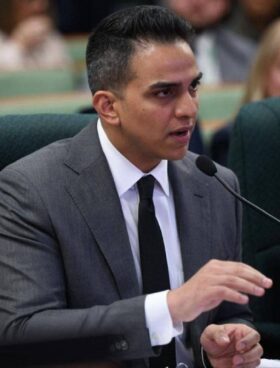
Asked about the use of the fund as a “political gift,” Health Secretary Víctor Ramos Otero said he was unaware of such cases and insisted it has not happened under his leadership and will not in the future. He added that it is normal and legal for legislators to refer cases.
The Secretary Will Not Comply With the Law
The fund does not maintain a list of the “remediable catastrophic illnesses” it covers, leaving patients and families uncertain of their eligibility.
“The fund does not have an exhaustive list establishing which diagnoses qualify for benefits,” Roxana Martínez Barbosa, the fund’s executive director, confirmed to the CPI.
According to Martínez Barbosa, the fund relies on the criteria in its enabling legislation, the Right to Health Act. But the law is vague. It simply states that a “remediable catastrophic illness” is one that could cause death but for which a treatment exists “that remedies the condition to the point of saving the patient’s life,” or that relieves symptoms, extends life expectancy, or significantly improves quality of life.
Under those parameters, Ian’s case should have been approved.

Photo by Brandon Cruz González | Centro de Periodismo Investigativo
In 2024, the definition of “remediable catastrophic illness” was expanded through legislation introduced by Sen. María de Lourdes Santiago. The change included illnesses that are not terminal but that have caused a permanent impairment likely to worsen significantly without medical intervention, provided there is a treatment shown to remedy or prevent further deterioration of the condition.
The law also required the Health Secretary to publish a list of these illnesses — a step that has yet to be taken.

Photo by Brandon Cruz González | Centro de Periodismo Investigativo
The 66 grants for hearing implants approved by the fund’s Evaluating Board do not qualify under either version of the definition.
“There are illnesses without a cure, and patients need assistance to have a better quality of life, even when the disease is absolutely incurable at this time. What we wanted was to change the definition of catastrophic illness so that it would include conditions for which science has not yet found a cure,” the senator explained.
The Health Secretary, however, does not believe the fund should have a defined list of covered illnesses. He said he plans to push for legislation that would eliminate the requirement, arguing that priorities should be determined by the board’s medical specialists and advances in healthcare.
“I think the list should remain open,” Ramos Otero said, noting that thousands of people live with rare diseases and that research into treatments grows every day. “If I create a closed list and someone applies [with a condition not included], then I can’t approve the help. Medicine evolves; it’s flexible. Closed lists in medicine have always been a problem.”
Ramos Otero also criticized the fact that when the law was amended, no additional funds were allocated, despite it being foreseeable that expanding the definition of catastrophic illness would increase the number of requests for grants from the fund.
Lack of Information and Confusion Among Patients
Few people know it, but the Puerto Rican government offers three funding alternatives to support patients facing catastrophic illnesses: the Catastrophic Illness Fund, the special coverage under the Vital health plan, and the temporary special coverage of the same plan. All three are available to citizens who cannot afford costly treatments when private health insurance does not cover them.
The special coverage under Vital does have a defined list of illnesses it covers, including cancer, rheumatoid arthritis, and leprosy, explained Milagros A. Soto Mejía, clinical operations manager at the Puerto Rico Health Insurance Administration (ASES, in Spanish).
Soto Mejía said that under this special coverage, patients are exempt from referral requirements, and their specialist or subspecialist becomes their primary physician. This coverage is an additional service under the Vital health plan in particular circumstances a patient may face.
The Catastrophic Illness Fund, on the other hand, provides state grants to patients who require treatment but lack the resources to pay for it.
A patient may use both mechanisms. The Vital health plan’s special coverage can cover certain expenses, while the Catastrophic Illness Fund can cover others.
Since October of last year, patients covered under Vital have also been able to access a temporary special cancer benefit, designed to speed up diagnoses of the disease.
Like many in Puerto Rico with the Vital health plan, Sorelis was unaware that this special coverage existed or that her son qualified because of his autism diagnosis.
The Health Secretary acknowledged the lack of awareness about the Catastrophic Illness Fund and said the Department will launch a publicity campaign to increase its visibility.
“There may be people who need it and haven’t applied — not because it’s hard to access, since all you have to do is apply, but simply because they don’t know it exists. Clearly, I think one of our advertising priorities, within our resources, must be the fund,” Ramos Otero said.
Members of the board and fund administrators told the CPI that while an average of 150 people apply annually, many more call seeking guidance and are referred to other sources of support. However, they did not provide data or even an estimate of this alleged volume of redirected calls.
Between 2017 and 2020, the Puerto Rico Legislature investigated the fund. The initiative, presented by then-senators Carlos Rodríguez Mateo and Ángel “Chayanne” Martínez Santiago, sought to determine the fund’s fiscal condition and whether it was receiving the legally mandated budget allocations.
The Senate Health Committee concluded that the contributions were not being made and that the fund was not receiving the annual $10 million it was supposed to collect from various government sources, including the Traditional Lottery and the Electronic Lottery. Following the establishment of the Financial Oversight and Management Board in 2016, the fund’s authorized budget was approximately $8 million, which was included within the Puerto Rican government’s general operating budget, according to the legislative report.
At the time, the Senate recommended, among other things, that the Office of the Comptroller conduct an audit and that the fund’s Evaluating Board consider launching a mass media campaign to attract donations. The campaign was never carried out.
Years of Operating in Deficit
For nearly two decades, the fund has faced budgetary problems caused by several factors: approving roughly double the amount of grants than budgeted, rising treatment costs, and the lottery’s failure to remit the funds it is legally obligated to transfer, according to attorney Yesarel Pesante Sánchez, the official responsible for budgetary matters. At the time of publication, the fund had not provided data on its actual annual disbursements or the sources used to cover its deficits. Pesante Sánchez told the CPI that the fund operated through payment agreements with providers and by seeking alternative funding sources, although he did not specify which ones.
The CPI reviewed minutes from board meetings that document the lottery’s noncompliance. For example, in a 2015 meeting, the fund’s accountant, José Ocasio, complained that the lottery owed them “the amount of $6 million.”
These funding shortfalls led some hospitals, including MD Anderson in Texas, to refuse to treat patients because of the fund’s outstanding debts.
“The hospital requests payment in advance, since in previous years the fund has had pending debts,” according to the minutes of a 2015 board meeting regarding an emergency case for a patient who had an appointment scheduled at the hospital.
The debt dated back to 2005 and 2006, and according to meeting minutes, the hospital canceled the procedure until payment was received. “Countless efforts were made and none succeeded. The goal was to secure a new opportunity, but none were approved,” reads the 2015 record.
Ramos Otero noted that this situation with hospitals took place while he was president of the Puerto Rico College of Physicians and recalled that in 2015, the debt owed to hospitals was estimated between $20 million and $25 million. The secretary insisted that the issue has since been resolved.
The Department of the Treasury did not respond to CPI’s request for information on how much money from lottery sales had been transferred to the Catastrophic Illness Fund over the past 10 years.
Pesante Sánchez explained that those funds were supposed to be transferred every two months but were instead arriving, on average, every six months. He added that the situation has since normalized, with transfers now made every two months or quarterly.
According to the minutes, the Medical Cannabis Board has also failed to send its contributions to the Catastrophic Illness Fund. Ramos Otero, who also chairs that board, said that money from medical cannabis was not a legal obligation but a voluntary decision of their board. He told the CPI that transferring cannabis funds to the Catastrophic Illness Fund would now be one of his priorities as chair.
Act 42 of 2017 states in Article 27 that: “The Board may determine and will allocate each year a portion of the revenue from licenses to the Fund for Services for Remediable Catastrophic Illnesses,” though it does not specify an amount.
Pesante Sánchez said that, given the fund’s importance and the unpredictability of some treatments, the Financial Oversight and Management Board had authorized it to operate in deficit.
Private Insurers Wash Their Hands of Responsibility
The Right to Health Act, which created the fund, established a minimum annual budget of $8 million from uncommitted funds in the state Treasury, plus another $2 million from recurring allocations under the Puerto Rico Lottery Act. Dr. Obed García Guzmán, who represented the Puerto Rico College of Physicians and Surgeons on the fund’s Evaluating Board from 2015 until October of last year, said that when the fund was created, it was agreed that the budget allocation would be reviewed annually. But that has not happened, and every fiscal year the same base budget request continues.
Act 150 of 1996 requires the Evaluating Board to certify to the Treasury Secretary an annual estimate of the resources needed to fulfill the law’s purpose, and for the secretary to include those resources in the island’s general fund.
“No one has wanted to do it; no one has dared to demand a review or push for more money,” García Guzmán said.
“Right now, Puerto Rico is under the control of the Fiscal Oversight Board, and no one dares to demand more funding for this. Everything starts from a base budget, even though needs and costs continue to rise year after year. There are new technologies and new techniques that are extremely costly. We already have high-tech, biotech medications that can cost a million dollars,” he added.
According to García Guzmán, “we need to rethink the fund’s finances.” For example, if a person is involved in a traffic accident and requires a procedure outside Puerto Rico, the Automobile Accident Compensation Administration (ACAA, in Spanish) insurance only covers services on the island. For that reason, some patients turn to the Catastrophic Illness Fund to cover life-saving treatment abroad. In such cases, García Guzmán argued, ACAA should reimburse the fund. The same, he said, should happen with pediatric patients under Medicaid who are sent to the United States for treatment.
He criticized the negligence of health insurers who abandon their patients by telling them, “‘We don’t cover that — go to the fund.’ That should not be the case.” In his view, insurers must show greater commitment to their patients and cover treatments not available in Puerto Rico that patients are forced to seek in the United States.
García Guzmán noted that health insurers participating in the Vital plan network do not cover transplants, though they recently began covering corneal transplants. Vital does not cover hearing implants — expenses absorbed by the Catastrophic Illness Fund — but it does pay for calibrating the implanted devices.
He added that private health insurers cover transplants depending on the patient’s plan. “In reality, most people have cheap [private] health insurance plans that don’t cover this,” García Guzmán said.
Faced with the lack of health insurance coverage, the American Cancer Society refers about 10 patients a year to the Catastrophic Illness Fund, mostly for autologous stem cell transplants or for patients requiring treatment outside Puerto Rico, explained case navigator Jacqueline Agramonte.
Because of the lack of support from the private insurance health plans they pay into, some patients switch to the government plan after receiving a catastrophic diagnosis, said María Cristy, vice president of Health and Patient Services at the American Cancer Society.
Even as they deny coverage to their own insured patients in life-or-death situations, health insurance companies “have been lobbying” to administer the Catastrophic Illness Fund themselves, Health Secretary Ramos Otero told the CPI. He said insurers even pitched the idea to leaders of different political campaigns during the last election, in hopes of including it in the government platforms presented to voters in 2024. Ramos Otero — who drafted the health platform for Gov. Jenniffer González’s campaign — said he opposed including the proposal in the platform of the New Progressive Party candidate.
Suggested Reforms for the Catastrophic Illness Fund
Dr. Ibrahim Pérez, a veteran physician, public health specialist, and former health director of the Municipality of San Juan, said an independent panel of doctors trained in the patient’s specific area of need should be created to evaluate cases deserving financial support from the Catastrophic Illness Fund for life-extending treatments.
He added that the approval process must be highly selective, limited to patients whose circumstances are truly compelling. He also argued that family, social, and emotional factors should be taken into account when making decisions.
An Incomplete Evaluating Board
The Catastrophic Illness Fund has an Evaluating Board that meets monthly to review applications and decide who receives funding for treatment and who does not. Currently, one community representative seat on the board remains vacant, according to Health Department records.
In addition, Carlos Díaz Vélez, president of the Puerto Rico College of Physicians, has not attended any meetings since García Guzmán’s departure last October, nor has he delegated a representative, said Martínez Barbosa. She added that the board has sent three letters to Díaz Vélez — who has been in a long-standing public feud with Ramos Otero — without receiving a reply. Díaz Vélez did not respond to the CPI’s calls for comment.
Health Secretary Ramos Otero told the CPI he was unaware of the community vacancy but said he would raise the issue with the governor, who is responsible for making the appointment.
The board is composed of nine members: the Health Secretary, the President of the Puerto Rico College of Physicians, the Treasury Secretary, the President of the Government Development Bank, and the Secretary of the Department of Family. It also includes two community representatives and two physicians appointed by the governor with the advice and consent of the Senate.

Photo by Brandon Cruz González | Centro de Periodismo Investigativo
The Health Secretary’s representative on the board is Dr. Javier Cuevas Marrero. The medical specialists are Dr. Natalio Debs, a plastic surgeon, and Dr. Joselyn Molina, a hematologist-oncologist. María Calvo Ruiz serves as the community representative.
Meanwhile, Sorelis — like so many others in Puerto Rico — continues struggling to raise money to pay outstanding medical debts and the future expenses related to Ian’s illness. After the CPI’s interview, officials from the Catastrophic Illness Fund informed the family that they would be allowed to apply for a grant for Ian’s next surgery this week.
This translation was generated with the assistance of AI and reviewed by our editorial team to ensure accuracy and clarity.