



Puerto Rico’s Energy Czar blames LUMA Energy, the private operator of the power grid, for failing to manage federal funds. The company has been embroiled in an internal dispute with one of its main contractors while also pointing the finger at the Puerto Rico Electric Power Authority (PREPA) for neglecting maintenance. Meanwhile, the Financial Oversight and Management Board for Puerto Rico says no one was in charge or coordinating agencies under former Governor Pedro Pierluisi’s administration. The result: no one is taking responsibility for the delays and inefficiencies in rebuilding the electrical grid, eight years after Hurricane Maria.
When LUMA competed for the privatization contract to run Puerto Rico’s grid, which it won in 2020, it touted its expertise in handling federal funds through its partner, Innovative Emergency Management (now IEM International). But once the deal was secured, conflicts quickly erupted between the two.
“For us, it is unacceptable that they can’t even reach an agreement among themselves,” said Puerto Rico’s Energy Czar, engineer Josué Colón, in an interview with the Centro de Periodismo Investigativo (CPI). “We told them, ‘No, no, you have to resolve this. You can’t keep getting stuck in these disputes.’”
The infighting disrupted the disbursement of funds from the Federal Emergency Management Agency (FEMA), which had announced the most significant allocation ever made under its Public Assistance program following a disaster. The conflict further delayed the reconstruction of Puerto Rico’s power grid after Hurricane Maria.
In June 2024, the Puerto Rico Energy Bureau also raised concerns about IEM’s unclear role in managing federal funds, even though that was supposed to be its primary responsibility. Regulators warned that LUMA had not explained why projects were being submitted late to FEMA.
“LUMA ignored IEM,” Colón explained. “LUMA wasn’t following their recommendations or advice on how to handle project development for FEMA.”
Along with Puerto Rico’s Central Office for Recovery, Reconstruction and Resiliency (COR3) and the Financial Oversight and Management Board, officials had to hold “multiple meetings” to force LUMA to resolve its internal disputes. “Now they claim the issues have been resolved and they’re working together. We’ll see,” Colón added.

Photo by Ana María Abruña Reyes | Centro de Periodismo Investigativo
FEMA reimburses Puerto Rico’s recovery spending through COR3. Meanwhile, the oversight board drafts PREPA’s fiscal plans and oversees the island’s energy transformation. It also adds another bureaucratic layer, since all grid contracts over $10 million must receive its approval.
In a statement to the CPI, LUMA said: “There is no misalignment between IEM and LUMA that has delayed ongoing work. The creation of our new federal funding office has achieved significant progress with the support of additional resources, including IEM’s expertise, with whom we have worked continuously since 2021.” Since July 2025, that office has been led by Vice President Doriel Pagán Crespo, who, until February, was executive director of the Puerto Rico Aqueduct and Sewer Authority.
IEM International, for its part, did not respond to CPI’s questions. Stephanie Tennyson, the company’s chief communications director, referred all inquiries back to LUMA.
One of LUMA’s critical projects to reduce the frequency and duration of blackouts is clearing 16,000 miles of vegetation from PREPA rights of way. Overgrowth entangles transmission lines and causes more than half of power outages, according to LUMA. The work involves cutting trees and brushing them down to the ground, Colón said.
But LUMA fell behind on the project after revising and resubmitting its plans. It had to address concerns from both federal and Puerto Rican environmental regulators, particularly after initially proposing widespread herbicide spraying from aircraft and interventions near bodies of water.
Colón noted that vegetation management was not the only project facing setbacks. “They’ve had to go back and forth on several projects just to achieve compliance,” he said. The U.S. Environmental Protection Agency (EPA) told the CPI that it has provided LUMA with technical assistance and guidance for its vegetation clearing plan. The agency informed the company that it would need a permit if it planned large-scale herbicide use or disturbed an acre or more of land in ways that could contaminate water bodies. EPA emphasized it has not yet received a permit application from LUMA and has no authority to grant waivers under the federal Clean Water Act.
When more than 350,000 customers lost power in June 2024, LUMA President Juan Saca said the outage was caused by vegetation damaging transmission line 39000. According to COR3 data, it was not until a year later that LUMA submitted a project to FEMA for vegetation removal along that line.

Photo by Brandon Cruz González | Centro de Periodismo Investigativo
Of the 116 energy projects pending FEMA approval, 29 are for clearing vegetation around substations and transmission lines.
LUMA has become known for delays in managing federal funds and filing reimbursement requests for post-Maria recovery work. To make matters worse, all projects the company submitted to FEMA after Hurricane Fiona struck in September 2022 failed to meet federal guidelines, leaving $300 million in dispute with the agency, according to Colón. While permanent energy projects tied to Fiona are estimated at $2.3 billion, not a single dollar has yet been obligated.
Colón declined to say whether restoring the electrical system could take two decades, given LUMA’s missteps and federal bureaucracy. That bureaucracy has only grown heavier since the Department of Homeland Security (DHS) confirmed in a statement to CPI that “Secretary [Kristi] Noem personally reviews and approves any contract above $100,000.”
“Obviously, there’s no doubt we have to interact with that additional layer of management,” Colón said. Still, he insisted projects are not stalling at that step, since the DHS secretary has responded to Puerto Rico government requests.
“She [Kristi Noem] doesn’t intervene in projects still under FEMA review or validation. She steps in at the final stage, when funds are about to be obligated,” said Colón, who was appointed Energy Czar in January 2025 by Gov. Jenniffer González Colón, a Republican aligned with President Donald Trump’s administration.
While Colón downplayed the impact of this new layer of bureaucracy, architect Tamara Orozco, who works on school reconstruction projects, described the policy as a real obstacle. She testified before the Puerto Rico House of Representatives in August that one challenge delaying funds for Dr. Pedro Albizu Campos School in Toa Baja is “that for federal projects over $100,000, you need approval from the director of Homeland Security.”
Several U.S. jurisdictions, including North Carolina, have denounced the directive as an obstruction that has created a bottleneck in federal reimbursements.
Lack of Leadership
Nearly eight years after Hurricane Maria, less than 24% of the more than $9.5 billion allocated for Puerto Rico’s grid recovery has been disbursed. FEMA is still reviewing 116 energy projects. Among them is a plan to repair the Guajataca Dam —the most essential reservoir in northwestern Puerto Rico— whose damaged gates threatened the lives of thousands of residents in Quebradillas and Isabela. Other projects awaiting action include repairing and replacing transmission lines.
The recovery of Puerto Rico’s electrical grid has been so sluggish that a new audit from the federal inspector general concluded FEMA “does not know when Puerto Rico’s power grid will be completely rebuilt.” The system is currently managed by PREPA and its private operators, LUMA and Genera.
Robert Mujica, executive director of the Financial Oversight and Management Board, told the CPI that a lack of leadership and coordination among the entities responsible for carrying out energy projects during former Gov. Pedro Pierluisi’s administration was partly to blame for the slow pace of recovery.
He noted that “everyone kept saying everything was fine” whenever former U.S. Energy Secretary Jennifer Granholm visited Puerto Rico to attend follow-up meetings on energy issues. Yet, projects remained stalled.
Those meetings included FEMA, PREPA, LUMA, Genera, the Puerto Rico Fiscal Agency and Financial Advisory Authority (AAFAF, in Spanish), the Public-Private Partnerships Authority (P3A), the Energy Bureau (NEPR, in Spanish), and COR3.
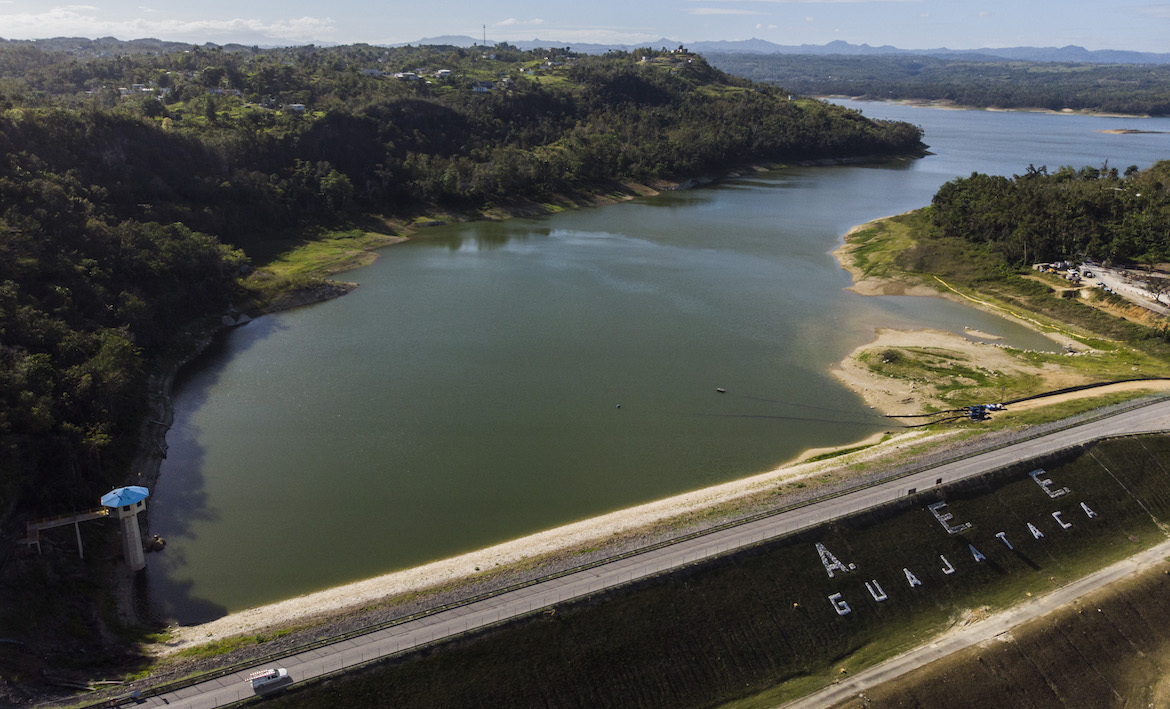
Photo by Dennis M. Rivera Pichardo | Centro de Periodismo Investigativo
After the massive blackout in June 2024, the U.S. Department of Energy asked Mujica to take a more active role in Puerto Rico’s energy recovery, he said.
“Each agency has its own responsibility, but each one blames the others,” Mujica said, describing what he saw as disorganization among the entities involved in the grid’s recovery under Pierluisi.
“In my administration, there was constant and comprehensive oversight of every component of our power system,” the former Governor said in a statement to CPI. He cited members of his team who monitored the private operators, including Josué Colón, former PREPA executive director, who is now seeking to cancel LUMA’s contract.

Photo provided
Pierluisi also said that the appointment of Assistant Secretary for Energy Affairs, engineer Francisco Berríos Portela, was intended to oversee and coordinate all energy-related matters in Puerto Rico. Portela left the post in December 2024 and, in January 2025, announced he was joining Quanta Services, one of the companies that make up the LUMA consortium.
FEMA, the federal agency responsible for disbursing reconstruction funds, has also stumbled. The inspector general’s audit, released this week, found FEMA failed to provide adequate guidance and technical support to PREPA and its affiliates. For instance, one distribution project underwent four revisions in 13 months, and another involving street lighting had to be resubmitted due to inconsistencies in required documentation.
“Had FEMA provided more extensive technical assistance, we conclude it would have approved project SOWs more quickly and without the need for multiple revisions,” the Department of Homeland Security’s Office of Inspector General wrote.
According to the audit, 92% of projects with obligated funds for grid reconstruction remain incomplete as of February this year.
Andrew D’Amora, deputy administrator for FEMA Region 2, which includes Puerto Rico, responded to Inspector General Joseph Cuffari by saying responsibility for rebuilding and modernizing of the island’s power grid belongs to the government of Puerto Rico, not FEMA. He added that FEMA cannot finance the government’s modernization goals, which are estimated at more than $24 billion and could take up to a decade.
D’Amora added that by the end of this year, he expects to complete additional training for PREPA staff and its affiliates, COR3, and other officials responsible for the grid. FEMA also plans to issue more straightforward guidelines on how PREPA should update its work plans, which must be submitted to the agency every 90 days.
Where Is IEM?
LUMA was tasked with managing Puerto Rico’s recovery funds. When competing for the contract, the company boasted of its partnership with Innovative Emergency Management (IEM), which claimed experience handling federal disaster and recovery funds in more than 300 U.S. jurisdictions.
Yet last year, the Puerto Rico Energy Bureau raised concerns about IEM’s role, citing “significant and unacceptable” delays in vegetation management projects.
The Energy Bureau also noted that LUMA had failed to explain the delays in submitting projects and starting work that had already been approved.
“The role of Innovative Emergency Management, Inc. (IEM) in this process is also unclear. When IEM was first brought on board, it was presented as an expert in securing and managing federal funds. However, its current involvement and effectiveness in accelerating the vegetation management program is not clear,” the bureau stated. In other words, both Energy Czar Josué Colón and Puerto Rico’s energy regulator have questioned IEM’s role in the LUMA consortium and its supposed effectiveness in managing federal funds.
But IEM remains on contract, according to both LUMA and Colón. Since 2019, the company has secured more than $325 million in contracts with Puerto Rican government agencies. Among its top executives is Alex Amparo, a former FEMA recovery coordinator, now serving as vice president of critical infrastructure. Pamela H. Patenaude, a fundraiser for Gov. Jenniffer González Colón’s campaign, also continues to serve as a senior executive adviser to IEM. She obtained that contract just three months after resigning as deputy secretary of the U.S. Department of Housing and Urban Development (HUD), where she helped push for a $20 billion increase in Puerto Rico’s housing recovery funds, known as CDBG-DR.
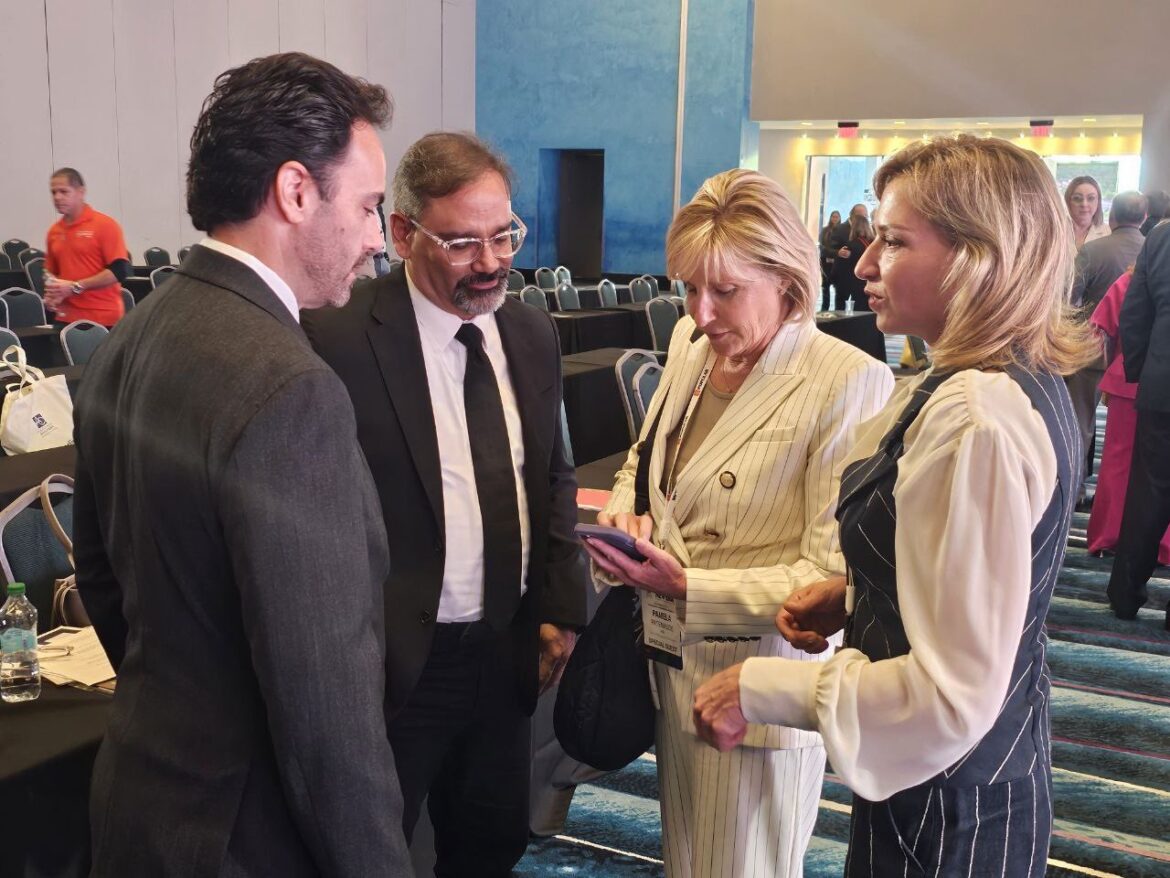
Photo provided
Puerto Rico’s Housing Department also hired IEM to help implement and administer federally funded energy and housing mitigation programs under HUD’s CDBG-DR program.
In its proposal, IEM highlighted as key team members former PREPA directors José Ortiz and Ricardo Ramos; former Energy Bureau commissioner Ángel Rivera; and Cristina Salib López, who was referred by Puerto Rico’s Office of the Inspector General to the Government Ethics Office for not having a required waiver when she received a contract with the Highways Authority while also working at the Department of Transportation and Public Works.
Of the nearly $2 billion in CDBG-DR funds announced by HUD in 2018 for improvements to Puerto Rico’s electrical system, less than 1% has been spent. The Housing Department contracted IEM to support the program funded by those resources.
The electrical grid is not the only area lagging in reconstruction. Eight years after Maria, other agencies also show dismal spending rates for recovery funds: the Department of Education (4%), Public Housing Administration (13%), and Puerto Rico Aqueduct and Sewer Authority (23%). Collectively, these agencies —among the largest recipients of FEMA obligations— still have nearly $15 billion left to spend on permanent works.
This translation was generated with the assistance of AI and reviewed by our editorial team to ensure accuracy and clarity.
